Tying down a dirt bike in a truck bed is one of those things that looks simple—until you try it yourself. Many riders have watched their bikes tip over or shift dangerously during transport. But when you learn the right method and understand why each step matters, hauling your dirt bike becomes much less stressful and a lot safer.
Whether you’re heading to the track, trails, or back home, knowing how to secure your bike properly can save you from costly damage and last-minute headaches.
This guide will walk you through everything you need to know, from the right gear to pro tips that even experienced riders sometimes miss. Along the way, you’ll see where people usually go wrong and how you can avoid these common mistakes.
By the end, you’ll feel confident securing your dirt bike every single time.
Why Proper Tie Down Matters
Many riders assume that any strap will do, or that as long as the bike isn’t wobbling, it’s safe. But the truth is, improper tie-downs cause damage every year—not just to bikes, but to trucks and sometimes even other vehicles on the road.
A fallen dirt bike can break parts, scratch your truck bed, or even become a road hazard.
If you’ve ever seen a bike lying sideways in a truck bed after a sharp turn, you know it’s not just about scratches. It’s about safety. Using the right tie-down methods also protects your bike’s suspension and frame from strain and helps you avoid unnecessary repairs.
What You Need Before You Start
Let’s look at the essential gear for tying down your dirt bike. Not all straps and tools are made equal, and a few smart choices can make your setup much easier and safer.
Essential Tie-down Gear
- Ratchet straps or cam buckle straps (at least 4): These should be rated for at least 500 lbs each. Avoid old, frayed straps.
- Soft loops: These protect your bike’s handlebars and frame from scratches.
- Wheel chock or block: This keeps your front wheel from turning or moving.
- Ramp (for loading): Not for tying down, but essential for safe loading.
- Truck bed anchors or tie-down points: Most trucks have built-in hooks, but check yours before you start.
Optional But Useful
- Fork saver or fork block: Reduces pressure on your suspension.
- Protective mat: Prevents scratches in your truck bed.
- Towel or rag: Place under soft loops if you’re worried about paint scratches.
Here’s a quick comparison between ratchet straps and cam buckle straps:
| Strap Type | Strength | Ease of Use | Best For |
|---|---|---|---|
| Ratchet Strap | Very High | More Steps | Heavy Bikes, Long Trips |
| Cam Buckle Strap | Medium | Simple, Quick | Light Bikes, Short Trips |
How To Load Your Dirt Bike Into The Truck Bed
Before you tie down your dirt bike, you have to load it safely. Many accidents happen at this stage, so don’t rush.
- Position your truck on level ground. A slanted driveway makes loading much harder.
- Lay out your ramp securely. If possible, attach the ramp to your truck so it doesn’t slip.
- Check your surroundings. Remove any obstacles from around your truck bed.
- Push, don’t ride. Walking the bike up the ramp is safer than riding it.
- Ask for help. If your bike is heavy, a second person can steady the ramp or guide the bike.
Here’s a simple tip: If you’re loading alone, walk on the left side (clutch side) of the bike. This gives you more control if the bike starts to tip.
Choosing The Best Tie-down Points
Not all parts of your dirt bike are strong enough for tie-down pressure. Picking the wrong spot can bend your handlebars or crush cables.
- Best tie-down spots: Around the lower triple clamp, handlebars (using soft loops), or the foot pegs.
- Avoid: Brake lines, throttle cables, and levers.
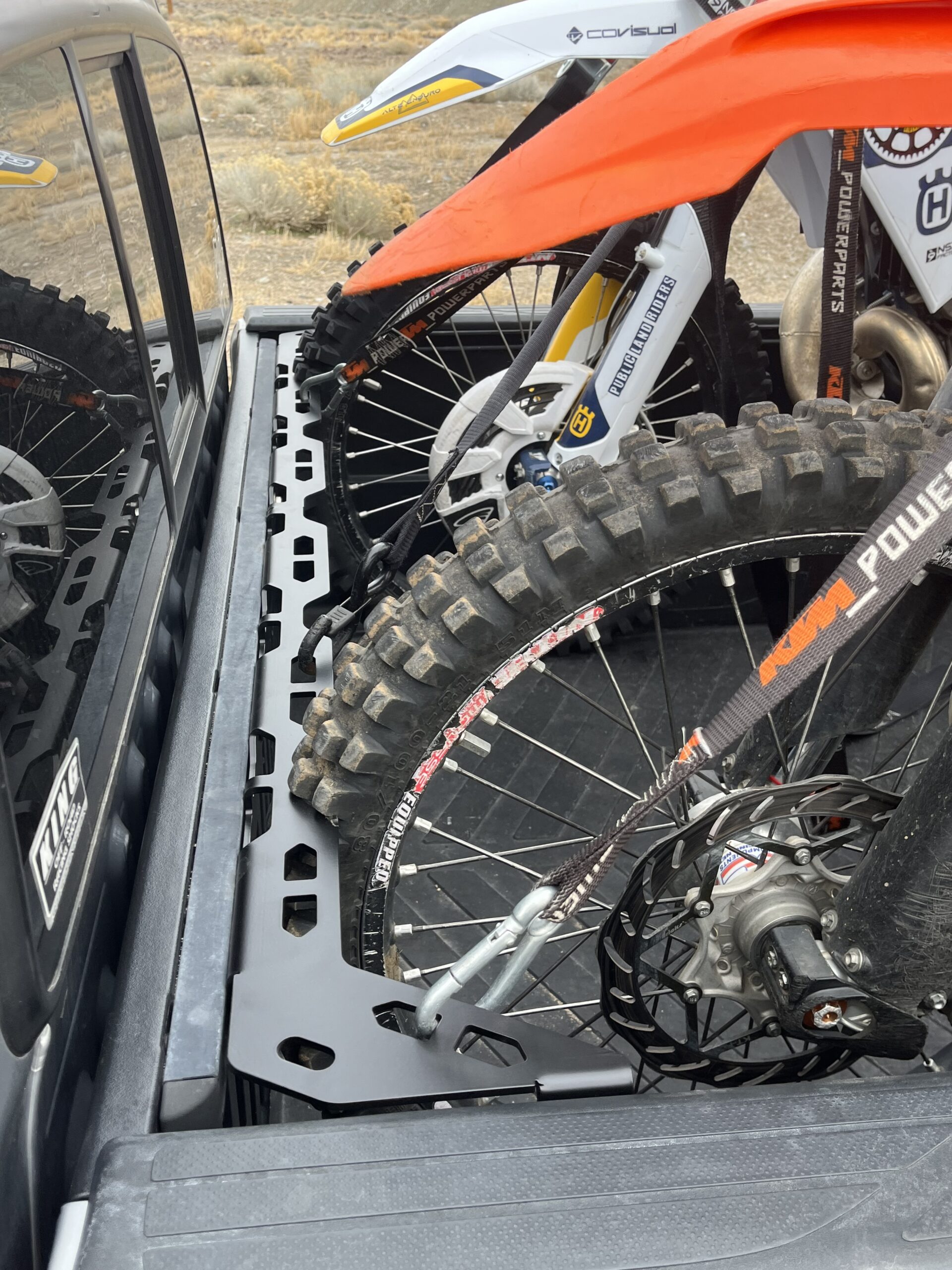
Most trucks have tie-down points in all four corners of the bed. If yours are missing or in poor shape, add sturdy aftermarket anchors.
Credit: athfab.com
Step-by-step: How To Tie Down A Dirt Bike In A Truck Bed
Now, let’s put it all together. Follow these steps for a secure tie-down every time.
1. Position The Bike Straight
Roll your bike forward so the front wheel is against the front wall of the truck bed. A wheel chock or block under the tire helps keep it straight and prevents side-to-side movement.
2. Attach Soft Loops
Loop soft straps around both sides of the lower triple clamp or handlebars. If you’re using the handlebars, place the soft loop just inside the grips to avoid bending them.
3. Connect Tie-down Straps
Hook the tie-down straps to the soft loops, then to the truck’s anchor points in the front corners of the bed. Make sure the straps are not twisted.
4. Compress The Suspension Slightly
Pull the straps tight enough to compress the front suspension about one-third of its travel. This keeps the bike stable without putting too much stress on the forks. Over-compressing can damage your suspension seals.
5. Secure The Rear
For extra stability, attach two more straps from the rear side of the bike (frame, passenger pegs, or swingarm) to the rear tie-down points in the truck bed. These should be snug but not overly tight.
6. Check Everything
Shake the bike gently. If it moves more than an inch or two, tighten the straps. Recheck all hooks and loops.
7. Add A Fork Saver
If you have a fork saver, place it between the front tire and fender before fully tightening the front straps. This helps prevent fork seal damage.
Here’s a visual summary of the tie-down positions:
| Bike Area | Attachment Point | Truck Bed Anchor |
|---|---|---|
| Front Left | Lower Triple Clamp/Handlebar | Front Left Corner |
| Front Right | Lower Triple Clamp/Handlebar | Front Right Corner |
| Rear Left | Frame/Passenger Peg | Rear Left Corner |
| Rear Right | Frame/Passenger Peg | Rear Right Corner |
Common Mistakes And How To Avoid Them
Even experienced riders sometimes make simple errors that can cause expensive problems. Here are the most common, and how to fix them:
- Over-tightening the straps: This can crush your suspension and lead to leaks.
- Loose or old straps: Weak straps can snap, especially after exposure to sun and weather.
- Forgetting to double-check before driving: Always walk around the truck and give each strap a tug before you leave.
- Not using soft loops: Metal hooks against the handlebars can scratch or bend them.
- Relying on only two straps: Four points of contact are much safer, especially for longer trips.
A tip many miss: If you’re parking overnight or in public, lock your bike to the truck with a cable lock. Theft is more common than most people realize.
How To Unload Your Dirt Bike Safely
Many riders focus on loading and forget unloading is just as risky. A dirt bike can tip or roll unexpectedly if you rush.
- Clear the area behind your truck.
- Loosen the rear straps first, then the front. The front keeps the bike upright while you’re working on the rear.
- Have your ramp ready and secure.
- Walk the bike down slowly, keeping a hand on the front brake.
- Get help if needed. It’s easy to lose balance when backing down a ramp alone.
Extra Tips For Different Truck Beds And Bikes
Not every truck or bike is the same. Here’s how to adjust your tie-down method for different setups:
- Short bed trucks: Angle the bike slightly to fit. It’s OK if the rear wheel is near the tailgate—just tie it down well.
- Tall bikes: Lower the tailgate for more room, but always secure the rear wheel.
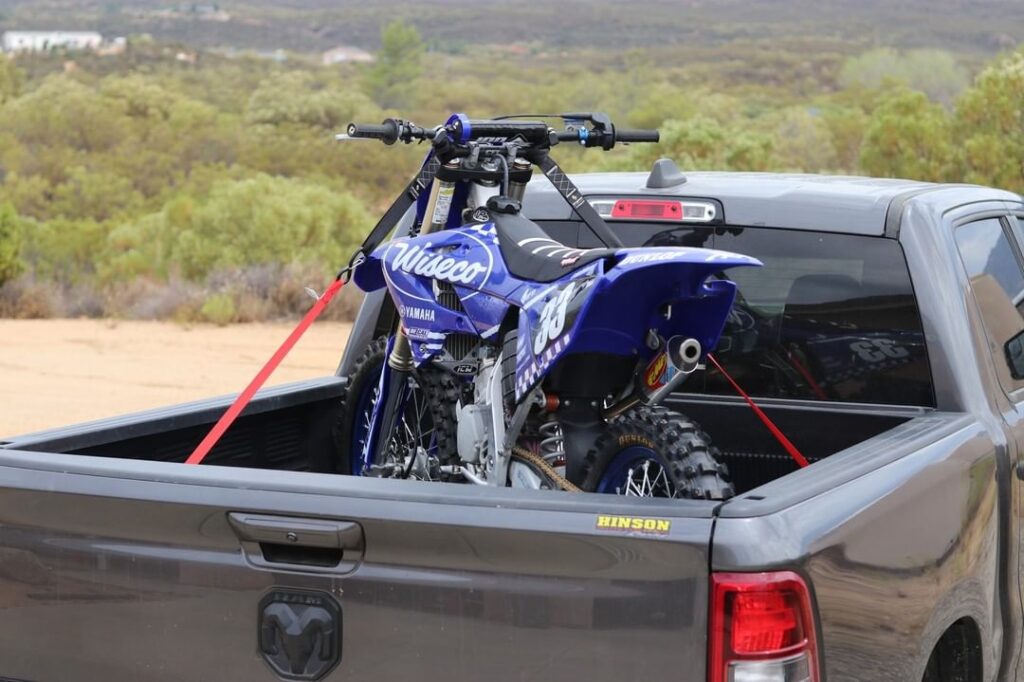
- Hauling two bikes: Place them in opposite corners, front wheels against the front bed wall, with handlebars slightly offset.
- Heavy dual-sport bikes: Use ratchet straps for more holding power.
Here’s a quick comparison of single-bike and two-bike setups:
| Setup | Bike Position | Number of Straps | Notes |
|---|---|---|---|
| Single Bike | Straight or Slightly Angled | 4 | Most Stable |
| Two Bikes | Opposite Corners | 6-8 | Offset Handlebars |
Credit: dliras.us
Maintenance: Keeping Your Tie-down Gear In Good Shape
Your tie-down system is only as strong as its weakest part. Inspect your straps every few trips.
- Look for fraying, cuts, or worn-out stitching.
- Check hooks and ratchets for rust or bending.
- Store straps out of the sun and rain. UV rays weaken the fibers over time.
Replacing a $15 strap is much cheaper than fixing a dropped bike.
Real-world Example: What Happens When You Skip Steps
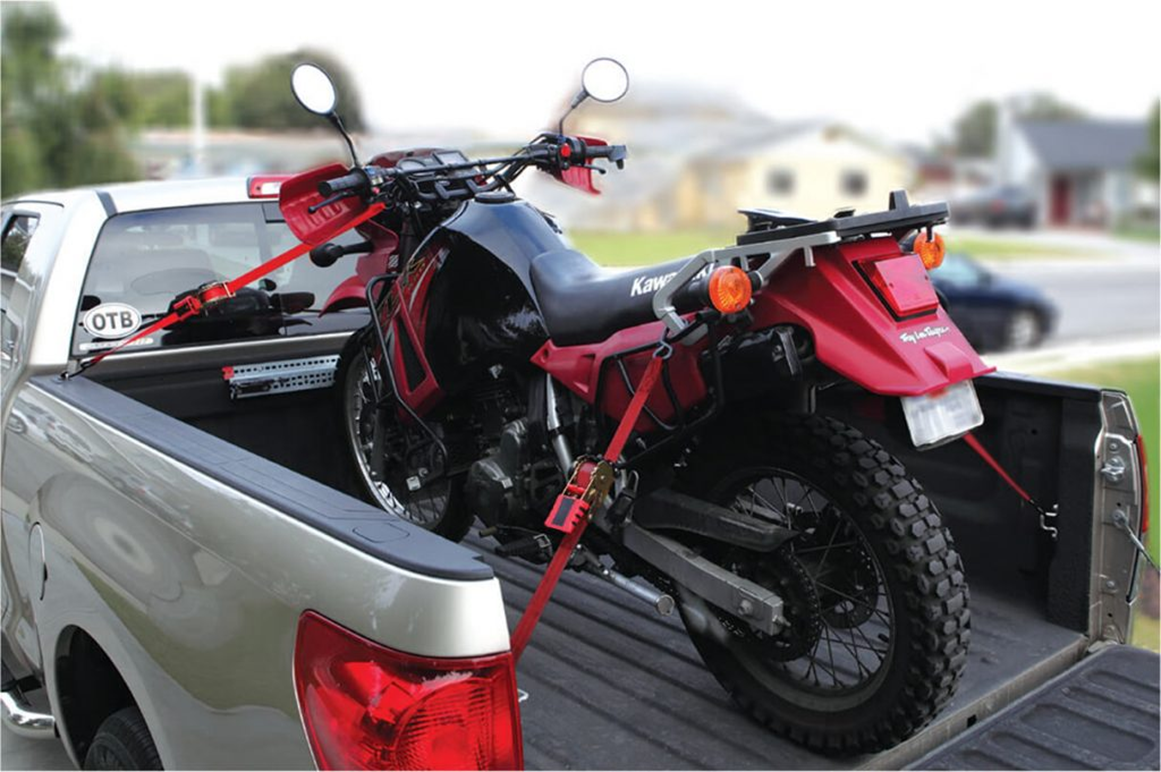
A rider once shared that he skipped soft loops and tied ratchet straps directly to his handlebars. Halfway to the trail, he hit a pothole. The metal hooks bent his handlebars, and the bike came loose, falling against the bed.
The damage cost over $200 to repair. One soft loop would have prevented it.
This kind of real-world mistake is more common than many think. Taking the extra time for each step pays off, especially if you ride often.
Credit: strapinno.com
Safety And Legal Tips
Some states require your load to be “secure” by law. If a dirt bike falls out, you could be liable for damage or injury. Also, never leave straps flapping outside the truck—they can get caught in wheels or fly off and hit other cars.
If you’re unsure about your state’s transport laws, check a reliable source like NHTSA.
Frequently Asked Questions
How Tight Should I Make The Tie-down Straps?
The straps should be tight enough to slightly compress the front suspension (about one-third of its travel). This keeps your bike stable without putting too much stress on the forks. If the bike can rock back and forth, tighten the straps more.
Can I Tie Down A Dirt Bike With Just Two Straps?
It’s not recommended. Two straps might hold the bike for short trips, but for safety, always use four points of contact: two in the front and two in the rear. This prevents the bike from tipping or shifting.
Do I Need A Wheel Chock To Secure My Dirt Bike?
A wheel chock is helpful but not required. It makes the front wheel stay straight and adds stability, especially if you’re driving long distances or over rough roads. If you don’t have one, use a sturdy block or wedge.
Is It Safe To Leave The Tailgate Down While Transporting My Dirt Bike?
Yes, if your bike is too long, you can leave the tailgate down. Just make sure the rear wheel is well-secured and nothing can roll out. Double-check all straps before driving.
What Is A Fork Saver, And Do I Need One?
A fork saver is a plastic or rubber block that sits between your front tire and fender. It prevents your suspension from compressing too much during transport, which protects your fork seals. It’s a smart, inexpensive addition, especially for frequent haulers.
Securing your dirt bike in a truck bed isn’t just about keeping your bike upright—it’s about protecting your ride, your truck, and everyone on the road. With the right tools and method, you’ll travel to your next trail or track with peace of mind, knowing your bike will arrive safe and ready to ride.