Measuring your bike stem may seem simple, but it has a big impact on how your bike feels and handles. If you ever felt uncomfortable on your bike or noticed pain in your shoulders, neck, or hands, your stem size might be the reason.
Knowing how to measure your bike stem is a skill that helps you get the right fit, upgrade your bike, or troubleshoot handling problems. This guide will give you clear steps, tips, and examples to measure your bike stem like a pro, even if you’re not a mechanic.
Why Bike Stem Measurement Matters
The bike stem connects your handlebars to the steerer tube of your fork. Its length, angle, and clamp sizes change how far you reach, your posture, and even how quickly your bike turns. A stem that’s too long or too short can cause discomfort, less control, or even pain during rides. Measuring your stem before buying a new one, or when adjusting your fit, helps you avoid these problems.
Surprisingly, many riders guess their stem size, or rely on what came with their bike. But a few simple measurements can make a huge difference in comfort and performance.
What You Need To Measure A Bike Stem
Before you start, gather these basic tools:
- Tape measure or ruler (metric is best)
- Allen wrenches (to remove the stem if needed)
- Angle finder (optional, for exact angle)
- Notebook or phone (to record numbers)
A tip many miss: double-check your tape measure against a ruler for accuracy. Some tape measures have a worn tip, which can make your measurements slightly off.
Key Measurements Of A Bike Stem
To fully measure a bike stem, focus on these main numbers:
- Stem length
- Clamp diameter (handlebar clamp)
- Steerer tube diameter
- Rise or angle
- Stack height
Each measurement affects your fit and what stems will work with your bike.
How To Measure Stem Length
What Is Stem Length?
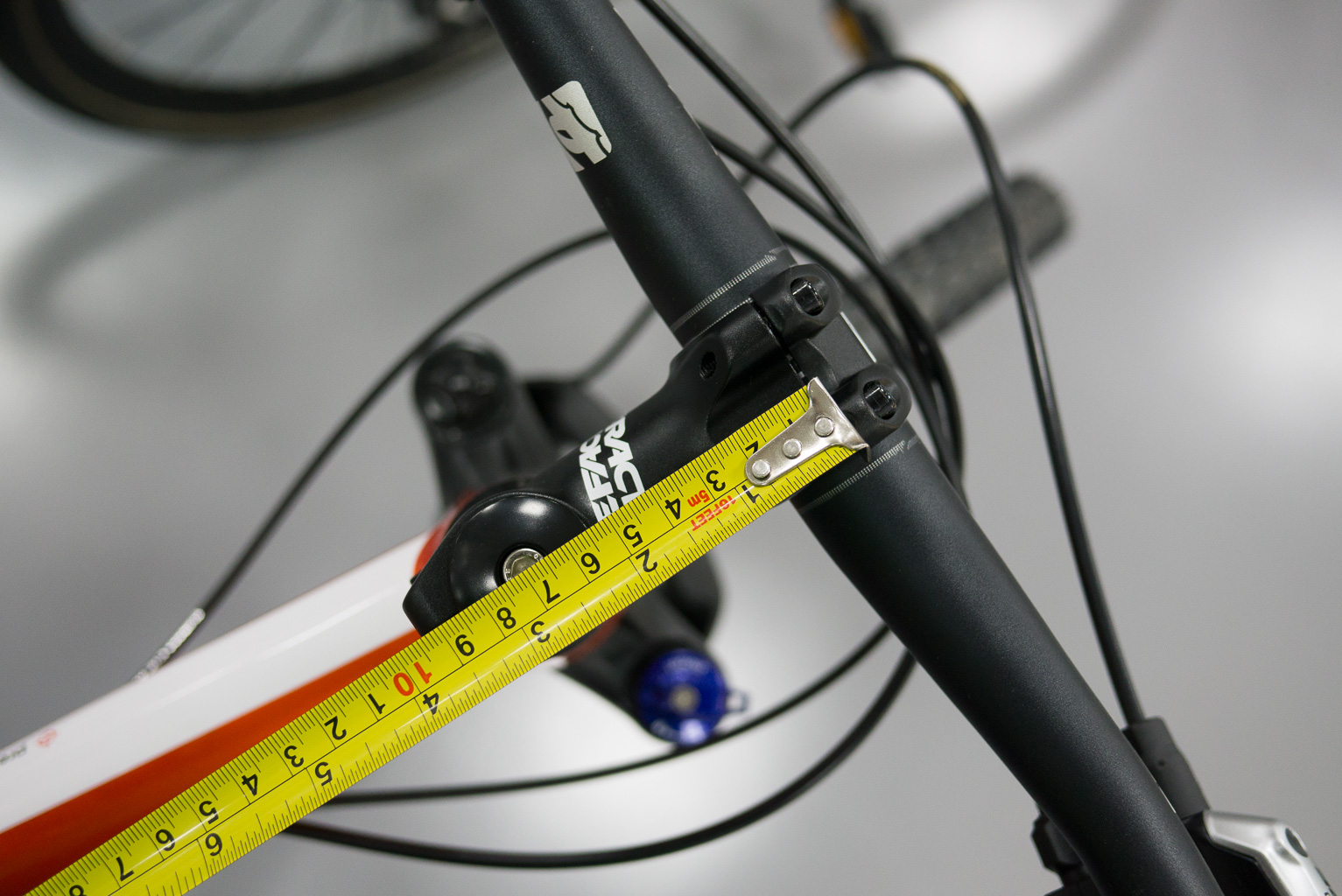
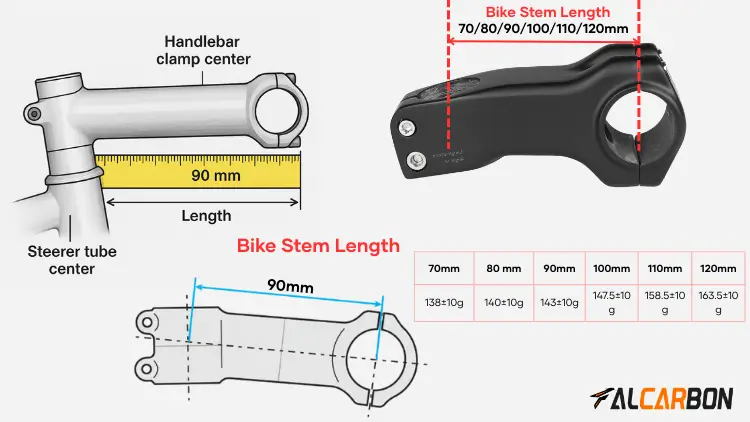
Stem length is the distance from the center of the steerer tube to the center of the handlebar clamp. It’s not the total length of the stem, but the “center-to-center” distance.
Step-by-step Guide
- Leave the stem on the bike (best for accuracy).
- Place your tape measure at the center of the stem bolt (where it clamps to the steerer).
- Stretch the tape to the center of the handlebar clamp bolt.
- Read the measurement in millimeters (e.g., 90mm, 100mm, 120mm).
Most road bikes use stems from 80mm to 130mm. Mountain bikes usually have shorter stems, around 40mm to 90mm.
Pro Tip
Don’t measure along the top or bottom of the stem. Always measure in a straight line from center to center, or your number will be too long.
Common Mistake
People often measure “end to end” (from the back of the stem to the front), which adds extra millimeters and gives the wrong fit.
How To Measure Clamp Diameter
Handlebar Clamp Diameter
This is the width of the area where your stem holds the handlebars. The two most common sizes are:
- 25.4mm (older bikes)
- 31.8mm (modern bikes)
To measure:
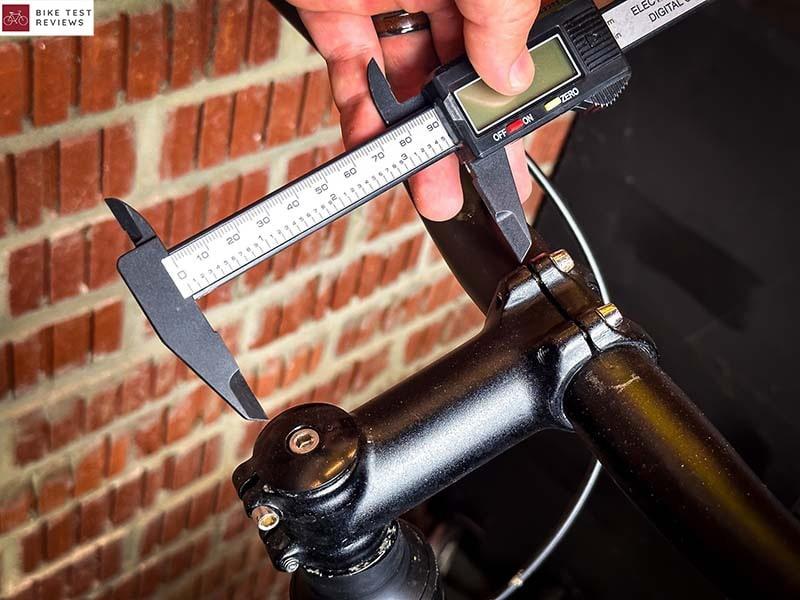
- Remove the faceplate (front part) of the stem with an Allen wrench.
- Use your ruler or caliper to measure the inside diameter of the clamp.
If you see 26.0mm, you likely have a vintage road bike. 31.8mm is standard for most bikes made after 2000.
Steerer Tube Clamp Diameter
This is the size of the hole where your stem slides onto the fork’s steerer tube. Common sizes:
- 1 inch (25.4mm) – old bikes
- 1 1/8 inch (28.6mm) – most modern bikes
Measure the inside diameter of the stem clamp. Or, look at the markings on your old stem for “25.4” or “28.6”.
Quick Comparison
Here’s a table to see common clamp sizes and which bikes they fit:
| Clamp Area | Common Sizes (mm) | Typical Bikes |
|---|---|---|
| Handlebar Clamp | 25.4, 26.0, 31.8 | MTB, vintage, modern road |
| Steerer Tube | 25.4, 28.6 | Older, modern bikes |
How To Measure Stem Angle (rise)
The stem angle is the tilt of the stem, measured in degrees from the fork steerer tube. Most stems are labeled with their angle, like 6°, 10°, 17°, etc.
Measuring The Angle
- If the angle is not printed, use an angle finder (inexpensive tool from hardware stores).
- Place the angle finder along the stem’s top surface.
- Read the degree number from horizontal.
A higher angle means a more upright position. A lower angle (like -10°) means a lower, more “aero” position.
Example
If your current stem is labeled “100mm x 6°”, it is 100mm long, with a 6-degree rise.
Credit: www.merlincycles.com
How To Measure Stack Height
Stack height is the vertical space the stem takes up on the steerer tube. It matters if you’re swapping stems or cutting your steerer tube.
To measure:
- Remove the stem (if possible).
- Measure the height of the steerer clamp from bottom to top.
Most stems have a stack height of 35mm to 45mm.
How To Remove And Measure An Off-bike Stem
Sometimes, it’s easier to remove the stem for exact measuring.
- Use the correct Allen wrench to loosen the steerer clamp bolts.
- Gently slide the stem off the fork.
- Remove the handlebar clamp bolts and handlebars.
Now, you can measure the length, clamp diameters, angle, and stack height directly.
Visualizing Stem Measurements
Here’s a simple comparison of two common road bike stems:
| Stem Model | Length (mm) | Angle (°) | Clamp Diameter (mm) | Stack Height (mm) |
|---|---|---|---|---|
| Road Stem A | 100 | 6 | 31.8 | 40 |
| Road Stem B | 120 | 17 | 31.8 | 42 |
Notice how length and angle change the fit and handling.
Additional Tips For Accurate Measurement
- Clean your stem before measuring. Dirt can hide numbers or affect where you measure from.
- If you’re unsure about the clamp size, measure both the stem and the handlebars.
- Always measure at the center points, not the edges, for the most accurate numbers.
- Write down all numbers before shopping or asking for advice.
Many beginners forget to check the stack height and end up with a stem that won’t fit their steerer tube spacers.
How Stem Length And Angle Affect Your Ride
The numbers you measure aren’t just for matching parts—they impact how your bike feels:
- Longer stems give a more stretched-out position, good for speed but harder for sharp turns.
- Shorter stems make steering quicker and are common on mountain bikes.
- Higher angles raise your handlebars, making the ride more comfortable.
- Lower angles put you in a more aggressive, racing position.
A common beginner mistake is only changing the stem length, not the angle, and ending up with a bike that fits worse.
Measuring Different Types Of Bike Stems
There are two main types of stems:
- Threadless stems (most modern bikes): Clamp onto the outside of the steerer tube.
- Quill stems (older bikes): Slide inside the steerer tube.
How To Measure A Threadless Stem
- Follow the steps above: Length, both clamp diameters, angle, stack height.
How To Measure A Quill Stem
- Measure the insert diameter (usually 22.2mm for 1-inch forks).
- Measure the extension length (center of quill to center of handlebar clamp).
- Measure the quill length (how far it can go into the fork).
If you’re not sure which you have, threadless stems have a cap on top, while quill stems have a bolt down the middle.
When To Replace Your Stem
You should consider a new stem if:
- You feel stretched out or cramped on your bike.
- You experience hand, neck, or back pain.
- You want sharper or more stable steering.
- Your current stem is damaged or rusted.
Changing your stem is one of the cheapest ways to improve your bike’s comfort and handling.
Real-world Example
Anna rides a modern road bike with a 120mm stem. She feels too stretched and has neck pain. She measures her stem (120mm, 6°), then tries a 100mm, 10° stem. The shorter length and higher angle let her sit more upright, and her pain disappears.
This shows how a simple measurement and small change can transform your riding experience.
Credit: www.chispafest.com
Common Problems And How To Avoid Them
- Wrong clamp size: Always measure both the stem and the handlebars/steerer tube.
- Mismatched angle and length: Check both, not just one.
- Stack height too tall/short: If the new stem’s stack height is different, you may need to add or remove spacers.
- Mixing road and MTB parts: Road and mountain bikes often use different sizes—always measure.
Popular Stem Sizes And What They Fit
| Bike Type | Typical Stem Length (mm) | Clamp Diameter (mm) |
|---|---|---|
| Road | 90-130 | 31.8 |
| Mountain (modern) | 40-80 | 31.8 |
| Hybrid/City | 70-110 | 25.4/31.8 |
| Vintage Road | 90-120 | 25.4/26.0 |
If your numbers don’t match these ranges, double-check your measuring method.
Extra Insights Most Beginners Miss
- Always check reach and drop (how far you have to reach and how low you must go) together with stem length for the best fit.
- If you change your stem by more than 20mm, you may need to adjust your handlebar height or cable length.
- Some stems are “flip-flop”—you can install them upside down for a different angle.
Where To Find More Information
If you want deeper details or bike fitting advice, check resources like Wikipedia’s bike stem page for technical info.
Credit: streetphotographersfoundation.com
Frequently Asked Questions
How Do I Know If My Stem Is Too Long Or Too Short?
If you feel over-stretched, get hand numbness, or have neck/shoulder pain, your stem is probably too long. If your steering feels twitchy or you feel cramped, it may be too short. Try different sizes and see what feels best.
Can I Measure The Stem Without Removing It From The Bike?
Yes, you can measure length and angle without removing the stem. For clamp diameters, you may need to remove the faceplate or loosen the stem.
Is It Ok To Use A Different Brand Stem Than My Handlebars?
Yes, as long as the clamp diameters match exactly. Mixing brands is fine, but always double-check the numbers.
Do All Bikes Use The Same Stem Size?
No. Road, mountain, hybrid, and vintage bikes often have different sizes. Always measure your specific bike before buying a new stem.
What Happens If My Stem’s Stack Height Is Too Tall Or Too Short?
If the stem is too tall, you may not be able to fit all spacers or tighten the top cap. If it’s too short, there may be play in the headset. Always match or adjust spacers as needed.
Choosing the right stem makes your bike feel like it was made for you. It takes just a few careful measurements, but the reward is a ride that’s comfortable, fast, and fun every time.