E-bikes are changing the way people move around cities, commute to work, and enjoy the outdoors. One of the first questions new riders ask is: How long do e-bikes last on a charge? The answer is not as simple as a single number. Range depends on many factors, like battery size, riding style, terrain, and even the weather. Understanding these details helps you get the most from your e-bike and avoid surprises on your ride.
In this guide, you’ll find clear explanations, real-world examples, and tips from experienced riders. If you’re thinking about buying an e-bike, or you already own one, this article will help you plan your trips with confidence.
What Is E-bike Range?
When people talk about e-bike range, they mean how far the bike can travel on one battery charge. Most e-bikes today advertise a range between 20 and 100 miles (32 to 160 km), but these numbers often assume ideal conditions. In real life, your results can be higher or lower.
Range is affected by both the bike’s specifications and how you use it. For example, riding up hills or using maximum motor power will reduce the distance you can go before recharging.
Key Factors That Affect E-bike Range
Many new e-bike owners expect to get the maximum advertised range every time they ride. In reality, several important factors play a role. Here’s what really matters:
1. Battery Capacity
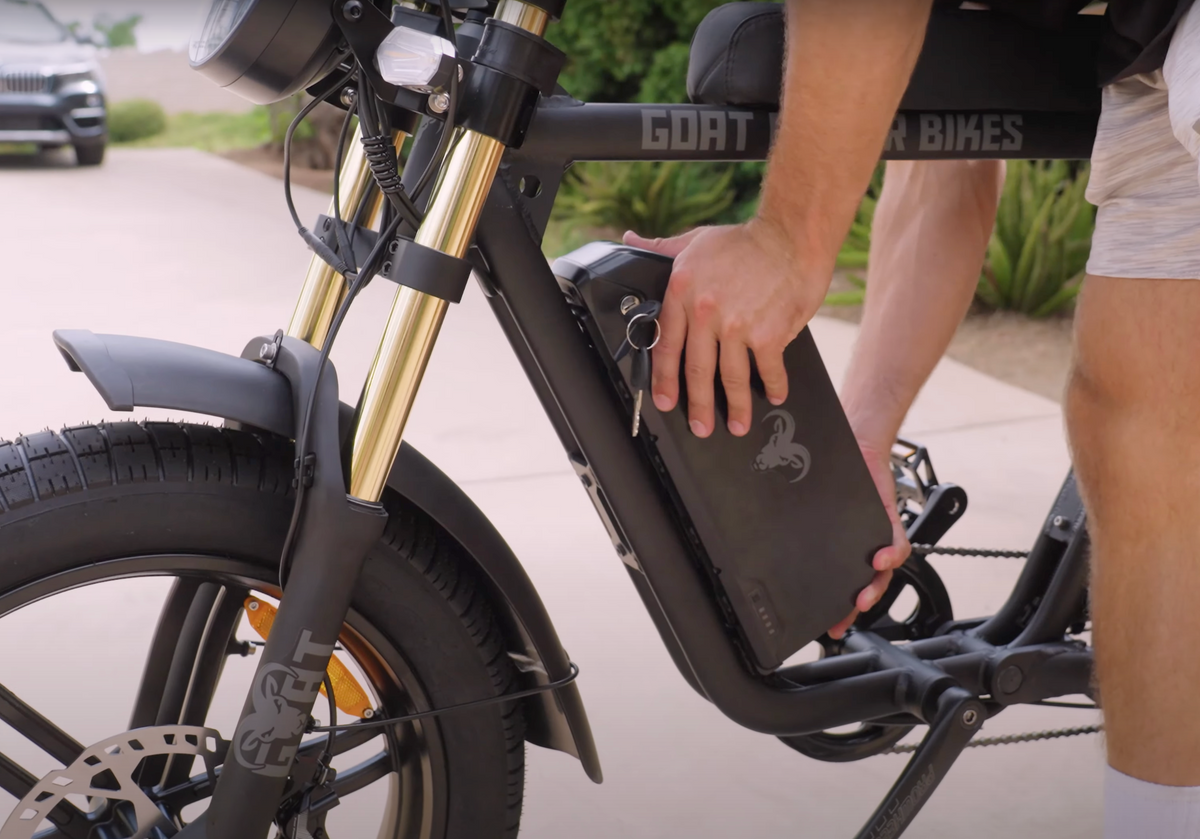
The battery is the heart of any e-bike. Most e-bikes use lithium-ion batteries measured in watt-hours (Wh). The higher the watt-hour rating, the more energy the battery can store.
- Common sizes: 250Wh, 400Wh, 500Wh, 700Wh, and even 1,000Wh for high-end models.
- Typical range: A 500Wh battery might give you about 25–50 miles (40–80 km), depending on other conditions.
2. Motor Power And Efficiency
E-bikes come with different motor sizes, usually from 250W to 750W. Higher power motors can help you accelerate faster or climb steeper hills, but they also use more energy.
- Efficient motors can stretch your range, especially if you’re riding on flat roads.
- Powerful motors are fun but will drain the battery more quickly if you use them at full strength.
3. Rider Weight And Load
The total weight the motor must move—your body, the bike, and any cargo—affects range.
- Heavier loads mean the motor works harder, using more battery power.
- For example, a rider weighing 220 lbs (100 kg) will get less range than someone weighing 150 lbs (68 kg) on the same e-bike.
4. Terrain And Elevation
If your route includes a lot of hills or rough terrain, your e-bike will use more energy.
- Flat roads maximize range.
- Steep climbs or off-road riding can cut your range in half or more.
5. Pedal Assist Vs. Throttle
E-bikes usually have pedal assist (the motor helps when you pedal) and sometimes a throttle (the motor moves the bike without pedaling).
- Pedal assist conserves battery since you share the work.
- Throttle riding, especially at full power, will drain the battery much faster.
6. Speed
The faster you go, the more wind resistance you face.
- Riding at 15 mph (24 km/h) might use half as much energy as riding at 25 mph (40 km/h).
- Lower speeds usually mean longer range.
7. Tire Pressure And Type
Many riders forget that tire pressure affects efficiency.
- Properly inflated tires roll with less resistance.
- Fat tires or underinflated tires can reduce your range.
8. Weather Conditions
- Cold weather can reduce battery performance by 10–20%.
- Strong headwinds will make the motor work harder, decreasing range.
9. Battery Age And Care
Batteries lose capacity over time.
- After 500–1,000 charge cycles, most lithium-ion batteries will hold less energy.
- Storing your battery in extreme temperatures can shorten its life.
Credit: www.goatpowerbikes.com
Typical E-bike Range Examples
Let’s look at how the factors above combine in real-life situations:
| Scenario | Battery Size | Expected Range | Notes |
|---|---|---|---|
| City commute, flat roads, light rider | 500Wh | 40–60 miles (64–96 km) | Moderate pedal assist, steady pace |
| Hilly countryside, heavy rider | 500Wh | 20–35 miles (32–56 km) | Frequent climbs, more motor use |
| Throttle only, high speed | 500Wh | 15–25 miles (24–40 km) | No pedaling, max motor output |
| Eco mode, mixed terrain | 700Wh | 60–90 miles (96–145 km) | Low assist, regular pedaling |
As you can see, range can double or drop by half just by changing how and where you ride.
How To Calculate Your E-bike’s Range
While manufacturer numbers are helpful, you can estimate your own range with a simple formula:
Range (miles) = Battery capacity (Wh) / Average consumption (Wh per mile)
- Most e-bikes use 15–25 Wh per mile depending on conditions.
- Example: A 500Wh battery / 20 Wh per mile = 25 miles (40 km).
But remember, real-world range often differs from calculations. Wind, stops, and hills add up.

Credit: arielrider.com
Comparing E-bike Ranges By Category
Not all e-bikes are created equal. Here’s how different types compare:
| E-Bike Type | Typical Battery (Wh) | Average Range (miles) |
|---|---|---|
| City/commuter | 400–600 | 25–50 |
| Folding | 250–500 | 15–35 |
| Mountain | 500–700 | 20–40 |
| Cargo | 500–1,000+ | 20–60 |
| Road/touring | 500–700 | 40–100 |
City e-bikes are usually more efficient, while mountain and cargo bikes trade some range for extra power and load capacity.
How To Extend Your E-bike Range
Worried about running out of power? These strategies help you ride farther on each charge:
- Use lower assist levels when possible. Eco or low settings stretch your range.
- Pedal more, especially on hills. The motor uses the most energy when climbing.
- Keep your tires properly inflated. Check pressure every week.
- Travel at moderate speeds. Slower riding reduces wind resistance.
- Reduce weight. Leave heavy items at home unless needed.
- Plan your route. Choose flatter roads and avoid constant stops.
- Charge your battery fully before each long ride.
- Avoid using the throttle for the entire trip.
- Maintain your e-bike. A well-oiled chain and working gears make a big difference.
- Keep your battery at room temperature. Cold batteries perform worse.
Non-obvious Insights
Many riders don’t realize that frequent short trips with lots of stops (like city errands) can drain the battery faster than one long, steady ride. Also, regenerative braking (when available) adds only a small amount of range—usually less than 10%. It’s helpful, but not a substitute for good planning.
Charging Times And Range Anxiety
Most e-bike batteries take 3–6 hours to fully charge from empty. Some high-end models offer fast charging, reaching 80% in under two hours.
Range anxiety—the worry about running out of power—is common for new e-bike owners. The best way to avoid it is by learning your personal range through experience and always starting with a full battery for longer trips.
If you often push the limits of your range, consider buying a spare battery or a model with a larger capacity.
How Long Does An E-bike Battery Last?
E-bike batteries don’t last forever. Most modern lithium-ion batteries survive 500–1,000 full charge cycles before dropping below 70–80% of their original capacity.
- If you charge every few days, your battery can last 3–5 years.
- Proper care—like avoiding full discharges and not exposing the battery to extreme heat or cold—will extend its life.

Credit: www.heybike.com
Real-world Range Stories
Experienced e-bike owners often discover their own “true range” after a few weeks.
For example, Maria commutes 10 miles (16 km) each way on her city e-bike with a 400Wh battery. She uses moderate pedal assist, rides mostly on flat roads, and weighs 130 lbs (59 kg). She consistently gets about 40 miles (64 km) per charge, enough for two days of commuting.
In contrast, Jamal rides a cargo e-bike loaded with groceries and a child. His route includes hills, and he uses a higher assist level. With a 750Wh battery, he averages just 25 miles (40 km) per charge, but the extra power is essential for his needs.
These examples show why range is personal. Testing your own e-bike, with your habits and routes, is the best way to learn what to expect.
Future Trends In E-bike Range
Battery technology is improving every year. Newer batteries offer more capacity in the same size and weight. Some e-bikes now feature dual battery systems, allowing ranges of over 100 miles (160 km).
In the coming years, expect:
- Faster charging times
- Longer-lasting batteries
- More efficient motors
- Better range estimates from smart displays and apps
You can check recent battery breakthroughs and trends at resources like Wikipedia.
Frequently Asked Questions
How Can I Increase My E-bike’s Range Without Buying A New Battery?
Lower your assist level, pedal more, keep your tires inflated, reduce extra weight, and ride at moderate speeds. Regular maintenance also helps your e-bike run more efficiently.
Is It Bad To Charge My E-bike Battery Every Day?
No, it’s safe to charge daily. Modern lithium-ion batteries are designed for frequent charging. It’s better to keep your battery topped up than to let it run completely empty.
What Happens If My E-bike Runs Out Of Battery During A Ride?
You can still pedal your e-bike like a regular bicycle. It will feel heavier, especially on hills, but you won’t be stranded. Plan ahead for longer trips to avoid surprises.
Does Using Lights Or Accessories Affect My E-bike’s Range?
Yes, using built-in lights, displays, or other powered accessories will use a small amount of battery. For most riders, the impact is minor—usually less than 5% of total range.
Can I Bring A Spare Battery On Long Trips?
Absolutely. Many riders carry a spare battery for longer rides. Just make sure it’s compatible and safely stored. Swapping batteries is quick and extends your range.
E-bikes offer freedom and flexibility, but knowing your real range is essential for an enjoyable ride. By understanding the factors that affect battery life, you can travel farther, worry less, and make the most of every journey.