Cycling is more than just pushing pedals and feeling the wind in your face. Every ride relies on a simple, often overlooked part: the bike chain. Many riders wonder, “How long do bike chains last?” The answer is not as straightforward as you might think. Chain lifespan depends on many things, from how often you ride to how well you care for your bike. If you want smooth rides, fewer repairs, and a longer-lasting bike, understanding your chain’s life is essential.
Let’s break down what affects chain durability, how to recognize wear, maintenance tips, and the real numbers behind chain replacement. Whether you’re a daily commuter or weekend warrior, you’ll find practical advice to keep your bike in top shape.
What Is The Average Lifespan Of A Bike Chain?
Most cyclists want a single number: how many miles or kilometers does a bike chain last? On average, a bike chain lasts between 2,000 to 3,000 miles (3,200 to 4,800 kilometers) under normal conditions. However, this range is just a guideline. Some riders get less than 1,500 miles, while others reach over 4,000 miles with careful maintenance.
The main reason for this variation? Chains wear out due to stretching, dirt, weather, riding style, and even the type of bike you use. Road bikes, mountain bikes, and e-bikes all put different demands on their chains.
To help you see the difference, consider this comparison:
| Bike Type | Expected Chain Life (miles) | Typical Conditions |
|---|---|---|
| Road Bike | 2,500 – 3,500 | Clean, paved roads |
| Mountain Bike | 1,500 – 2,500 | Mud, dust, frequent shifts |
| Commuter Bike | 2,000 – 3,000 | Urban, mixed weather |
| E-bike | 1,000 – 2,000 | High torque, extra load |
This table shows the range you can expect. Remember, these numbers assume regular cleaning and lubrication. Neglect your chain, and it won’t last nearly as long.
Key Factors That Affect Chain Lifespan
No two cyclists treat their bikes exactly the same. Several factors play a major role in how long your chain will last.
1. Riding Style And Frequency
Aggressive riders who accelerate hard or shift gears under heavy load wear chains faster. If you ride daily, especially in hilly areas or off-road, your chain will show signs of wear sooner than someone who rides only on weekends.
2. Maintenance Habits
A well-maintained chain will easily outlast a neglected one. Removing dirt, applying the correct lubricant, and checking for stretch are simple steps that extend chain life. Many beginners miss that skipping just a few cleanings can cut chain life in half.
3. Weather And Road Conditions
Wet, muddy, or dusty environments are tough on chains. Rain washes away lube, while dirt acts like sandpaper. Riding in winter or on salted roads can also cause rust and speed up wear.
4. Chain Quality And Type
Not all chains are made equal. High-end chains often use better materials and coatings, lasting longer. For example, a nickel-plated chain can resist rust much better than a basic steel one.
5. Gear Count
Chains for bikes with more gears (like 11 or 12-speed drivetrains) are usually narrower and may wear out a bit faster. The closer spacing between gears means more precise shifting but also more friction.
6. Power Output
E-bikes and strong riders put extra force on the chain, which means more stress and faster wear. If you ride an electric bike, expect to replace your chain more often.
How To Tell When Your Bike Chain Needs Replacement
You don’t need to guess when your chain is worn out. There are clear signs and simple tools to help.
Chain Stretch
Chains don’t actually “stretch” but the pins and rollers wear, making the chain longer. This causes poor shifting and can damage your cassette and chainrings.
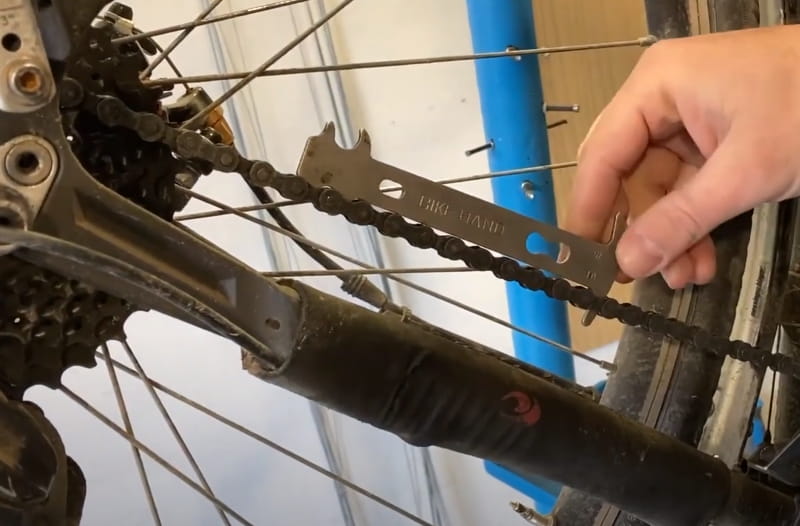
A chain checker tool is the easiest way to measure wear. Most have 0.5% and 0.75% markers:
- For road bikes, replace the chain when it reaches 0.75% wear.
- For mountain bikes, replace at 0.5% to avoid damaging expensive parts.
Visual Signs
- Rust and stiff links: If you see orange rust or links that don’t bend smoothly, your chain needs attention.
- Noisy shifting: Clicking or grinding noises when you shift usually means the chain is worn or dirty.
- Chain slipping: If the chain skips over the gears, especially under load, it’s likely too stretched.
Measuring With A Ruler
If you don’t have a chain checker, use a ruler. Place the zero mark at the center of one pin. The 12-inch mark should land exactly on another pin. If it’s more than 1/16 inch past, your chain is worn.
Why Replacing A Worn Chain Matters
Replacing your chain on time is not just about smoother rides. It saves money in the long run.
A stretched chain wears out your cassette and chainrings much faster. These parts cost much more than a new chain. Letting the chain go too long can mean replacing your whole drivetrain.
For example, a new chain costs $15–$50, but a new cassette and chainrings can easily cost $100–$300 or more. This is why mechanics say, “It’s cheaper to replace the chain than the cassette. ”

Credit: macfoxbike.com
How To Make Your Bike Chain Last Longer
You can’t make a chain last forever, but you can get the most out of it with good habits.
1. Clean Regularly
Dirt and grit grind away at your chain. Wipe the chain with a rag after every ride, especially in wet or dirty conditions. Every few weeks, give it a deeper clean with a degreaser.
2. Lubricate Correctly
Apply chain lube only to the inside of the links, wipe off excess, and let it dry. Too much lube attracts dirt, while too little causes friction.
There are two main types:
- Dry lube: Best for dry, dusty conditions. Needs reapplication after wet rides.
- Wet lube: Stays on in rain and mud but attracts more dirt.
3. Avoid Cross-chaining
Riding in the big chainring and big cog, or small chainring and small cog, puts your chain at a bad angle, causing extra wear. Shift to keep the chain as straight as possible.
4. Shift Gears Smoothly
Don’t shift under full power, especially going uphill. Ease off the pedals slightly as you shift to reduce stress on the chain.
5. Replace Before It’s Too Late
Check your chain every 500 miles or so. Replacing it early costs less and protects other parts. Many riders make the mistake of waiting until the chain fails—by then, it’s too late.
Real-world Examples: Chain Lifespan In Practice
Let’s look at two riders:
- Anna commutes 10 miles daily on city roads, cleans her chain weekly, and uses dry lube. Her chain lasted about 3,200 miles before needing replacement.
- Ben rides mountain trails twice a week, rarely cleans his chain, and rides in all weather. His chain showed skipping at 1,800 miles, and he needed a new cassette too.
This shows that care and conditions matter as much as mileage.

Credit: www.youtube.com
Common Mistakes That Shorten Chain Life
Beginners often make the following errors:
- Ignoring chain cleaning: Even a little dirt can speed up wear.
- Using the wrong lubricant: Motor oil or WD-40 is not for bike chains.
- Over-lubricating: Too much lube is as bad as too little. It attracts grit.
- Not checking for wear: Waiting until the chain breaks can damage the whole drivetrain.
- Riding in harsh conditions without care: Mud and rain demand extra cleaning.
Avoiding these mistakes can easily add 500–1,000 miles to your chain’s life.
How Does Chain Wear Compare To Other Bike Parts?
It’s helpful to see how a chain’s lifespan stacks up against other key parts. Here’s a simple comparison:
| Part | Average Lifespan (miles) | Typical Replacement Cost ($) |
|---|---|---|
| Chain | 2,000–3,000 | 15–50 |
| Cassette | 4,000–6,000 | 30–100 |
| Chainrings | 6,000–10,000 | 40–200 |
| Brake Pads | 1,000–2,000 | 10–30 |
Replacing the chain is the cheapest way to keep your bike running smoothly and avoid costly repairs.
Upgrading Or Changing Your Chain
Sometimes you may want to upgrade your chain to a higher-quality model or try a different brand. If you do, always make sure:
- The new chain matches your bike’s gear count.
- The chain is the right length (you may need to remove links).
- It is compatible with your cassette and chainrings.
Quality chains often have better coatings (like Teflon or nickel) for smoother shifts and longer life, but they cost more upfront.
Should You Consider A Chain Checker Tool?
A chain checker is a small, inexpensive tool that saves money. It quickly tells you if your chain has reached the replacement point. Using one every month or so makes chain care almost effortless. Many riders skip this tool, but it often pays for itself by helping you avoid cassette or chainring damage.
Credit: bike.bikegremlin.com
Is Chain Waxing Worth It?
Some cyclists use hot wax instead of liquid lubes. Waxing can keep the chain very clean and extend its life, but it takes more effort and time. For most riders, regular cleaning and proper lubrication are enough. Waxing makes the most sense for racers or those riding in very dirty conditions.
Environmental Impact Of Chain Replacement
Every chain you replace has a small environmental footprint. Some brands now offer recycling programs for old chains. If you want to reduce waste, ask your local shop or check with chain manufacturers about recycling options.
Frequently Asked Questions
How Often Should I Check My Bike Chain For Wear?
Check your chain every 500 miles (800 km), or at least once a month if you ride often. Use a chain checker for best results.
Can A Rusty Chain Be Saved, Or Should I Replace It?
Light surface rust can be removed with cleaning and lubrication. If the rust is deep or links are stiff, replace the chain to avoid damaging other parts.
Will Using A High-end Chain Make A Big Difference?
High-end chains often last longer and shift more smoothly, but regular cleaning matters more. Even the best chain wears out quickly if neglected.
Is It Safe To Ride With A Worn Chain?
Riding with a worn chain can lead to poor shifting, chain breaks, and damage to your cassette and chainrings. Replace the chain before it reaches 0. 75% wear.
Are There Any Resources For More Technical Details?
For those who want in-depth technical data on chains, check out Wikipedia’s Bicycle Chain page.
Taking care of your bike chain is one of the smartest habits for any cyclist. With a little attention, you’ll ride farther, spend less, and enjoy smoother journeys every time.