Mountain biking pushes both rider and equipment to the limit. One of the most important parts of your bike is the tires—they connect you to the trail, affect control, and impact your safety. Many riders wonder, “How long do mountain bike tires last?” The answer is not simple, but understanding the factors can help you get the best performance and value from your tires. This article explains everything you need to know about mountain bike tire lifespan, signs of wear, maintenance tips, and when to replace them.
What Affects Mountain Bike Tire Lifespan?
Several key elements control how long your tires will last. No two riders or trails are the same, and tire life depends on a mix of:
1. Tire Type And Compound
Softer rubber compounds give better grip but wear faster. Harder compounds last longer but may not perform as well on technical trails. For example, downhill tires often wear out faster due to soft rubber.
2. Riding Style
Aggressive riding with sharp turns, jumps, and slides will wear tires faster than smooth, cautious riding. Riders who brake hard or skid often see more rapid tread loss.
3. Trail Conditions
Rocky, root-filled, or abrasive trails will eat away at rubber much faster than soft forest paths. Sandy or muddy trails are gentler, but can still wear tires if there’s a lot of debris.
4. Tire Pressure
Running too low or too high pressure can cause uneven wear. Low pressure increases sidewall wear, while high pressure can cause the center tread to wear faster.
5. Rider Weight And Bike Load
Heavier riders and bikes carry more force, pressing tires harder against the ground and causing faster wear.
6. Maintenance Habits
Regular cleaning, rotation (if possible), and checking for proper inflation all help extend tire life.
Realistic Mileage Expectations
While it’s hard to give a single number, most mountain bike tires last between 1,000 and 3,000 miles (1,600 to 4,800 km). Lightweight XC tires may only last 800–1,200 miles, while tough downhill or enduro tires can sometimes reach 2,500 miles if used gently. Few tires survive beyond 3,500 miles of regular off-road use.
Let’s compare some general estimates:
| Tire Type | Expected Lifespan (miles) | Typical Use Case |
|---|---|---|
| Cross-Country (XC) | 800–1,200 | Lightweight, fast-rolling |
| Trail/All-Mountain | 1,200–2,500 | Mix of durability and grip |
| Downhill/Enduro | 1,000–2,000 | Soft rubber, aggressive riding |
Signs Your Mountain Bike Tires Need Replacing
Tires do not last forever—even if they look “ok” at a glance. Here are the most common warning signs your tires are past their best:
1. Worn Tread
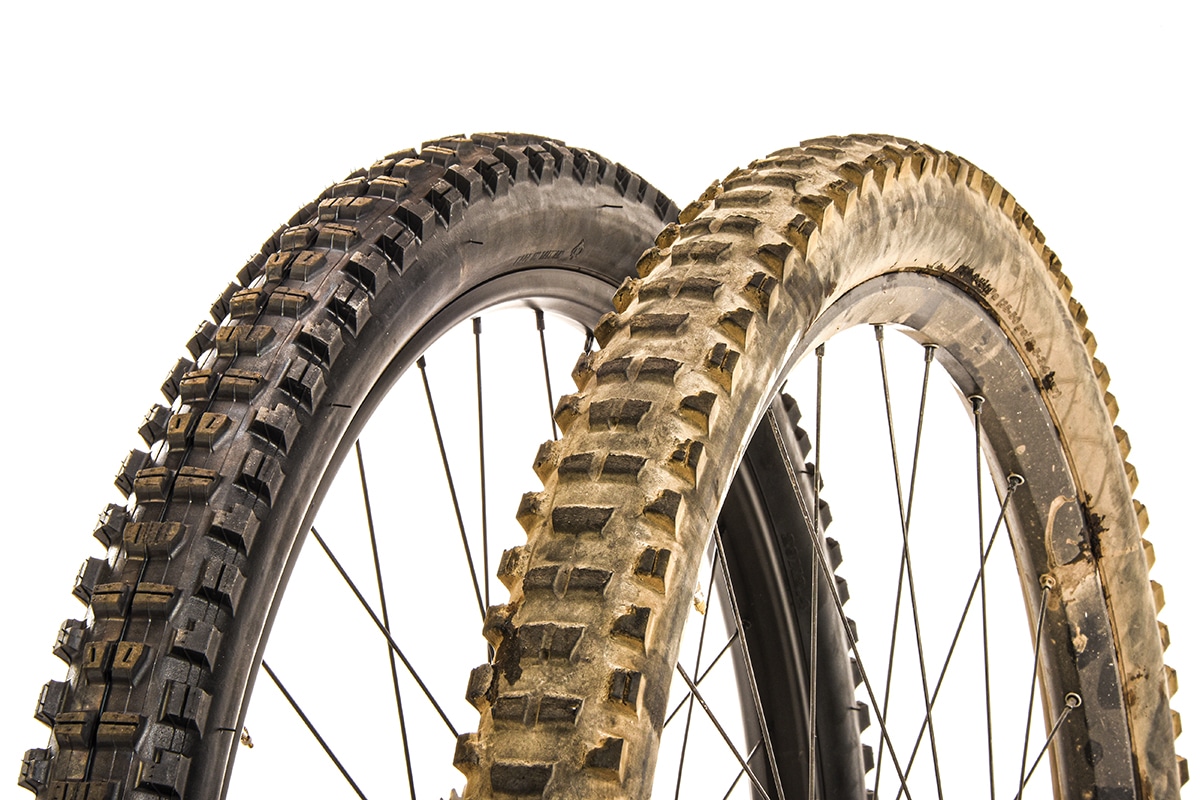
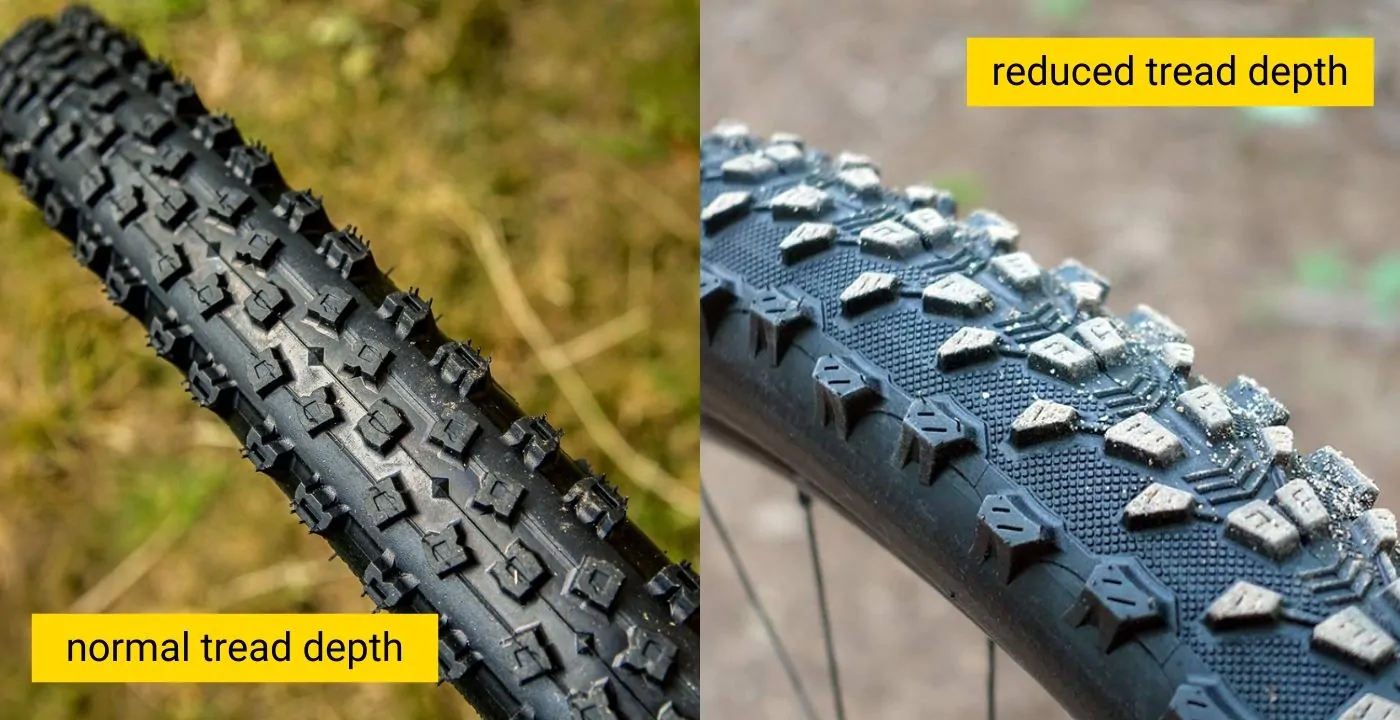
Look for rounded knobs, or sections where the tread pattern is missing. On some tires, the center tread disappears first, making climbing and braking less safe.
2. Cracks In The Rubber
Aging rubber becomes brittle and can show visible cracks, especially on the sidewalls. This makes the tire more likely to fail suddenly.
3. Cuts, Tears, Or Holes
Small cuts can sometimes be repaired, but large tears or holes (especially in the sidewall) mean it’s time for a new tire.
4. Frequent Punctures
If you start getting flats more often, it could mean the rubber is too thin or damaged to protect the tube or sealant.
5. Loss Of Grip
If the bike starts sliding in corners where it used to hold, worn tread could be the cause—even if it’s hard to see by eye.
6. Bulging Or Uneven Shape
A tire that looks lumpy or has a bulge is unsafe. This means the internal structure is damaged.
7. Visible Threads Or Casing
If you can see the fabric or threads inside the tire, it’s well past the point of safe use.
It’s easy to overlook small changes, but riding on worn-out tires is risky. A sudden blowout far from home is more than just inconvenient—it can be dangerous.

Credit: www.reddit.com
How To Check Your Tires For Wear
Regular inspection is key. Here’s a simple process:
- Clean the tire with water and a brush.
- Spin the wheel slowly and look for changes in the tread pattern.
- Squeeze the sidewalls and check for cracks or cuts.
- Press on the tread—if it feels hard or brittle, the rubber is aging.
- Look at the tire shape. Any bulges or dips are a red flag.
You can also compare the current tread to a new tire (photos online help). Some brands include wear indicators—small holes or marks that disappear when the tire is worn out.
How To Make Mountain Bike Tires Last Longer
You can’t avoid tire wear, but some simple steps help you get more life from each set:
1. Keep Tires Clean
Dirt and debris can hide cuts or cracks. Wash your tires after muddy rides.
2. Use Correct Pressure
Check tire pressure before each ride. Adjust for your weight, terrain, and tire size. Most mountain bike tires run between 25 and 35 psi, but always check the sidewall for guidance.
3. Avoid Unnecessary Skids
Skidding looks fun, but it destroys tread quickly. Learn to brake smoothly, especially on technical descents.
4. Rotate Tires If Possible
Some riders swap the front and rear tires when the rear wears faster. This is only possible if your tires are not directional or specifically designed for front/rear use.
5. Store Bikes Out Of Sunlight And Heat
UV light and heat can age rubber fast. Keep your bike indoors or covered.
6. Choose The Right Tire For Your Terrain
Use tougher tires for rocky, sharp trails. Lighter tires are best for soft, smooth paths.
7. Repair Small Cuts Quickly
Seal small holes with tubeless sealant or a patch before they grow larger.
8. Check For Sharp Objects
After every ride, look for glass, thorns, or wire stuck in the tread.
Many riders overlook the effect of storage and cleaning. Leaving a bike in direct sun or failing to wash off chemicals from the trail can cut tire life by months.
Credit: mbaction.com
Rear Vs. Front Tire Lifespan
One key detail is that the rear tire usually wears out much faster than the front. This is because:
- Most of your weight is on the rear wheel.
- The rear tire provides most of the drive and braking force.
- Skids and slides usually happen at the back.
It’s common to replace the rear tire twice as often as the front. Some experienced riders even run a tougher, grippier tire on the front for safety and a faster-rolling tire on the rear for efficiency.
Let’s see a quick comparison:
| Wheel Position | Average Lifespan (miles) | Wear Pattern |
|---|---|---|
| Front | 1,500–3,000 | Slower, more even wear |
| Rear | 800–1,500 | Faster, center tread wears first |
Replacing the rear tire more often is normal. Some riders even rotate a less-worn front tire to the back, but only if both are similar in size and tread.
Types Of Mountain Bike Tires And Their Durability
Not all mountain bike tires are made equal. Your choice of tire will affect how long it lasts.
Cross-country (xc) Tires
XC tires are light and fast, with smaller knobs. They are designed for speed and low rolling resistance, not maximum durability. Expect to replace them after 800–1,200 miles if you ride often on rough trails.
Trail/all-mountain Tires
These tires balance grip and durability. Knobs are bigger and the casing is often reinforced. Lifespan is usually 1,200–2,500 miles, depending on terrain and riding style.
Enduro/downhill Tires
These use soft, sticky rubber for grip on steep, technical trails. The trade-off is faster wear—often 1,000–2,000 miles or less with aggressive use. Sidewalls are thicker for protection.
Fat Bike Tires
Fat bike tires are wide and have lots of rubber. They usually last longer, but their weight and lower pressure mean sidewalls may crack if not cared for. Expect 2,000–3,000 miles for most users.
Here’s a simple summary:
| Tire Category | Durability | Recommended Usage |
|---|---|---|
| XC | Low | Racing, fast trails |
| Trail | Medium | All-round use |
| Enduro/DH | Medium-Low | Aggressive, steep trails |
| Fat Bike | High | Sand, snow, soft trails |
Credit: emountainbikekings.com
When Should You Replace Your Mountain Bike Tires?
You do not need to wait until the tire is completely smooth or broken. Replace your tire when:
- The tread is mostly gone or the tire slides easily
- You see cracks, cuts, or holes too big for safe repair
- The tire is losing air frequently (not just due to the valve or rim)
- The ride feels rougher or less predictable
- You see threads or casing material
Do not risk riding on unsafe tires. It’s better to replace a little early than suffer a crash or long walk home.
Two non-obvious insights:
- Many riders focus only on tread wear, but sidewall damage is a major cause of sudden failure—inspect sidewalls as carefully as the tread.
- Tire age matters too—even unused tires become unsafe after 5–6 years due to rubber hardening and cracking.
How To Choose Replacement Tires
When buying new mountain bike tires, consider:
- Tire width and diameter (matches your rim and frame)
- Tread pattern (for your usual trail conditions)
- Rubber compound (softer for grip, harder for durability)
- Tubeless compatibility (for fewer flats)
- Puncture protection features
Check reviews and ask local riders for advice. Brands sometimes overstate durability—real-world feedback is helpful. For more in-depth details, you can visit BikeRadar.
Frequently Asked Questions
How Do I Know If My Mountain Bike Tires Are Too Old?
If your tires are more than five years old, even if they look unused, the rubber may be dry and brittle. Look for cracks, loss of flexibility, or a hard, shiny surface.
Is It Safe To Patch A Cut In A Mountain Bike Tire?
Small cuts in the tread can be patched or sealed (especially with tubeless tires), but large sidewall cuts are not safe to repair for trail riding.
Can I Use Road Tires On A Mountain Bike?
Road tires do not fit most mountain bike rims, and even if they do, they lack the grip and durability for off-road use. Always use tires designed for your riding style and conditions.
Should I Replace Both Tires At The Same Time?
Not always. The rear tire wears out faster. Replace each tire based on its own condition, but make sure front and rear have similar grip levels for safety.
How Do I Store Unused Mountain Bike Tires?
Keep tires in a cool, dry place away from sunlight and chemicals. Do not hang them by the bead, as this can deform the tire over time.
Riding with confidence starts with good tires. Knowing when to replace your mountain bike tires, and how to care for them, means more fun and fewer problems on the trail. Regular checks and smart choices keep you rolling smoothly, whatever path you choose.