Can You Wear Headphones While Riding A Bike
Cycling brings a sense of freedom—wind in your face, the world rolling by, and, for many, music or podcasts in your ears. But the question is not as simple as it seems: Can you wear headphones while riding a bike? The answer depends on safety, local laws, and the kind of riding you do. This article explores everything you need to know, from safety risks and legal restrictions to practical tips and alternatives. Whether you’re a daily commuter or a weekend rider, you’ll find clear, actionable guidance here.
Why Cyclists Want To Wear Headphones
Many cyclists love the idea of listening to music or podcasts while riding. It can make long rides more enjoyable, help keep a steady pace, or simply block out city noise. For some, listening to navigation instructions is important, especially on complicated routes.
Others use language learning apps or audio books to make productive use of travel time.
However, what feels comfortable or productive may not always be safe or legal on the road.
Legal Restrictions: What The Law Says
Before you put on your headphones and start pedaling, check the rules where you live or ride. Laws about wearing headphones on bikes are not the same everywhere. They range from complete bans to no restrictions at all.
Here’s a comparison of headphone laws in selected countries and US states:
| Location | Headphones Allowed? | Details |
|---|---|---|
| United Kingdom | Yes (not recommended) | No specific law, but police can fine for careless cycling |
| Germany | Yes (one ear only) | Must hear traffic at all times |
| Australia (NSW) | No | Illegal to ride with headphones covering both ears |
| USA (California) | No | Illegal to wear in both ears |
| USA (New York) | Yes (one ear only) | One ear must remain uncovered |
| USA (Texas) | Yes | No state law against it |
Always check your local laws before riding with headphones. Even within countries, different cities or states can have their own rules. Ignoring these laws could result in fines, or worse, liability in case of an accident.
Credit: www.bikelegalfirm.com
Safety Considerations: Risks You Need To Know
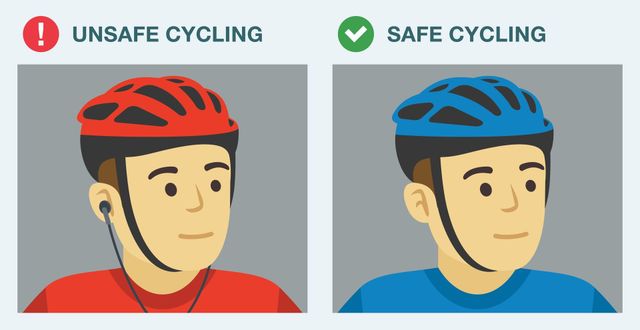
Wearing headphones while cycling changes how you experience your surroundings. The biggest safety concern is that headphones can block important sounds like:
- Car horns
- Emergency vehicle sirens
- Bells from other cyclists
- Pedestrian warnings
- Train or tram signals
A study from the University of Maryland found that 29% of cyclists involved in collisions with vehicles had been wearing headphones or earbuds. This doesn’t mean that headphones always cause accidents, but they do reduce your ability to react quickly.
How Headphones Affect Your Hearing
Traditional in-ear or over-ear headphones can cut down your awareness by up to 50% in noisy environments. Even at moderate volumes, your brain has to work harder to process both the audio and external sounds. This split attention can slow your reaction time by several seconds—a critical difference on busy roads.
Types Of Headphones And Risk Levels
Not all headphones are equal in terms of risk. Here is a quick comparison:
| Type | Risk Level | Why |
|---|---|---|
| In-ear / Earbuds | High | Block most external sound, especially noise-cancelling models |
| Over-ear | High | Cover the ear entirely, very isolating |
| Bone conduction | Lower | Sit outside the ear, let you hear traffic and voices |
| Single-ear | Medium | One ear open to traffic, but less immersive sound |
Bone conduction headphones are often recommended for cyclists. They send sound through your cheekbones, leaving your ears open to the environment. Still, no headphone is entirely risk-free.
Practical Tips For Safer Listening
If you choose to listen to audio while biking, you can reduce risk by following these practical tips:
- Keep volume low: You should always hear horns, shouts, or bells over your music.
- Use only one earbud: Leave one ear open to the environment, especially in cities.
- Pause at busy intersections: Remove your headphones before crossing crowded or complex roads.
- Choose bone conduction headphones: These keep your ear canals open for traffic sounds.
- Download audio for offline use: Avoid fiddling with your phone to change tracks or podcasts.
- Set up playlists before you start: Reduce distractions by planning your audio in advance.
- Stay alert in new areas: If you’re unfamiliar with the route, avoid headphones altogether.
- Reflective gear and lights: Make sure you are visible to drivers, especially if sound is limited.
- Obey all traffic laws: Always signal, stop at lights, and ride defensively.
Some advanced riders use smart helmets with built-in speakers, which can be safer than traditional headphones but still require caution.

Credit: biketoeverything.com
Real-world Examples
Consider a city commuter in London. There is no specific law against headphones, but police can fine riders for not paying attention. In 2018, a cyclist was fined £100 for riding with both headphones in, unaware of a police car behind him.
In California, a rider wearing earbuds in both ears was involved in a collision with a car. The insurance company reduced his compensation, stating he was partly responsible due to reduced awareness. These cases show how local rules and insurance companies may see headphone use as risky behavior.
Arguments In Favor Of Headphones
While safety is a concern, some cyclists make reasonable arguments for using headphones:
- Noise pollution: City traffic can be loud and stressful. Music helps some people focus and stay calm.
- Navigation: Voice directions are less distracting than looking at a phone or GPS.
- Motivation: Fast-paced music can improve performance on long rides.
- Podcast learning: Some use ride time for education, language learning, or news.
Still, it’s essential to balance these benefits with safety and legal responsibility.
Better Alternatives To Traditional Headphones
If you want audio while riding but worry about safety, consider these alternatives:
- Bike-mounted speakers: Small, handlebar-mounted Bluetooth speakers let you hear music without blocking your ears. Volume should be kept low enough not to disturb others.
- Bone conduction headphones: These leave your ears open to the environment.
- Smart helmets: Some helmets include open-ear audio, rear lights, and even turn signals.
- Single-ear Bluetooth earpieces: Legal in many places and allow for more awareness.
These options are not perfect but offer a compromise between safety and entertainment.
How Headphones Affect Insurance And Accident Claims
Wearing headphones can change the outcome of insurance claims after an accident. If you were wearing headphones and did not hear a horn or warning, insurance companies may say you were partly at fault. This is called contributory negligence.
For example, in some US states, if you are found even 10% at fault, your compensation can be reduced by that amount. In severe cases, you may not get any compensation at all if you are judged mainly responsible for your own injury.
Always consider how your actions will look to police and insurance companies if something goes wrong.
What Cycling Organizations Recommend
Groups like the League of American Bicyclists and British Cycling strongly advise against wearing headphones on busy roads. They recommend only using headphones in safe, controlled environments like bike paths or parks, and even then, at low volumes.
They also support the use of bone conduction headphones or single-ear listening for those who want music or navigation.
For further details on cycling laws by country, you can visit Wikipedia: Bicycle Law.
Non-obvious Insights Most Beginners Miss
- Auditory masking is real: Many think they can simply “listen harder” for outside sounds, but your brain actually tunes out background noise when focused on music, even at low volumes.
- Insurance companies check phone and music history: In some claims, investigators have checked what the cyclist was listening to at the time of the accident. This can be used to reduce or deny claims.
- Some headphones leak sound: Open-back headphones or speakers may disturb pedestrians or other riders, leading to complaints or fines in some areas.
Frequently Asked Questions
What Are The Best Headphones For Cycling Safely?
Bone conduction headphones are the safest option for most riders. They let you hear traffic and conversations while enjoying your music. Smart helmets with built-in speakers are another good choice, but always keep the volume low.

Credit: romanaustin.com
Can I Get Fined For Wearing Headphones While Biking?
Yes, in many places. Fines can range from a small warning to over $100, depending on local laws. Some police officers may also judge you as riding carelessly, which carries higher penalties.
Is It Safer To Ride With One Earbud Instead Of Two?
Using just one earbud is much safer than two. It allows you to hear important sounds on one side. However, even with one ear open, your attention can be divided, so stay alert and keep the volume low.
Are Bike-mounted Speakers A Good Alternative?
Bike-mounted speakers are a safer alternative because they do not block your ears. However, they must be used at a reasonable volume to avoid disturbing others. In some cities, loud music in public spaces can still lead to fines.
How Can I Listen To Navigation While Riding Without Using Headphones?
Use a handlebar-mounted smartphone holder with the speaker facing you, or try a smart helmet with built-in audio. Voice navigation apps often have “bike mode” that repeats directions so you don’t miss a turn. Always pull over if you need to check the map visually.
Cycling is more enjoyable with your favorite tunes or a good podcast, but safety always comes first. Understand your local laws, consider the risks, and choose alternatives that let you stay aware of your surroundings. Responsible choices help protect not just you, but everyone sharing the road.