Finding a comfortable bike saddle is essential for enjoying every ride, whether you cycle for fitness, commuting, or adventure. But many cyclists overlook one key detail: saddle width. Choosing the right width can prevent pain, numbness, and even long-term injuries. Still, the process can feel confusing if you’re new to cycling or have never measured a saddle before. This guide will show you, step by step, how to measure bike saddle width accurately, what the numbers mean, and how to use that information to pick your ideal saddle.
Why Saddle Width Matters
The width of a bike saddle is not just about comfort. It’s about fit, efficiency, and health. If your saddle is too narrow, it can cause pressure on sensitive areas. Too wide, and it might lead to chafing or restrict your leg movement. The right width supports your sit bones (ischial tuberosities), letting you ride longer and more efficiently.
Several studies show that improper saddle width is a leading cause of cycling discomfort. For example, a report from the International Journal of Sports Physical Therapy found that 60% of cyclists with saddle pain had a mismatch between their sit bone width and saddle width.
Understanding Bike Saddle Width
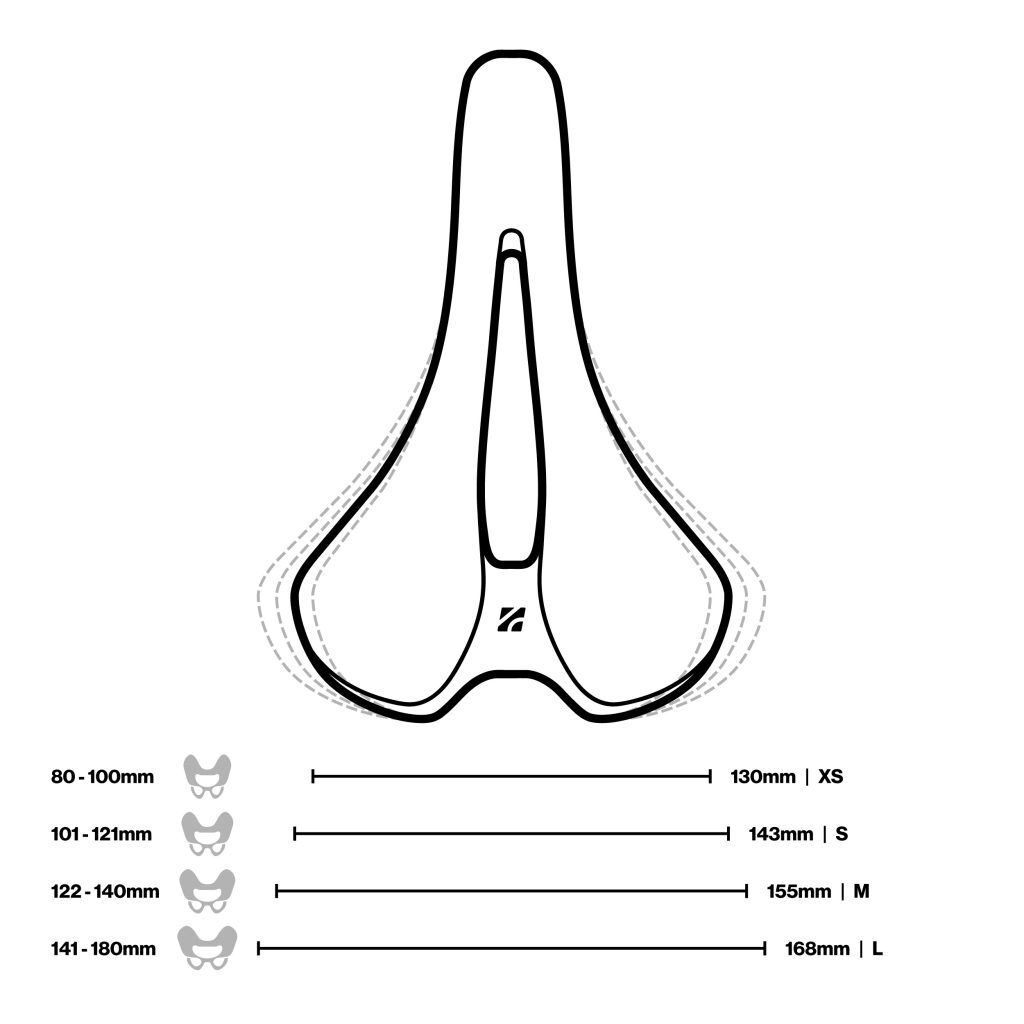
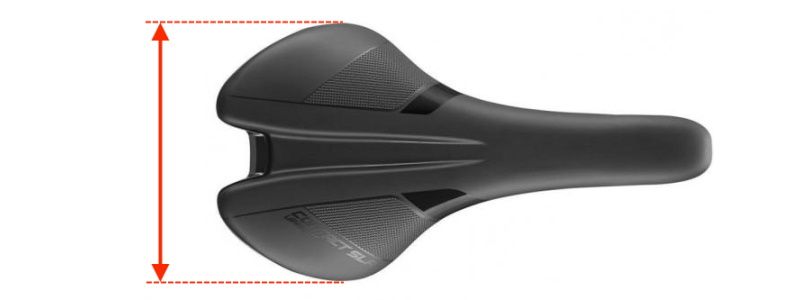
Bike saddle width is the distance across the widest part of the saddle, usually measured at the rear. Saddles come in a variety of widths, typically ranging from 130 mm to 180 mm. The correct width depends mainly on your sit bone spacing, which is unique to your body.
Saddle Width Vs. Saddle Shape
It’s important to note that saddle shape also affects comfort. Some saddles are flat, some are curved, and some have cut-outs or relief channels. While these features help with pressure and support, they do not replace the need for the right width.
Men’s And Women’s Saddle Widths
Generally, women’s sit bones tend to be wider than men’s, so women’s saddles are often broader. However, the best way to know your size is to measure your sit bones directly.
Credit: el-greco.ru
Tools You Need To Measure Saddle Width
You don’t need expensive equipment to measure your saddle or sit bone width. Here’s what you’ll need:
- A hard, flat surface (like a wooden chair)
- A large piece of corrugated cardboard or thick foam
- A tape measure or ruler (in millimeters for accuracy)
- A pencil or pen
- A calculator (optional, for quick math)
Some bike shops offer saddle fitting tools or special pressure-mapping devices, but you can get accurate results at home with simple materials.
Measuring Your Sit Bone Width
The key to finding the right saddle width is measuring your sit bones. Here’s how to do it at home:
- Place the cardboard or foam on a hard chair.
- Sit on the material, keeping your back straight and feet flat on the floor.
- Lean forward slightly, as you would when riding.
- Press down firmly for about 30 seconds to leave two clear indentations.
- Stand up and find the deepest points of the two marks.
- Use a ruler to measure the distance between the centers of the two indentations.
This number is your sit bone width.
Example: Measuring Sit Bones
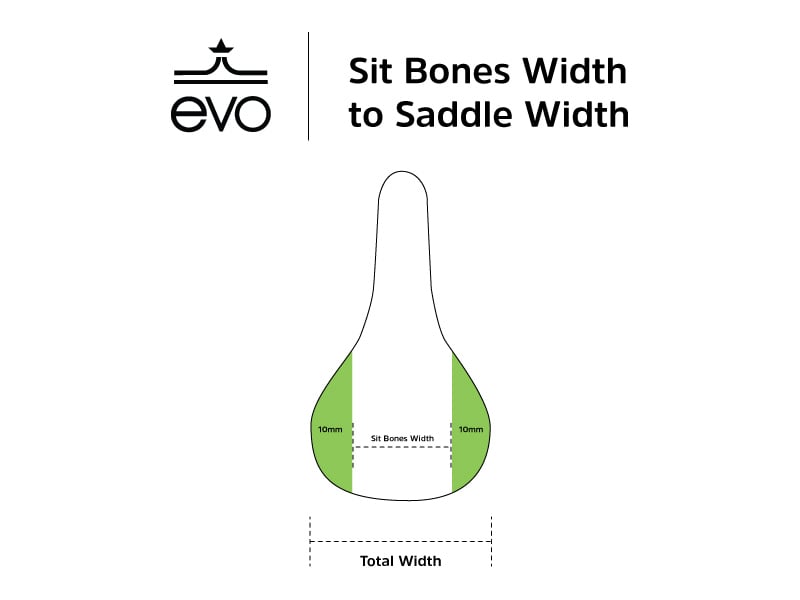
Suppose you measure 120 mm between the centers of the two indentations. This is your sit bone width. But your saddle needs to be slightly wider than your sit bones to provide proper support.
Credit: bestbikeadvice.com
How To Calculate The Ideal Saddle Width
After measuring your sit bones, add 20–30 mm to get your ideal saddle width. This extra space makes sure the saddle supports your bones and not just the soft tissue.
- For road cycling or racing: Add 20 mm
- For mountain biking or upright riding: Add 25–30 mm
Example Calculation
If your sit bone width is 120 mm:
- For road cycling: 120 mm + 20 mm = 140 mm
- For mountain biking: 120 mm + 30 mm = 150 mm
So, you should look for saddles around 140–150 mm wide, depending on your riding style.
Measuring An Existing Bike Saddle
If you already have a saddle and want to know its width, follow these steps:
- Remove the saddle from your bike for accuracy.
- Turn it upside down.
- Use a tape measure to find the widest point at the rear.
- Note the measurement in millimeters.
Many saddles have the width printed under the shell or on the packaging, but measuring yourself is always reliable.
Comparing Saddle Widths And Sit Bone Widths
Here’s a quick reference to help you match your sit bone width to saddle width, based on riding style:
| Sit Bone Width (mm) | Road/Performance Saddle (mm) | MTB/Comfort Saddle (mm) |
|---|---|---|
| 90–100 | 110–120 | 115–130 |
| 100–110 | 120–130 | 130–140 |
| 110–120 | 130–140 | 140–150 |
| 120–130 | 140–150 | 150–160 |
| 130–140 | 150–160 | 160–170 |
This table is a guideline. Always test saddles for comfort, as body shape and flexibility also play roles.
What Happens If You Get The Width Wrong?
Choosing the wrong saddle width can lead to several issues:
- Saddle sores: Painful skin irritation from rubbing.
- Numbness: Often caused by pressure on nerves and blood vessels.
- Poor pedaling efficiency: Too wide or narrow saddles can affect your movement and power.
A less-known problem is chronic pelvic pain. Some cyclists ignore mild discomfort, which can develop into long-term injuries if not corrected.
Credit: www.hgsauto.com.br
How To Test Saddle Width For Comfort
After you fit a new saddle, give your body time to adjust. Here’s how to test if the width is right:
- Ride for at least 30–60 minutes.
- Check if your sit bones feel supported without pressure on soft tissue.
- Notice any numbness or pain during or after the ride.
- Adjust saddle position (height, tilt, setback) if needed.
If discomfort continues, try a saddle 5–10 mm wider or narrower and repeat.
Other Factors That Affect Saddle Comfort
While width is crucial, other factors can influence saddle comfort:
- Padding: Too much padding can cause pressure; too little may be harsh.
- Shape: Flat or curved, with or without a cut-out.
- Material: Leather, synthetic, or gel.
- Riding position: The more you lean forward, the narrower your saddle can be.
Many beginners overlook saddle tilt. Even with the right width, tilting the nose too high or too low can cause pain. The saddle should be nearly level.
Measuring For Different Types Of Cycling
The ideal width varies with cycling style:
Road Biking
A slightly narrower saddle may be more efficient, as you ride in a forward-leaning position.
Mountain Biking
Wider saddles give more support as you often sit upright and absorb more shock.
Commuting Or Leisure
Go for comfort and support with a wider saddle, as speed is less critical.
Common Mistakes When Measuring Saddle Width
Many cyclists, especially beginners, make mistakes when choosing or measuring saddle width. Here are two often-missed points:
- Not using a hard surface: Measuring on a soft chair spreads your sit bones, leading to the wrong width.
- Ignoring riding style: A saddle that feels great for commuting may not work for aggressive road cycling.
Another error is only measuring once. For accuracy, repeat the process and compare results.
Comparing Popular Saddle Widths
To help you understand how saddle widths vary, here’s a comparison of common models:
| Saddle Model | Width (mm) | Best For |
|---|---|---|
| Specialized Power Comp | 143, 155 | Road, Racing |
| Brooks B17 | 175 | Touring, Comfort |
| Fizik Antares R3 | 140 | Performance |
| WTB Volt | 135, 142, 150 | MTB, Trail |
| Bontrager Boulevard | 205 | City, Leisure |
Notice that performance saddles are usually narrower, while comfort and touring saddles are much wider.
How To Use Saddle Width When Buying A New Saddle
When shopping for a new saddle, use your sit bone measurement plus the recommended extra (20–30 mm) as your starting point. Always check the saddle’s listed width; it’s usually printed on the packaging or the saddle’s underside.
Try different models and widths if possible. Many bike shops offer test saddles or return policies. Remember, personal comfort is the final test.
For more on saddle fitting science, visit the Wikipedia page on bicycle saddles.
Frequently Asked Questions
How Do I Know If My Saddle Is Too Narrow?
If you feel pain on the inside of your thighs or numbness in your soft tissue after riding, your saddle is likely too narrow. A proper saddle supports your sit bones, not just the middle area.
Can I Use The Same Saddle Width For All Types Of Bikes?
Not always. Road bikes, mountain bikes, and city bikes often require different saddle widths due to the riding position and surface. Adjust the width based on your main cycling style.
How Often Should I Measure My Sit Bones?
You only need to measure once, unless your body changes significantly (like weight gain or loss). If you feel new discomfort, it’s worth checking again.
Is A Wider Saddle Always More Comfortable?
No. Too wide a saddle can cause chafing and restrict your pedaling. The key is matching the width to your sit bones and cycling style, not just going wider.
What If My Measurement Is Between Saddle Sizes?
Go for the slightly wider option, especially if you ride in a more relaxed position. For aggressive racing positions, a narrower saddle might feel better.
Finding your ideal saddle width may take a little time, but the results are worth it. Proper support leads to better rides, fewer injuries, and a greater love of cycling. Take the time to measure, experiment, and listen to your body—the perfect saddle is out there.