Hanging your bike can transform a messy garage, apartment, or hallway into an organized, efficient space. But doing it right involves more than just putting a hook in the wall. The way you hang your bike affects its safety, your convenience, and even the bike’s lifespan.
Whether you are a city dweller with limited space or a family with several bikes, understanding the best method for your needs is essential. This guide will walk you through everything, from choosing the right hanging system to avoiding mistakes that could damage your bike or walls.
Why Hang Your Bike?
Storing bikes on the floor takes up valuable space and often leads to clutter. Hanging bikes is a smart solution, especially for people in small apartments or homes with limited storage. Vertical storage keeps bikes safe from accidental bumps, helps prevent tire deformation, and protects your bike from moisture on the ground. It also makes cleaning the floor easier and gives your space a neater look.
Many people worry about wall damage or lifting heavy bikes overhead. With the right tools and a bit of planning, almost anyone can hang a bike easily and safely.
Understanding Different Hanging Methods
Not all bikes and homes are the same. The best method for hanging your bike depends on your available space, your physical strength, and your bike type. Let’s look at the most common ways to hang bikes.
Wall-mounted Hooks
Wall hooks are the most popular way to hang bikes. They are simple, inexpensive, and widely available. You can mount hooks vertically (hanging by one wheel) or horizontally (hanging by the frame).
Vertical Wall Hook
This method hangs the bike by its front or rear wheel. It works well for most bikes and keeps the bike flat against the wall.
Horizontal Wall Hook
Here, two hooks support the bike frame, so the bike is parallel to the ground. This method is ideal for heavier bikes or if you want easier access to your wheels.
Ceiling-mounted Systems
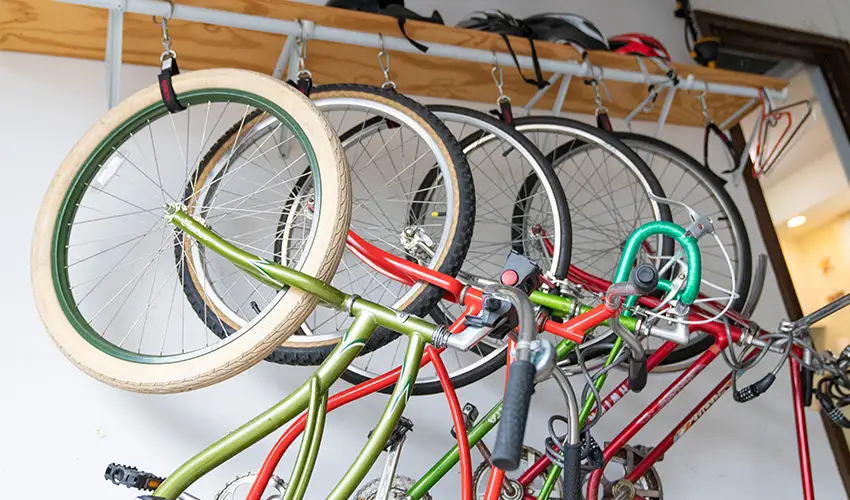
Ceiling hangers or pulley systems are great for garages or rooms with high ceilings. They free up wall and floor space entirely. However, they require you to lift or hoist the bike overhead, which can be challenging for heavier bikes or for people with limited strength.
Freestanding Racks
If you cannot drill into walls or ceilings, freestanding racks are a good option. They hold one or more bikes and can be moved as needed. While they take up some floor space, they are stable and don’t damage your walls.
Floor-to-ceiling Tension Poles
Tension poles press between the floor and ceiling, holding bikes without screws or nails. They are ideal for rentals or apartments where you cannot make permanent changes.
Bike Storage Furniture
Some modern furniture combines style and storage. Benches, shelves, or cabinets with built-in bike hooks can blend your bike into your living space.

Credit: storeyourboard.com
How To Choose The Right Hanging System
Selecting the right bike hanging method is about more than just saving space. Consider these factors:
- Space available: Measure your wall or ceiling area. Make sure there’s enough room to lift the bike into place and remove it easily.
- Bike weight and type: Lightweight road bikes are easy to hang almost anywhere. Heavier mountain or electric bikes may need more robust systems.
- Wall or ceiling material: Drywall, concrete, and wood all require different hardware. Test the strength of your chosen surface.
- Number of bikes: If you have multiple bikes, look for racks that hold two or more bikes safely.
- Accessibility: Think about how often you ride. Daily cyclists need quick access, while occasional riders may prefer out-of-the-way storage.
Step-by-step Guide: Hanging Your Bike Safely
Hanging a bike takes a bit of preparation. Follow these steps for a secure installation:
1. Gather Your Tools And Materials
You’ll need:
- Bike hooks, rack, or hanging kit
- Stud finder (for wall installations)
- Drill and appropriate drill bits
- Anchors or screws (matched to your wall type)
- Measuring tape and pencil
- Level
2. Find The Right Spot
Pick a spot with enough clearance for both the bike and your movements. Make sure the spot is dry and away from direct sunlight to avoid tire or frame damage over time.
3. Locate Wall Studs Or Ceiling Joists
Use a stud finder to locate wooden beams behind your wall. Hanging directly from drywall is not safe—your bike may pull the hook out over time. For concrete or brick walls, use masonry anchors.
4. Measure And Mark
Mark the height where the hook or rack should go. For vertical hanging, the hook should be high enough for the wheel to clear the floor, but not so high that lifting the bike is difficult. For horizontal hanging, ensure the bike’s pedals and handlebars won’t hit the wall.
5. Drill And Install Hardware
Drill pilot holes for your screws or anchors. Install the hooks or rack firmly, ensuring they are level and secure.
6. Hang The Bike
Lift the bike and place it on the hook or rack. Check that it’s stable and not at risk of falling. For heavy bikes, ask for help to avoid injury.
7. Test And Adjust
Gently shake the bike to ensure the system holds well. Make any adjustments if you notice wobbling or instability.
Credit: www.reddit.com
Comparing Popular Bike Hanging Systems
Here’s a quick comparison of three common hanging solutions:
| System | Best For | Installation Difficulty | Typical Cost |
|---|---|---|---|
| Wall Hook (Vertical) | Small spaces, apartments | Easy | $10 – $25 |
| Ceiling Pulley | Garages, high ceilings | Moderate | $25 – $60 |
| Freestanding Rack | Renters, multiple bikes | Easy | $40 – $150 |
Common Mistakes To Avoid
Many people make errors when hanging bikes that can lead to accidents or damage. Here are some pitfalls to watch for:
- Using weak anchors: Drywall plugs or small screws can pull out under a bike’s weight. Always anchor into a stud or use heavy-duty wall plugs.
- Wrong placement: Installing hooks too close together or near doors can cause frustration and accidents.
- Ignoring bike type: Suspension forks, fenders, or wide handlebars need special consideration. Some hooks may not fit all bikes.
- Overloading racks: Freestanding or wall-mounted racks have weight limits. Don’t hang more bikes than recommended.
- Skipping regular checks: Hardware can loosen over time, especially with frequent use. Check your hooks and screws every few months.
Protecting Your Bike And Your Home
Proper hanging should not damage your bike or your walls. To keep everything in good shape:
- Use hooks with rubber or vinyl coating to avoid scratching rims or frames.
- Place a small mat or towel under the bike to catch water, mud, or chain oil.
- Avoid hanging bikes by carbon fiber wheels, as this can cause stress cracks.
- If you hang your bike by the frame, wipe the frame clean regularly to prevent dirt buildup at contact points.
Multi-bike Storage: Organizing For Families Or Enthusiasts
If you have several bikes, organization matters even more. Try these strategies:
- Stagger hook heights so handlebars don’t clash.
- For children’s bikes, place hooks lower for easy access.
- Use ceiling pulleys for rarely used bikes, and wall racks for daily riders.
- Add name tags or color codes for each family member’s bike.
Here’s a quick look at organizing options for multiple bikes:
| Storage Type | Bikes Held | Best Location | Notes |
|---|---|---|---|
| Double Wall Rack | 2 | Garage, hallway | Staggered or side-by-side |
| Ceiling Pulley Set | 2-4 | Garage, basement | Requires lifting strength |
| Freestanding 4-Bike Rack | 4 | Basement, large rooms | Portable, no drilling |
Special Cases: Electric Bikes, Fat Bikes, And Carbon Frames
Some bikes need extra care:
- Electric bikes are heavier and may exceed typical rack limits. Check the product’s weight rating before buying.
- Fat bikes with wide tires need hooks or racks built for larger wheels.
- Carbon frames can be sensitive to point pressure. Use wide, padded hooks and avoid hanging by the top tube unless the manufacturer says it’s safe.
Safety Tips For Hanging Bikes
- Wear gloves when drilling or lifting heavy bikes.
- Keep tools out of children’s reach.
- Don’t hang bikes directly above cars or areas with foot traffic.
- After installation, check the system after the first week and every few months.
Real-world Example
Consider a family with two road bikes and one mountain bike in a small garage. They choose a double wall rack for the adults’ bikes (hung horizontally) and a lower vertical hook for the child’s bike. This setup keeps all bikes accessible, avoids tangled handlebars, and uses wall space efficiently.
They also add a mat below to protect the floor from chain oil.
Non-obvious Insights Most Beginners Miss
- Temperature and humidity matter: Storing your bike in extremely hot, cold, or damp places can damage tires and components, even when hung. If possible, keep your bike in a climate-controlled area.
- Tire pressure drops over time: When a bike hangs by its wheel, especially for months, check and inflate the tires regularly. Soft tires are more likely to develop flat spots.
Credit: www.mrhandyman.com
Resources For Further Information
If you want to learn more about bike storage solutions, the Sheldon Brown Bicycle Technical Information website offers detailed advice from experts.
Frequently Asked Questions
How High Should I Hang My Bike On The Wall?
The ideal height depends on your ceiling and your ability to lift the bike. For most adults, the hook should be about 4–6 inches above the floor for vertical storage. For horizontal racks, place the hooks so the bike is easy to lift but not in the way.
Will Hanging My Bike Damage The Wheels Or Frame?
If you use hooks with a soft coating and avoid hanging by carbon wheels, hanging does not typically cause damage. Always check your bike’s manual for manufacturer recommendations.
Can I Hang A Bike On Drywall Without Hitting A Stud?
It’s not recommended. Drywall alone is not strong enough to support a bike’s weight. Use a stud, masonry anchor, or toggle bolt designed for heavy loads.
What Is The Best Way To Store Multiple Bikes?
For families or collections, staggered vertical wall hooks or freestanding racks work well. Ceiling systems are great for seasonal storage but less convenient for daily use.
Are There Bike Racks For Renters Who Can’t Drill Holes?
Yes, freestanding racks and floor-to-ceiling tension poles are designed for renters. They hold bikes securely without permanent installation.
Organizing your space with a bike hanging system brings real benefits—cleaner floors, safer storage, and easier access. With the right tools and approach, anyone can hang a bike and enjoy a more organized home.