Taking your child or cargo on a bike ride can make journeys more enjoyable and practical. Bike trailers are a smart solution for families, commuters, and adventure seekers who need extra carrying capacity without losing the joy of cycling. But connecting a bike trailer isn’t always as simple as it looks.
If you want a safe, stable, and worry-free ride, you need to attach your trailer correctly. This guide will walk you through every detail, so even if you’re new to bike trailers, you’ll feel confident riding with one.
Understanding Bike Trailers
A bike trailer is a small, wheeled cart you attach to your bike. People use them for carrying kids, pets, groceries, or camping gear. Most trailers connect to your bike’s frame or axle, while some use a special hitch on the seat post. The right connection keeps the trailer stable and safe, even on bumpy roads.
There are two main trailer types:
- Child trailers: These have seats, harnesses, and weather covers for kids.
- Cargo trailers: Designed for luggage, groceries, or equipment. They don’t have seats or windows.
Choosing the right trailer for your needs is the first step. Always check the manufacturer’s weight limit and age recommendations.
Types Of Bike Trailer Attachment Systems
Not all bike trailers attach the same way. Here are the most common systems:
| Attachment Type | How It Connects | Best For |
|---|---|---|
| Axle-mount hitch | Secures to the bike’s rear axle or quick-release skewer | Most child and cargo trailers |
| Seat post hitch | Clamps around the seat post | Light cargo, single-wheel trailers |
| Frame clamp | Bolts to the chainstay or rear dropout | Older or heavy-duty trailers |
Axle-mount hitches are the most common for modern trailers, especially for carrying children. They provide strong support and don’t affect your bike’s handling much. Seat post hitches are easier to fit but can limit how much weight you carry. Some trailers require special adapters, especially for bikes with through-axles or disc brakes.
Tools And Preparation
Before you start, gather these basic tools and supplies:
- Wrench set (usually 15mm or adjustable)
- Allen keys (common sizes: 4, 5, 6 mm)
- Trailer hitch kit (included with most trailers)
- Lubricant (for rusty bolts if needed)
- Reflectors or safety flag (for visibility)
Inspect your bike and trailer. Make sure your rear wheel is secure, the bike frame isn’t cracked, and the trailer hitch parts are not damaged. Inflate all tires to the recommended pressure.
Step-by-step: How To Connect A Bike Trailer
1. Identify Your Trailer’s Hitch System
Check the trailer manual or look at the connection part. Is it an axle-mount, seat post, or frame clamp? Knowing this will guide the next steps.
2. Prepare The Bike
Shift your bike to a stable position. Either use a bike stand or lean it securely against a wall. Remove any bags or accessories that might get in the way.
3. Remove Or Adjust The Rear Axle (if Needed)
For most axle-mount hitches:
- Open the quick-release lever or use a wrench to loosen the axle nut.
- Slide the trailer hitch plate onto the axle. Make sure it fits snugly against the frame.
- If your bike has a through-axle, you may need an adapter designed for trailers.
Pro tip: Some bikes with disc brakes or special rear axles need a specific hitch or adapter. Check your trailer brand’s compatibility guide.
4. Attach The Trailer Hitch
Position the hitch arm or coupler so it lines up with the axle or seat post. Secure it according to the manual:
- Tighten bolts or nuts to the recommended torque.
- If using a quick-release, close it firmly but not overly tight.
- For seat post hitches, ensure the clamp is straight and won’t slip.
Check that the connection is solid and the hitch can rotate smoothly side-to-side. This movement helps your bike turn naturally.
5. Connect The Trailer Arm
Slide the trailer’s arm into the hitch receiver.
- Insert the locking pin or bolt.
- Secure all safety clips or cotter pins.
- Tug the arm gently to confirm it’s locked in.
Some trailers have a secondary safety strap. Loop this around your bike frame or seat stay and fasten it. This backup keeps the trailer attached if the main hitch fails.
6. Attach The Safety Flag And Reflectors
Visibility is critical. Most trailers include a safety flag—attach it to the trailer’s flag holder. Make sure reflectors are present on both the trailer and your bike. For extra safety, add battery-powered lights if you ride in low light.
7. Check Everything
Do a thorough check:
- All bolts and pins are tight.
- The trailer can pivot freely without hitting your bike.
- Tires are inflated, and nothing rubs against the wheels.
- The safety strap is secured.
Wiggle the trailer and the bike. There should be no loose parts or rattling noises.
8. Load And Test Ride
Before carrying your child or cargo, add weight to the trailer (like a bag of sand) and take a short test ride. Practice turning, braking, and riding over bumps. This helps you feel how the bike handles with the extra load.

Credit: www.youtube.com
Common Mistakes And How To Avoid Them
Many beginners make simple errors when attaching a bike trailer. Here’s how to avoid the most common ones:
- Forgetting the safety strap: Always use it. It’s a vital backup if the main hitch fails.
- Overtightening or under-tightening bolts: Too loose, and the trailer can detach; too tight, and you may damage the bike or hitch.
- Ignoring compatibility: Not all hitches fit all bikes. Check for special adapters if you have a thru-axle or e-bike.
- Skipping the test ride: Riding with a trailer feels different. Get used to the wider turning radius and longer stopping distance.
- Poor visibility: Never skip the safety flag or reflectors. Low trailers are harder for drivers to see.
Maintenance And Safety Tips
Keeping your trailer and connection in good shape is as important as the initial setup.
- Inspect regularly: Check all bolts, pins, and straps before each ride.
- Lubricate moving parts: Prevent rust on the hitch and arm joints.
- Clean after wet rides: Water can cause rust and wear.
- Store indoors: Protects the trailer from sun and rain damage.
- Replace worn parts: If any part of the hitch or arm looks bent, cracked, or worn, replace it immediately.
Remember, a well-maintained trailer is a safe trailer.

Credit: wikeinc.com
Special Considerations For Different Bike Types
Not all bikes are the same. Here’s what you need to know about various bike types:
| Bike Type | Trailer Compatibility | Special Notes |
|---|---|---|
| Road Bike | Usually compatible | Watch for lightweight frames and quick-release axles |
| Mountain Bike | Compatible | Disc brakes may require special adapters |
| E-bike | Check compatibility | Batteries and motors may block trailer hitches |
| Fat Bike | Possible | Wide axles need custom hitches |
Non-obvious insight: Some full-suspension mountain bikes move the rear triangle as you ride. This can put stress on the trailer hitch. Look for hitches specifically designed for full-suspension bikes.
For e-bikes, check the motor and battery location. Sometimes they block standard trailer hitches, and you’ll need a special mount or workaround.
Safety Guidelines For Riding With A Trailer
When you connect a trailer, your bike handles differently. Here are key safety tips:
- Lower your speed: Trailers add weight and change your stopping distance.
- Take wider turns: The trailer tracks inside your bike’s path.
- Avoid curbs and rough terrain: Trailers have smaller wheels and can tip if they hit obstacles.
- Signal early: Drivers may not see your trailer. Use hand signals and make eye contact.
- Check local laws: Some cities have rules about riding with trailers, especially for children.
Another non-obvious tip: If your trailer is empty, it can bounce or sway more. Add a small bag of sand or gear to help keep it stable, even when not fully loaded.
Practical Examples: Brands And Models
Many brands make reliable bike trailers. Here are a few popular options and their attachment systems:
| Brand/Model | Trailer Type | Attachment System |
|---|---|---|
| Burley Bee | Child | Axle-mount hitch |
| Thule Chariot | Child | Axle-mount hitch (with disc brake adapters) |
| Schwinn Echo | Child | Axle-mount hitch |
| BOB Yak | Cargo | Quick-release axle skewer |
| Weehoo Turbo | Pedal trailer (for kids) | Seat post hitch |
When buying a trailer, read reviews and check if your bike is listed as compatible. If in doubt, ask your local bike shop for advice.
Frequently Asked Questions
How Do I Know If My Bike Is Compatible With A Trailer?
Most bikes can pull a trailer, but you need the right hitch. Check your bike’s rear axle type and see if the trailer has the correct adapter. Some bikes with disc brakes, through-axles, or e-bike motors need special hitches. Always check the manufacturer’s guide or ask at a bike shop.
Can I Attach A Trailer To A Carbon Fiber Bike?
You can attach a trailer to some carbon fiber bikes, but be careful. Carbon frames can be damaged by overtightening clamps or bolts. Use only trailers and hitches approved for carbon bikes, and never force the connection. If you’re unsure, get advice from your bike’s maker or a professional shop.
Is It Safe To Carry A Child In A Bike Trailer?
Yes, it’s safe if you follow the trailer’s instructions, use all safety features (like harnesses and flags), and ride carefully. Make sure your child is old enough—most brands recommend at least 12 months. Always wear helmets and avoid busy roads when possible.
How Do I Prevent The Trailer From Tipping Over?
Go slow on turns, avoid curbs, and don’t overload the trailer. Even weight helps keep the trailer stable. If you ride on rough trails, choose a trailer with a wide wheelbase and good suspension.
Where Can I Learn More About Bike Trailer Safety?
For more tips and official guidelines, visit the National Highway Traffic Safety Administration. They provide up-to-date safety info for cyclists and families.
Connecting a bike trailer doesn’t have to be difficult or risky. With the right tools, knowledge, and a little practice, you’ll enjoy safer, more flexible rides—whether you’re taking your child to the park or hauling gear across town. Make sure to check your setup regularly, ride safely, and enjoy the journey.
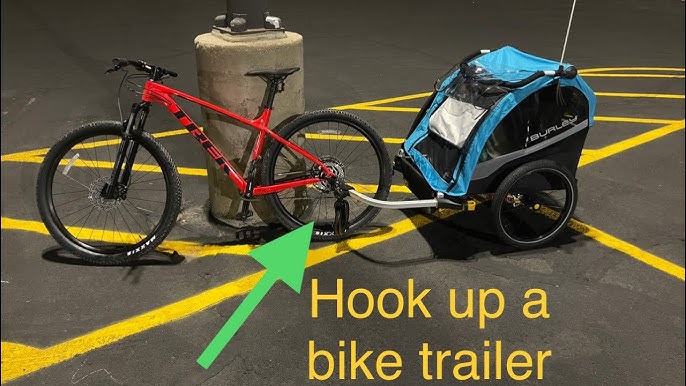
Credit: www.youtube.com