Riding an electric bike can be both thrilling and practical. Many people wonder how fast a 1500W electric bike can really go. The answer is not as simple as quoting a single top speed. Speed depends on many factors: the motor, battery, bike design, rider weight, road conditions, and even local laws. Understanding these aspects helps you make a smart decision if you want more speed or just want to know what to expect from a 1500W e-bike.
This article will give you clear, reliable answers about the real-world speed of a 1500W electric bike. We’ll also look at what affects performance, compare with other motor powers, discuss safety and legal limits, and answer the most common questions.
Whether you are a beginner or looking to upgrade, you will find the details you need to ride confidently.
What Does “1500w” Mean For An E-bike?
When you see an electric bike labeled as 1500W, it means the motor can use up to 1500 watts of electrical power. The watt (W) is a measure of power, or how much work the motor can do. A higher wattage usually means more speed and torque, so a 1500W motor is considered high-powered for an e-bike.
Most city e-bikes have motors between 250W and 500W. At 1500W, you are looking at a bike designed for stronger acceleration and higher speeds. However, the number alone does not tell the whole story. The bike’s controller, battery voltage, and gearing also play important roles.
How Fast Does A 1500w Electric Bike Go?
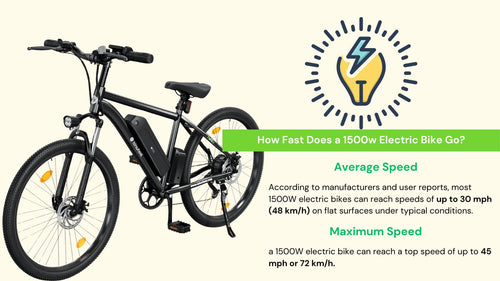
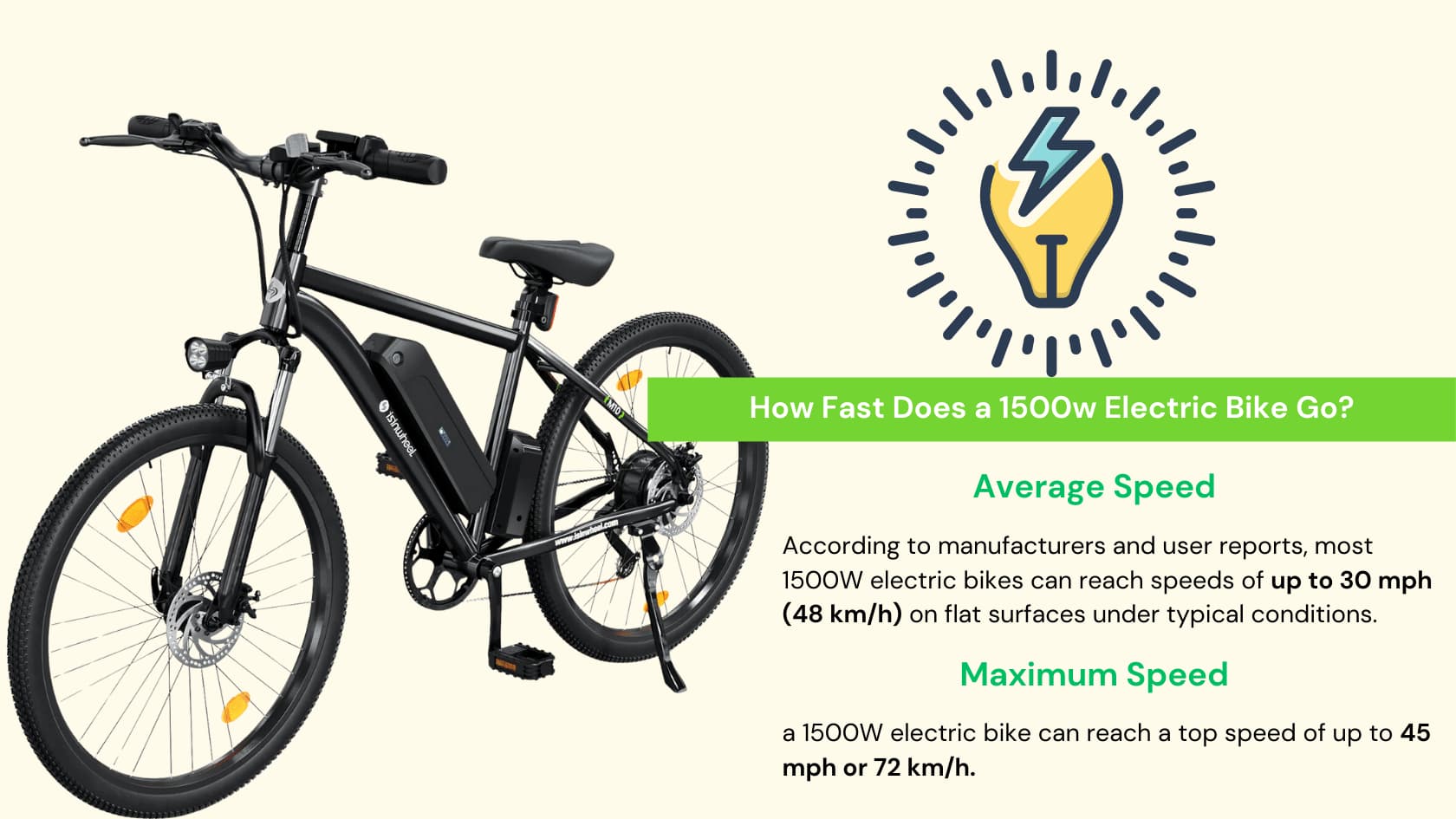
A 1500W electric bike can reach speeds between 28 to 40 mph (45 to 65 km/h) on flat terrain, depending on several variables. Some high-end models can even exceed these speeds, especially on smooth roads with a lightweight rider. However, most riders will see average top speeds in the lower half of this range.
To show how a 1500W bike compares to other common motor sizes, see the table below:
| Motor Power | Typical Top Speed (mph) | Typical Top Speed (km/h) |
|---|---|---|
| 250W | 15-17 | 24-27 |
| 500W | 20-25 | 32-40 |
| 750W | 25-28 | 40-45 |
| 1000W | 28-33 | 45-53 |
| 1500W | 28-40 | 45-65 |
Notice that the jump from 1000W to 1500W does not always mean a huge increase in speed. The extra power often helps more with acceleration, climbing hills, or carrying heavier loads, rather than maximum speed.
Credit: www.isinwheel.com
Key Factors That Affect Top Speed
A 1500W rating does not guarantee you will reach 40 mph. Real-world speeds depend on several things:
1. Battery Voltage And Capacity
A 1500W motor needs enough electrical power to run at full speed. This comes from the battery voltage (measured in volts, V) and its storage capacity (measured in amp-hours, Ah).
- Higher voltage (like 48V or 52V) lets the motor spin faster.
- Larger capacity (more Ah) means the bike can maintain high speeds for longer.
If your battery is low or old, you may not reach the top speed.
2. Rider Weight
Heavier riders require more power to reach and keep high speeds. A 150-pound (68 kg) person will go faster than a 250-pound (113 kg) person on the same bike, especially uphill.
3. Road And Weather Conditions
Smooth, flat pavement allows the highest speeds. Riding up hills, against the wind, or on rough terrain reduces your top speed. Wet or icy roads also force you to go slower for safety.
4. Bike Design And Tire Size
Some e-bikes are made for speed, with aerodynamic frames and thin tires. Others are heavy or built for off-road use. Larger wheels can roll faster, but heavy mountain tires add resistance. Suspension systems may absorb some of the power, making the bike slower.
5. Motor Controller Settings
Most e-bikes include a controller that decides how much power to give the motor. Some bikes come with software limits to keep speeds legal. Others can be “unlocked” for full power, but this may void warranties or break local laws.
6. Pedal Assist Vs. Throttle
Some bikes only reach their top speed when you help by pedaling. Others can hit high speeds with throttle only (like a scooter). Pedal assist usually gets you more speed and range.
7. Legal Restrictions
In many countries, electric bikes are limited by law to certain speeds and power levels. Some bikes are programmed to cut off motor support at 20 or 28 mph (32 or 45 km/h). Riding faster may be illegal on public roads.
Practical Examples: 1500w E-bikes In Action
Let’s look at a few real-world examples. These numbers reflect what you might see with a fully charged battery, an average-weight rider, and flat ground.
- Commuting in the city: A 1500W bike can cruise at 28–32 mph (45–52 km/h) without much effort. This is much faster than most city traffic.
- Riding on trails or gravel: Expect speeds between 22–28 mph (35–45 km/h), depending on bumps and surface.
- Uphill climbing: The bike can keep 15–20 mph (24–32 km/h) on steep hills, much better than lower-power bikes.
- Carrying cargo: Even with a heavy backpack or groceries, a 1500W motor keeps you moving quickly.
Comparing 1500w E-bikes To Other Power Levels
Is a 1500W e-bike really that much faster than a 1000W or 750W model? The answer depends on what you want: speed, acceleration, or hill-climbing ability.
| Motor Power | Best For | Drawbacks |
|---|---|---|
| 750W | City riding, moderate hills | Limited speed, less torque |
| 1000W | Steeper hills, heavier loads | May be illegal in some areas |
| 1500W | Top speed, off-road, steep climbs | Heavy, more expensive, often not street-legal |
Key insight: Most riders find 1000W enough for daily use. Only choose 1500W if you truly need the extra power for hills, speed, or heavy loads.
Safety Considerations At High Speeds
Riding a 1500W electric bike at 35–40 mph is very different from cruising at 20 mph. Here are some important safety tips:
- Wear a helmet: Always use a high-quality helmet, and consider full-face options at higher speeds.
- Use proper brakes: Make sure your bike has strong, hydraulic disc brakes. Regular bike brakes may not stop you safely from high speeds.
- Check your tires: High speeds can cause blowouts if tires are worn or underinflated. Use tires rated for e-bikes.
- Be visible: Use bright lights and reflective clothing. Cars do not expect bikes to move so fast.
- Practice first: If you are new to powerful bikes, practice in a safe place before riding in traffic.
One thing many beginners miss: At 35–40 mph, even a small bump or mistake can cause a serious fall. Treat your e-bike with respect, just like a motorcycle.
Legal Limits For 1500w Electric Bikes
Many countries and cities have strict rules for e-bikes. In the U.S., for example, federal law says an “electric bicycle” is limited to 750W and must not go faster than 20 mph (32 km/h) with motor power only. A 1500W bike often falls into the same category as a moped or motorcycle, which means you may need a license, registration, and insurance.
In Europe, the rules are stricter: most places only allow 250W motors and a top speed of 25 km/h (15.5 mph) for bikes without a license.
Before buying or riding a 1500W e-bike on public roads, check your local laws carefully. Riding an overpowered bike illegally can result in fines or your bike being taken away.
For up-to-date laws and regulations, see resources like the Wikipedia page on electric bicycle laws.
Range And Battery Life At High Speeds
One common mistake is to focus only on top speed and forget about range. The faster you go, the quicker your battery drains. At 35–40 mph, a 1500W motor uses a lot of energy.
- A typical 1500W e-bike with a 48V 20Ah battery might get 20–30 miles (32–48 km) at full speed.
- Riding slower or using pedal assist can double your range.
If you want both speed and long rides, consider carrying a spare battery or choosing a bike with a high-capacity battery pack.
Credit: www.isinwheel.com
Maintenance Needs For High-power E-bikes
A 1500W electric bike works harder than lower-power models. This means more stress on the motor, battery, tires, brakes, and chain.
- Check your brakes often, and replace pads as needed.
- Lubricate the chain and gears every few weeks.
- Inspect the battery for swelling, heat, or damage.
- Tighten all bolts before long or fast rides.
Many first-time owners miss this: High speeds cause more wear and tear. Regular maintenance is not optional—it is essential for safety and long life.
Is A 1500w E-bike Right For You?
Not everyone needs or should use a 1500W electric bike. Here’s a quick way to decide:
- Choose 1500W if you want the fastest speeds, ride steep hills, carry heavy loads, or use your bike off-road.
- Choose a lower power (500W–1000W) if you ride mainly in the city, want longer range, or need to follow strict local laws.
Remember, a high-power e-bike can be thrilling but also dangerous or illegal in some places. Make your choice based on your real needs, not just the numbers on paper.

Credit: www.reddit.com
Frequently Asked Questions
How Fast Can A 1500w Electric Bike Go?
A 1500W electric bike can usually reach 28–40 mph (45–65 km/h) on flat roads. Your actual speed depends on rider weight, battery health, terrain, and bike design.
Is A 1500w E-bike Legal On Public Roads?
In many places, a 1500W e-bike is not street-legal without a license or registration, as it exceeds common power and speed limits. Always check your local laws before riding.
How Long Does The Battery Last At Top Speed?
At full speed, a 1500W e-bike’s battery may last 20–30 miles (32–48 km), depending on its size and the riding conditions. Slower speeds or pedal assist can increase range.
Can I Upgrade My Current E-bike To 1500w?
You can upgrade the motor and battery, but you may also need a new controller, wiring, and stronger brakes. Not all bike frames can handle the extra power safely.
What Are The Main Risks Of Riding A 1500w E-bike?
The biggest risks are high-speed crashes, brake failure, and legal trouble if you ride where these bikes are not allowed. Always wear safety gear and follow local rules.
Riding a 1500W electric bike is exciting and powerful, but it’s not for everyone. If you choose one, use it responsibly and enjoy the speed with respect for safety and the law.