Electric bikes are changing how people travel in cities and the countryside. One question comes up again and again: how long does an electric bike battery last? This matters because the battery is often the most expensive part of the bike. Whether you ride every day or just on weekends, knowing how many years and miles you can get from your battery helps you plan better, avoid surprises, and get the best value for your money. Let’s dig into what really affects electric bike battery life, how to make it last longer, and how you know when it’s time for a replacement.
What Does “battery Life” Mean For Electric Bikes?
People often mix up two things: battery lifespan and battery range.
- Battery lifespan means how many years or charge cycles the battery will serve before its performance drops a lot.
- Battery range is how far you can go on a single charge.
This article focuses on battery lifespan—how long your battery will last before you need to buy a new one. However, range and lifespan are connected, because how you use your battery affects how quickly it wears out.
The Average Lifespan Of An Electric Bike Battery
Most modern electric bikes use lithium-ion batteries. These are similar to those in smartphones and laptops, but bigger and built for more cycles. On average, a quality electric bike battery lasts:
- 3 to 5 years in normal use
- About 500 to 1,000 charge cycles (a cycle means one full charge and discharge)
After this, the battery usually holds only about 60–80% of its original capacity. This means less range and weaker power.
Real-life Example
Suppose you ride your e-bike to work five days a week and charge the battery every night. In a year, that’s around 250 full cycles. If your battery lasts 800 cycles, you’ll get a bit more than three years before you notice a big drop in power.
Credit: reallygoodebikes.com
Factors That Affect Battery Lifespan
Not all e-bike batteries last the same amount of time. Several factors can shorten or lengthen battery life:
- Battery Quality
- Higher-quality brands use better cells and smarter battery management systems (BMS).
- Cheap batteries may fail after a year or two.
- Charging Habits
- Charging all the way to 100% or letting the battery drop to 0% too often can shorten lifespan.
- Keeping the battery between 20% and 80% often helps it live longer.
- Temperature Exposure
- Extreme heat or cold damages lithium cells.
- Storing batteries at room temperature is best.
- How You Ride
- Using maximum motor power all the time wears out the battery faster.
- Gentle riding and using pedal assist (instead of pure throttle) help the battery last longer.
- Storage Habits
- Storing a battery for months at full or empty charge hurts its health.
- Store at around 50–70% charge if not using for a long time.
- Weight Carried
- Carrying heavy loads or riding up steep hills makes the battery work harder.
Battery Chemistry
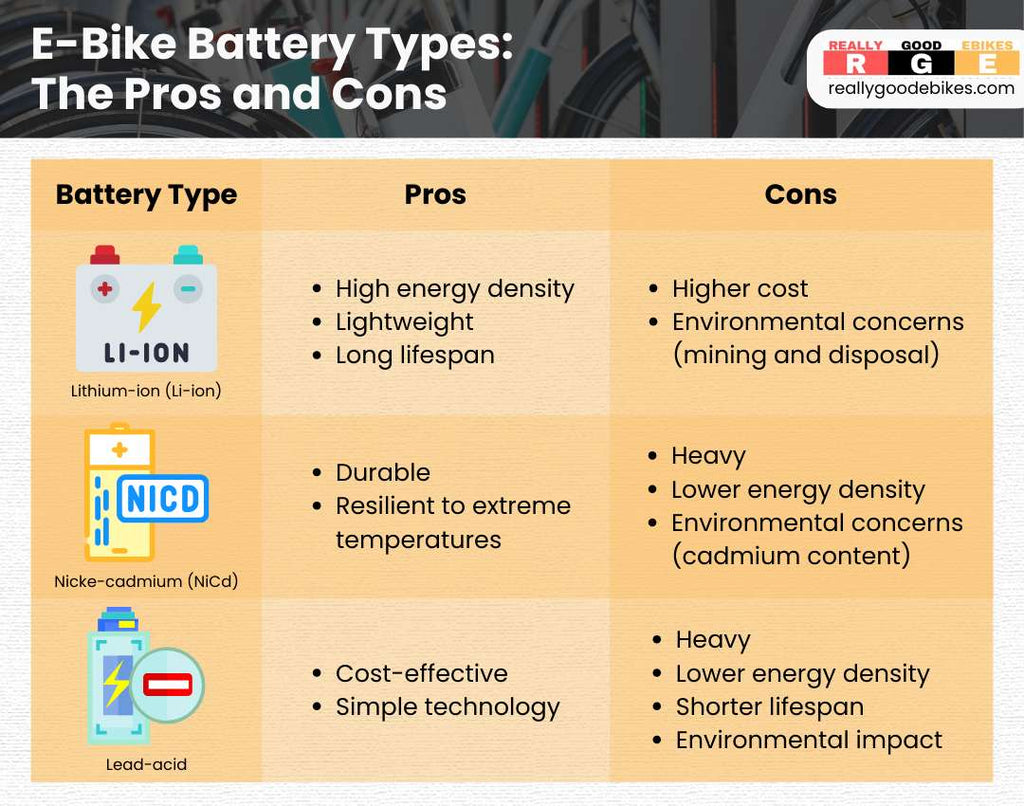
Most e-bikes use lithium-ion (Li-ion) batteries. Some older models use lead-acid or nickel-metal hydride (NiMH), but these are rare now. Lithium-ion lasts much longer and is lighter.
Battery Lifespan By Chemistry
To compare, here’s how long different battery types typically last:
| Battery Type | Typical Lifespan (Years) | Charge Cycles | Notes |
|---|---|---|---|
| Lithium-ion | 3–5 | 500–1,000 | Standard for most e-bikes |
| Lithium-polymer | 2–4 | 500–800 | Lighter, but less stable |
| Nickel-metal hydride | 2–3 | 300–500 | Rare, older bikes |
| Lead-acid | 1–2 | 200–300 | Heavy, mostly obsolete |
Signs Your E-bike Battery Is Wearing Out
It’s not always easy to tell when your battery is reaching the end of its life. Look for these signs:
- Range drops—You can’t go as far on a charge as you used to.
- Power fades—The motor feels weak, especially on hills.
- Longer charging times—Battery takes longer to reach full charge.
- Battery won’t charge fully—It stops charging at 80% or 90%.
- Battery gets hot—During charging or riding, more than before.
If you notice two or more of these, it’s likely your battery is past its prime.
How To Make Your Electric Bike Battery Last Longer
Good habits can add years to your battery’s life. Here’s what really works:
1. Don’t Overcharge
Unplug the charger when your battery is full. Leaving it plugged in for days can slowly damage the cells.
2. Avoid Full Discharges
Try not to let your battery run all the way to zero. Charge when it drops to about 20–30%.
3. Store Correctly
If you won’t use the bike for weeks or months, leave the battery at about 50–70% charge in a cool, dry place.
4. Don’t Use In Extreme Temperatures
Riding or charging in very hot or cold weather can shorten battery life.
5. Use The Right Charger
Always use the charger that came with your bike or one recommended by the manufacturer. Cheap or wrong chargers can cause permanent damage.
6. Clean Carefully
If you wash your bike, remove the battery and avoid getting connectors wet.
7. Ride Smoothly
Use pedal assist instead of full throttle when possible. Start gently instead of sudden high power.
Example Charging Routine
Many e-bike owners keep their battery between 30% and 80% for daily use and only charge fully before a long ride. This simple change can make your battery last 20–30% longer.
How Many Miles Before You Need A New Battery?
E-bike batteries last for 10,000 to 30,000 miles depending on quality, usage, and care. To estimate your own battery’s lifespan:
- Suppose your e-bike gets 30 miles per charge.
- If your battery lasts 800 cycles, that’s 24,000 miles.
Of course, as the battery ages, your per-charge range drops. After three to five years, you may find you only get 20 miles per charge, so the total useful miles are often a bit less.
Real-world Data: How Long Do Top Brands Last?
Some brands stand out for longer battery life. Here is how three popular brands compare:
| Brand | Battery Type | Expected Lifespan (Years) | Typical Charge Cycles |
|---|---|---|---|
| Bosch | Lithium-ion | 4–6 | 1,000 |
| Shimano | Lithium-ion | 3–5 | 800–1,000 |
| Samsung (cells) | Lithium-ion | 3–5 | 800 |
Higher-quality brands also include better battery management systems, which help prevent overcharging, deep discharging, and overheating.
The Cost Of Replacing An Electric Bike Battery
Batteries are one of the most expensive parts of an e-bike. Prices depend on brand, capacity, and chemistry.
- Average cost: $300–$800
- High-end (Bosch, Shimano): $600–$900
- Generic/unbranded: $200–$400
A more expensive battery often lasts longer, so the cost per mile can be lower than a cheap battery that needs faster replacement.
Recycling And Disposal: What To Do With Old Batteries
You should never throw old e-bike batteries in the trash. They can leak chemicals and start fires. Instead, take them to a recycling center or a bike shop that accepts used batteries. Many cities now have special programs for safe battery disposal.
For more information about recycling lithium batteries, the U.S. Environmental Protection Agency offers guidelines and locations.
Common Myths About E-bike Battery Life
Many e-bike owners hear advice that’s outdated or just wrong. Let’s clear up a few myths:
- Myth: You must run the battery to zero before charging.
- Fact: This is true for old nickel-cadmium batteries, not lithium-ion. Shallow charges are better for lithium batteries.
- Myth: Leaving the battery on the charger all night is fine.
- Fact: Most modern chargers stop charging when full, but it’s safer to unplug when done.
- Myth: All e-bike batteries are the same.
- Fact: Quality, brand, and internal electronics make a big difference.
- Myth: Cold weather will kill my battery.
- Fact: Cold reduces range temporarily but doesn’t destroy the battery unless you store or charge it below freezing.
When Is It Time To Replace Your Battery?
If you notice your bike can’t go as far, takes longer to charge, or the battery feels hot and swollen, it’s time to replace it. Don’t wait until the battery fails completely—you could be left stranded. It’s also wise to buy from a trusted seller and check compatibility with your bike model.
Comparison: Battery Range Vs. Battery Lifespan
These terms often confuse new e-bike owners. Here’s a simple comparison:
| Feature | Battery Range | Battery Lifespan |
|---|---|---|
| Definition | How far you can ride per charge | How many years or cycles before battery needs replacement |
| Key Factors | Capacity, terrain, rider weight, assist level | Cycling habits, charging practices, temperature, storage |
| Typical Range | 20–70 miles per charge | 3–5 years, 500–1,000 cycles |
| Improvement Tips | Ride efficiently, lower assist level | Proper charging, avoid extremes |
Two Insights Most Riders Miss
1. Partial Charging Is Healthier
Unlike old batteries, modern lithium-ion batteries last longer if you avoid full charges and deep discharges. Many riders think full charging is always best, but keeping the charge between 20% and 80% can add months or even years to your battery’s life.
2. Temperature Is Critical
Even a few hot days in a closed garage can permanently reduce battery lifespan. Always remove your battery and store it indoors during heat waves or freezing weather, even if you don’t plan to ride.
Credit: www.cyrusher.com
Final Thoughts
An electric bike battery is a big investment. With good habits and a little care, you can make it last for years and thousands of miles. Choose quality, keep an eye on charging and temperature, and replace the battery when range or power drops.
Most of all, remember that taking care of your battery is the best way to get more from your e-bike and enjoy a smooth, reliable ride for a long time.
Frequently Asked Questions
How Many Years Does An E-bike Battery Last On Average?
Most quality electric bike batteries last 3 to 5 years with regular use and good care. Some premium brands reach up to 6 years, but this is less common.
What Happens When My E-bike Battery Gets Old?
As your battery ages, it holds less charge. You’ll notice shorter range, weaker motor power, and longer charging times. Eventually, you’ll need to replace it.
Can I Upgrade My Electric Bike Battery To Get More Range?
Yes, if your e-bike model allows, you can buy a higher-capacity battery. Always check compatibility with your bike’s electronics and mount.
Is It Safe To Leave My Battery Charging Overnight?
It’s generally safe if you use the original charger, as most have built-in protection. Still, it’s best to unplug when full to maximize battery life.
How Do I Recycle An Old E-bike Battery?
Take it to a recycling center or a bike shop that accepts used batteries. Never throw it in the trash, as it can be hazardous to the environment.
Credit: rydybikes.com