Connecting a bike trailer to your bicycle opens up a world of possibilities, whether you want to bring your kids for a ride, carry groceries, or take your dog on an adventure. Many people feel unsure about how to attach a trailer safely and correctly, but it’s not as complex as it seems.
With the right guidance, you can connect a bike trailer in just a few minutes, even if you’re new to cycling accessories.
This guide explains every step, from understanding trailer types to practical tips for a smooth ride. You’ll also learn how to avoid common mistakes and get answers to the questions most beginners ask. Whether your trailer is for passengers or cargo, you’ll finish reading with the confidence to install it and enjoy the ride.
Understanding Bike Trailer Types
Before you attach anything, it’s important to know which kind of trailer you have. The attachment method depends a lot on the trailer type and your bike’s design.
Passenger Trailers
These are the most common for families. Passenger bike trailers are built to carry children or pets. They have a covered compartment, seat belts, and sometimes weather shields. Most attach to the bike’s rear axle or frame.
Cargo Trailers
If you want to transport groceries, camping gear, or tools, a cargo trailer is best. These often use a simple connection to the rear axle or a special hitch, as they don’t need extra safety features for people.
Single Vs. Double Wheel
- Single-wheel trailers: More agile, follow the bike’s path closely, good for narrow trails.
- Double-wheel trailers: More stable, better for heavy loads or children, but wider.
Understanding your trailer type helps you find the right hitch, tools, and connection method.
What You Need Before Attaching
To avoid frustration, gather everything first. Here’s a checklist to keep things smooth:
- Bike trailer (with all included parts)
- Bike with a solid rear axle or quick-release skewer
- Hitch mechanism (often included with trailer)
- Basic tools: Adjustable wrench, Allen keys, or screwdriver (depends on your trailer)
- Safety strap (usually comes with trailer)
- Lubricant (sometimes useful for old or stiff bolts)
- Reflectors/lights (for visibility, if not already attached)
Double-check your trailer’s manual for any special requirements.

Credit: www.youtube.com
How Bike Trailer Hitches Work
The hitch is the connector between your bike and the trailer. Most hitches fit at the rear wheel’s axle. There are two main types:
Axle-mounted Hitches
These attach directly to the rear axle or the quick-release skewer. They are popular for their stability and are common on passenger trailers.
Frame-mounted Hitches
These clamp onto the bike’s frame near the rear wheel. They’re less common but used for some cargo trailers.
Here’s a quick comparison:
| Hitch Type | Attachment Point | Best For | Pros | Cons |
|---|---|---|---|---|
| Axle-Mounted | Rear axle/skewer | Passenger, cargo trailers | Stable, common, easy to find | May not fit all axles |
| Frame-Mounted | Bike frame (seat stay/chain stay) | Cargo trailers | Fits more bikes, less stress on axle | Can scratch paint, less common |
Step-by-step Guide: Connecting The Trailer
Let’s walk through the process. Most people can do this in about 10-20 minutes, even if they’re beginners.
1. Prepare Your Bike
- Check your bike’s rear axle. Some trailers only fit standard solid axles or quick-release skewers. If you have a thru-axle, you may need an adapter.
- Clean the attachment area. Dirt or rust can make installation harder and less secure.
2. Assemble The Trailer
- Follow the manual. Most trailers need some assembly, like attaching wheels or safety flags.
- Check all fasteners. Make sure everything is tight, especially the wheels.
3. Attach The Hitch To The Bike
- Remove the axle nut or loosen the quick-release skewer.
- Slide on the hitch arm or connector plate (provided by the trailer manufacturer).
- Re-tighten the nut or skewer. It should be firm but not overtightened.
Some newer trailers have their own quick-release skewer included.
4. Connect The Trailer Arm
- Align the trailer’s tow arm with the hitch on your bike.
- Insert the connecting pin or bolt. This holds the arm in place.
- Secure the safety clip (usually a metal pin or latch) to make sure the arm can’t slide out.
5. Attach The Safety Strap
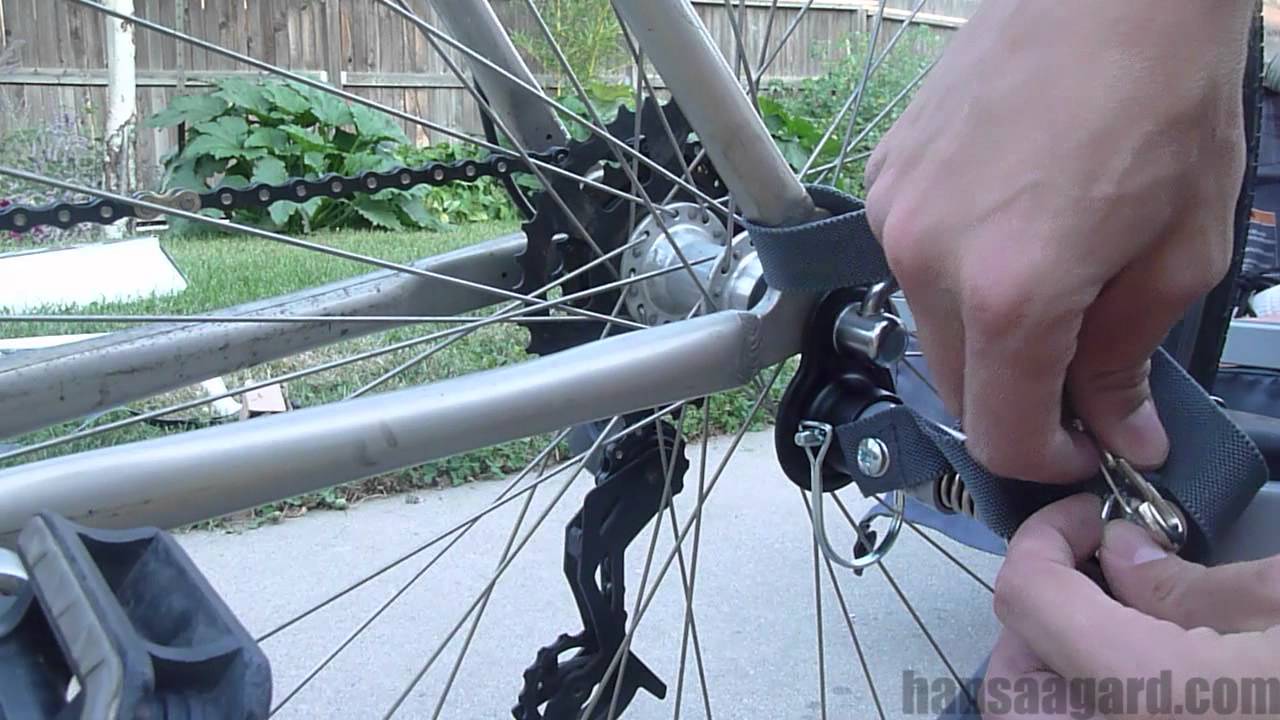
Most trailers include a safety strap for backup security. This wraps around the bike’s frame or axle. If the main hitch fails, the trailer stays attached.
- Wrap the strap around the frame or seat stay.
- Clip or buckle the end securely.
Never skip this—it’s a critical safety feature.
6. Double-check Everything
- Shake the trailer gently. It should move with the bike, not wobble or rattle.
- Check all fasteners. Nothing should be loose.
- Test the brakes. The trailer adds weight, so make sure you can stop safely.
7. Add Visibility Gear
- Attach reflectors or lights if not already installed.
- Raise the safety flag. This makes the trailer easier for cars to see.
Common Mistakes And How To Avoid Them
Even careful riders make errors the first time. Here’s what to watch out for:
- Skipping the safety strap. This is a major risk; always use it.
- Using the wrong hitch. Not all hitches fit every bike. Double-check compatibility, especially with disc brakes or thru-axles.
- Loose fasteners. Even a small amount of play can cause wobbling or dangerous detachment.
- Ignoring weight limits. Overloading the trailer can damage your bike or make it hard to control.
- Not testing the setup. Always do a short test ride before any long journey.
Special Cases: Adapting To Different Bikes
Modern bikes come in many styles, and not all are the same when it comes to attaching trailers.
Bikes With Thru-axles
Many newer mountain and road bikes use thru-axles instead of quick-release skewers.
- Standard hitches won’t fit. You’ll need a thru-axle adapter, which replaces your current axle.
- Buy the right size. Axle diameters and lengths vary. Check your bike’s specs.
Bikes With Disc Brakes
Disc brakes can block some hitches. Look for hitches designed for disc brake clearance or use frame-mounted options.
E-bikes
Electric bikes are heavier and sometimes have different axle designs.
- Check the manual for trailer compatibility.
- Consider weight limits, as the motor and battery add mass.
Carbon Frames
Carbon bikes are light but can be damaged by over-tightening or clamping.
- Use frame protection if attaching a hitch.
- Prefer axle-mounted hitches to avoid frame stress.
Safety Tips For Riding With A Trailer
Once attached, riding with a trailer is different from riding solo. Here’s how to stay safe:
- Allow more braking distance. Trailers add weight and momentum.
- Take wider turns. Double-wheel trailers are wider than your bike—don’t cut corners too sharply.
- Avoid sudden swerves. Trailers can tip or sway if you steer quickly.
- Check tire pressure. Both your bike and trailer tires must be properly inflated.
- Monitor your load. Make sure children are buckled in, cargo is balanced, and nothing is loose.
Here’s a quick safety comparison:
| Without Trailer | With Trailer |
|---|---|
| Normal braking distance | Longer braking distance needed |
| Standard turning radius | Wider turns required |
| No extra visibility needed | Use flags/lights for safety |
Real-world Example: Connecting A Child Trailer
Let’s say you bought a popular child trailer like the Burley Bee. Here’s what connecting it looks like:
- The trailer comes with a hitch that fits most quick-release axles.
- You remove the rear quick-release skewer, slide the hitch plate on, and re-tighten.
- Connect the trailer’s tow arm, insert the pin, and secure the safety strap.
- Fasten the child inside, raise the orange flag, and do a short test ride.
In less than 20 minutes, your bike is ready for the park or grocery run.
Credit: www.youtube.com
Maintenance And Aftercare
Attaching the trailer is just the start. Keeping everything in good shape is important for safety and long-term use.
- Check all bolts and pins before every ride.
- Lubricate moving parts every few months.
- Inspect the hitch for wear. Replace if you see cracks or bent parts.
- Clean the trailer after wet or muddy rides to prevent rust.
With regular checks, your trailer will last for years.
Two Non-obvious Tips For Beginners
- Practice without passengers first. Take a few test rides with the trailer empty. This helps you adjust to the extra weight and length.
- Mark your axle position. If you remove the trailer often, a small paint dot on your axle or frame helps you attach the hitch in the same spot every time, saving setup time.
When To Ask For Help
Sometimes, you may face a problem your manual doesn’t solve—strange noises, poor fit, or unclear instructions. Don’t hesitate to ask at your local bike shop. Mechanics see all types of setups and can usually fix issues quickly and safely.
You can also check trusted sources like Sheldon Brown’s bicycle advice for detailed guides.
Frequently Asked Questions
How Much Weight Can A Bike Trailer Carry?
Most trailers carry 40–100 pounds (18–45 kg), depending on the model. Always check the trailer’s manual for exact limits. Overloading can damage your bike or cause accidents.
Can I Use A Bike Trailer With Any Bicycle?
Many trailers fit standard road, hybrid, and mountain bikes. However, bikes with thru-axles, disc brakes, or carbon frames may need special adapters or hitches. Always check compatibility before buying.
Is It Safe To Ride With A Bike Trailer In The Rain?
Yes, but use extra caution. Wet roads are slippery, and visibility is lower. Make sure the trailer has rain covers for passengers or cargo, and always use lights and reflectors.
Do I Need To Register My Bike Trailer?
In most countries, registration is not required for bike trailers used on public roads or paths. Check your local laws for any special rules, especially if carrying children.
How Do I Store My Bike Trailer When Not In Use?
Most trailers fold flat for easy storage. Keep it in a dry place, out of direct sunlight, to prevent fading or rust. If possible, hang it or place it on a shelf to avoid tire damage.
Connecting a bike trailer isn’t hard if you follow the right steps. With a little practice, you’ll be ready for family adventures, shopping trips, or even long-distance rides. Always put safety first, double-check your setup, and enjoy the freedom that comes with your new rolling companion.

Credit: www.wikeeurope.com