Packing a bike into a bike box can feel intimidating, especially if you’ve never done it before. Yet, it is a skill that every cyclist who travels needs to learn. Whether you’re flying across continents for a race or shipping your bike for a big move, proper packing protects your investment and saves you from costly damage.
With the right steps, tools, and mindset, you can transform your bike from a fully-built machine into a safe, compact package ready for any journey.
Why Packing Your Bike Correctly Matters
A bike is not just a collection of metal and rubber—it is a precisely engineered machine. When shipped or transported, it faces bumps, vibrations, and handling that can cause serious damage if not packed well. Cracked frames, bent derailleurs, and scratched paint are common results of poor packing. Insurers may not cover damage if they decide your packing was careless. So, learning how to pack your bike correctly isn’t just about convenience, but about protecting both your gear and your wallet.
What You Need Before You Begin
Before you start, gather all the tools and materials you’ll need. This step saves time and prevents mistakes later.
- Bike box: Cardboard or hard case. Airlines and couriers accept both, but a hard case offers more protection.
- Allen keys and wrenches: For removing wheels, handlebars, and pedals.
- Pedal wrench: Often needed for pedals.
- Torque wrench: To safely re-tighten bolts without over-tightening.
- Wheel bags (optional): For extra wheel protection.
- Plastic spacers: To prevent the fork and rear triangle from being crushed.
- Foam tubing or pipe insulation: To protect the frame and fork.
- Zip ties or Velcro straps: For securing moving parts.
- Bubble wrap or soft cloths: For delicate areas.
- Packing tape: To close the box securely.
- Small bag or box: For bolts, skewers, and small parts.
- Marker and shipping labels
If you’re missing any specialized items, most bike shops can provide them or suggest alternatives.
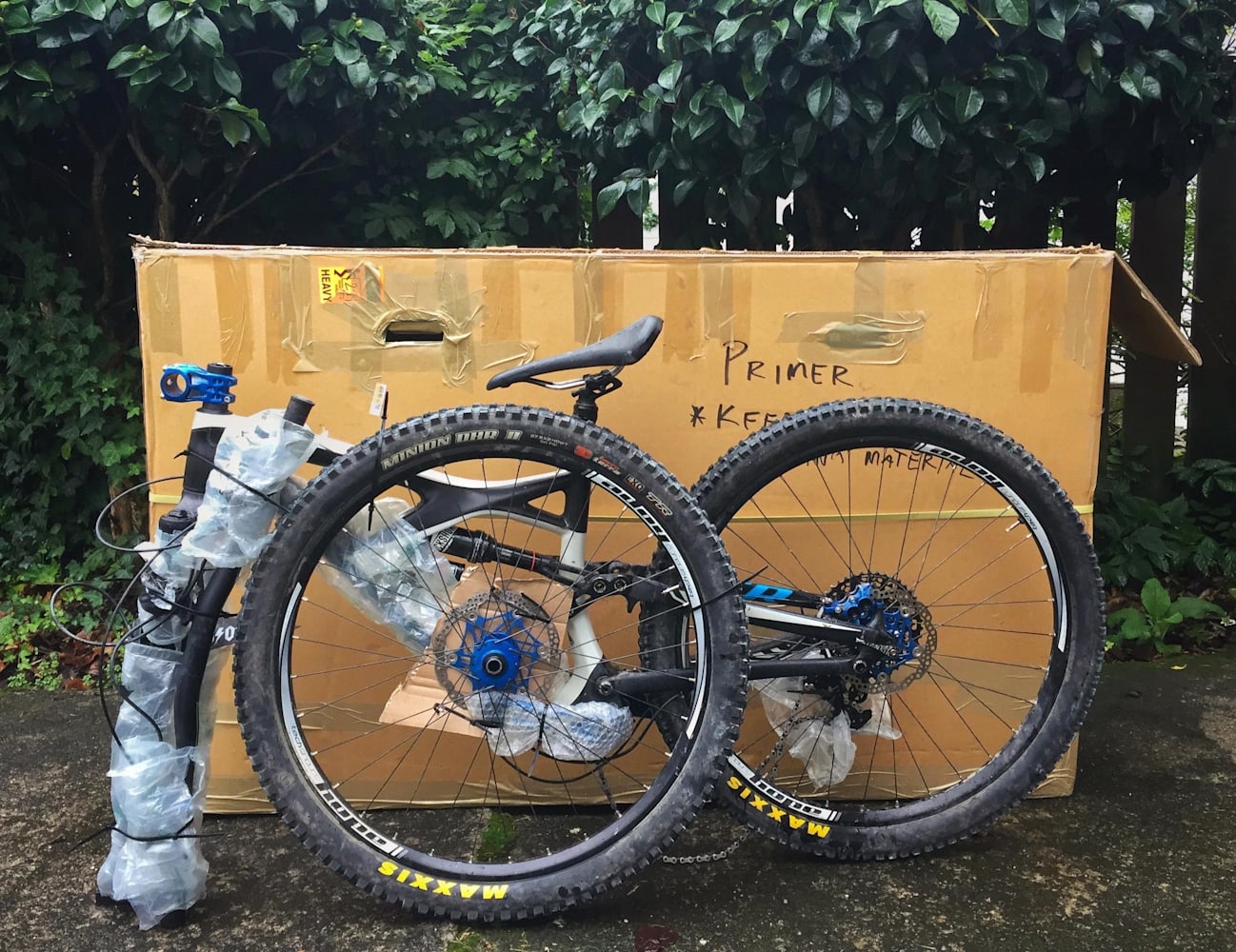
Credit: www.redbull.com
Step-by-step Guide To Packing Your Bike
1. Clean Your Bike
Dirt and grit can scratch your frame during transport. Take a few minutes to clean your bike, especially the drivetrain and wheel areas. A clean bike also makes reassembly easier and more pleasant.
2. Remove The Pedals
Use your pedal wrench or Allen key. Remember, the left pedal unscrews clockwise, the right counterclockwise. Pedals can be tight, so apply firm, controlled pressure. Place the pedals in a small bag to avoid losing them.
3. Take Off The Wheels
Release your brakes if needed (especially with rim brakes). Remove both wheels. If you have disc brakes, insert rotor spacers to protect the calipers from getting squeezed during transport. Remove the quick-release skewers or thru-axles and store them safely.
4. Lower Or Remove The Seatpost
Most bikes allow you to simply lower the seatpost into the frame. If it’s too tall for the box, fully remove it. Mark your saddle height with tape or a marker for quick reassembly later.
5. Remove Or Rotate Handlebars
Loosen the stem faceplate bolts using an Allen key. Remove the handlebars from the stem but leave all cables connected. Wrap the bars in foam and secure them to the frame with zip ties. On some bikes, you can simply rotate the bars parallel to the frame.
6. Protect The Frame And Fork
Wrap foam tubing or bubble wrap around the frame tubes, fork blades, and rear stays. Pay special attention to the chainstay, fork tips, and any exposed metal. Use zip ties or tape to keep the padding in place, but don’t overtighten.
7. Add Spacers
Install plastic spacers in the fork and rear dropouts. These prevent the frame from being crushed if something presses against the box. Bike shops often have these for free.
8. Remove Or Pad Delicate Parts
Take off any fragile or protruding components such as:
- Rear derailleur (hang it inside the frame, wrapped in bubble wrap)
- Computer mounts
- Lights and accessories
- Water bottle cages (optional)
Place all bolts, small parts, and accessories in a labeled bag.
9. Place The Bike In The Box
Lay the frame in the box so it sits securely. Add extra bubble wrap if needed. Slide the wheels into the side slots (in a hard case) or alongside the frame (in a cardboard box). Place wheel bags or cardboard between the wheels and frame for more protection.
10. Fill Empty Spaces
Use soft materials like clothes, towels, or more bubble wrap to fill gaps. This prevents movement and adds a layer of shock absorption. Never use hard or sharp objects.
11. Close And Seal The Box
Check that everything is snug, then close the box. Seal all edges with strong packing tape. Attach your shipping label clearly and add “FRAGILE” stickers if allowed.
12. Take Photos
This is a step many forget. Take photos of your packed bike and its condition before sealing the box. These can be vital if you need to file a claim for damage.
Cardboard Bike Box Vs. Hard Case
Choosing between a cardboard bike box and a hard case is an important decision. Here’s a quick comparison to help you decide:
| Feature | Cardboard Box | Hard Case |
|---|---|---|
| Cost | Usually free from bike shops | Can cost $200–$600+ |
| Protection | Good, but not crush-proof | Excellent, highly impact-resistant |
| Weight | Lighter | Heavier (adds to baggage weight) |
| Storage | Disposable/recyclable | Reusable, but takes space |
| Convenience | Bulky, one-time use | Wheels and handles for easy transport |
Non-obvious insight: Many airlines accept both, but a hard case can pay for itself if you travel often. Some pro teams still use cardboard boxes because they are light and can be recycled at the destination.

Credit: tempocyclist.com
Common Packing Mistakes (and How To Avoid Them)
Many beginners make mistakes that can lead to damage or extra costs. Here are some to watch out for:
- Forgetting to protect the derailleur: Even a light bump can bend it. Always remove and wrap it.
- Not using dropout spacers: These small plastic pieces prevent crushed forks and frames.
- Over-tightening zip ties: This can damage carbon frames or cables.
- Leaving air in tires: Some airlines require you to deflate tires partially, but not fully. Fully flat tires are more prone to pinch damage.
- Packing heavy items inside: Don’t use your bike box to ship tools or heavy gear; they can move and cause damage.
- Not labeling small parts: Mixing up bolts or losing them during unpacking is common. Use labeled bags.
- Skipping photos: If there’s a dispute, your photos are your best evidence.
How Airlines And Couriers Handle Bike Boxes
Knowing how your bike will be handled helps you pack smarter. Airline staff and couriers move thousands of boxes a day. Your bike box will be stacked, slid, and moved with other heavy items. That’s why internal padding and protecting delicate parts is so important.
Here’s a look at typical airline bike box rules:
| Airline | Maximum Box Size | Weight Limit | Extra Fees |
|---|---|---|---|
| United | 115 in (292 cm) total | 50 lbs (23 kg) | $150 (may vary) |
| British Airways | 190 x 95 x 65 cm | 23 kg | Included as checked bag |
| Lufthansa | Up to 315 cm total | 32 kg | $150+ |
Always check the current rules with your airline, as they change often.

Credit: bikeboxalan.com
Tips For Easy Reassembly At Your Destination
When you unpack, you want to get riding as soon as possible. Here’s how to make reassembly painless:
- Mark saddle and handlebar positions: Use tape or a marker before you disassemble.
- Pack tools you’ll need: Bring your Allen keys, torque wrench, and pedal wrench.
- Keep a checklist: Before sealing the box, make a list of everything you removed.
- Take photos during packing: Use these as a reference for reassembly.
- Inspect for damage: Check the frame, wheels, and components for cracks or bends before riding.
Real-world Example: Packing A Road Bike For A European Race
Imagine you’re flying from New York to Paris for a cycling event. You have a carbon road bike, a cardboard box from a local shop, and all the tools listed above.
- Clean your bike, then remove pedals and wheels.
- Deflate tires to about half pressure.
- Remove the derailleur and wrap it.
- Place foam on all frame tubes.
- Lower the seatpost and remove the handlebars from the stem.
- Insert dropout spacers.
- Place the frame in the box, add the wheels with cardboard between, and fill empty spaces with clothes.
- Tape the box well and attach your contact info.
- At the airport, declare your bike at the check-in desk and pay any required fee.
On arrival, you find your bike safe and ready to race, thanks to careful packing.
Environmental Considerations
If you’re concerned about waste, cardboard boxes can be recycled, and many bike shops will happily take them back. Hard cases, while less eco-friendly, are reusable for years. For extra padding, use old clothes instead of plastic wrap to reduce single-use waste.
Two Insights Often Missed By Beginners
- Insurance rarely covers poor packing: Even if you buy travel insurance, claims can be denied if the packaging was not “suitable.” Always keep receipts and take photos as proof.
- Customs regulations: Some countries require you to declare your bike or pay duties if they suspect commercial import. Always check local rules before shipping.
For more details on airline rules and bike transport, the Wikipedia page on bicycle transportation by air is a helpful resource.
Frequently Asked Questions
How Much Does It Cost To Check A Bike Box On Airlines?
It depends on the airline. Most charge $75–$200 per bike box, but some include it as a regular checked bag if within size and weight limits. Always check your airline’s website before you fly.
Is It Safe To Ship A Bike In A Cardboard Box?
Yes, if you pack it well with proper padding and spacers. Many pros use cardboard boxes. Hard cases offer more protection but cost more.
Should I Remove The Chain Before Packing?
Usually, you can leave the chain on. For long shipments, or if you want to keep your frame extra clean, you can remove it and pack it separately.
Can I Pack Tools And Gear In My Bike Box?
It’s best to avoid putting heavy tools or gear in the box. They can shift and damage your bike. Pack light accessories only, like your helmet or shoes, with extra padding.
How Do I Protect My Disc Brakes During Travel?
Insert disc brake spacers to prevent the calipers from closing accidentally. Remove the rotors if you want extra safety, and pack them flat between cardboard sheets.
Packing your bike doesn’t have to be stressful. With careful preparation, the right materials, and attention to detail, you can ensure your bike arrives safe and ready for your next adventure.