Transporting a bike without a rack can seem tricky, but it’s possible if you know the right techniques. Many cyclists find themselves in situations where a bike rack isn’t available—maybe you bought a new bike and want to bring it home, or you’re going on a trip and need to fit the bike inside your car.
Whether you have a sedan, SUV, or even a small hatchback, there are safe and practical ways to move your bike without a dedicated rack. The key is preparation, understanding your vehicle’s space, and using the right protection for both your bike and your car.
This guide will walk you through all the best methods for transporting a bike without a rack. You’ll learn step-by-step instructions, useful tips, and things to avoid. By the end, you’ll feel confident moving your bike securely, even if you’ve never done it before.
Assessing Your Vehicle And Bike
Before you attempt to transport your bike, it’s important to look at your vehicle’s size and the type of bike you own. Some cars have foldable seats or wide trunks, while others are more compact. Likewise, road bikes are generally lighter and slimmer than mountain bikes, which can influence your method.
Take a tape measure and check your car’s trunk or interior dimensions. Measure your bike’s length, height, and width. Don’t forget to account for the handlebars and pedals, as these often stick out. Most standard adult bikes are between 68–70 inches (about 175 cm) long. If your car’s trunk opening is smaller than this, you’ll likely need to remove one or both wheels.
Understanding these details will save you time and frustration, and help you decide which transport method suits your situation.
Preparing Your Bike For Transport
To minimize the risk of damage to your bike or your car, it’s crucial to prepare your bike properly.
- Clean your bike. Dirt and mud can scratch your car’s interior. Wipe down the frame, tires, and drivetrain with a damp cloth.
- Remove accessories. Take off anything that can fall off or break, such as lights, water bottles, GPS units, or pumps.
- Deflate tires slightly. Let a little air out of the tires. This can help the bike fit more easily, and it reduces pressure on the rims if the bike is squeezed in.
- Protect sharp edges. Use old towels, foam, or bubble wrap to cover the pedals, seat post, and handlebar ends. This will help avoid scratches and dents inside your car.
Many first-timers miss the importance of removing accessories and protecting sharp edges. These small steps can prevent costly damage to both your bike and your vehicle.
Transporting A Bike Inside Your Car
One of the safest ways to move your bike without a rack is to place it inside your vehicle. This works best if you have a hatchback, wagon, SUV, or any car with fold-down seats. Here’s how to do it:
- Fold down the rear seats to maximize space.
- Remove the front wheel. Most bikes use quick-release levers or thru-axles. For quick-release, simply open the lever and slide the wheel out. For thru-axle, use an Allen key to unscrew and remove the axle.
- Remove the rear wheel if needed. If space is tight, take off the rear wheel as well. Just shift the chain onto the smallest gear before removing to make reinstallation easier.
- Place the bike chain-side up. This prevents oil or grease from touching your car’s surfaces.
- Lay the bike frame carefully. Position the frame so it rests on soft padding. Make sure no pressure is on the derailleur or disc rotors.
- Store wheels separately. Place removed wheels in wheel bags, pillowcases, or wrap them in towels. Keep them flat to avoid bending the rims.
- Secure everything. Use bungee cords or straps to keep the bike from moving during transport.
Example: Fitting A Road Bike In A Sedan
Let’s say you have a compact sedan like a Toyota Corolla. Fold the back seats down, remove both wheels, and turn the handlebars sideways. Lay the frame in first, chain-side up, with towels underneath. Tuck the wheels alongside the frame.
Even in a small car, a standard road bike will fit this way.
Tips For Suvs And Hatchbacks
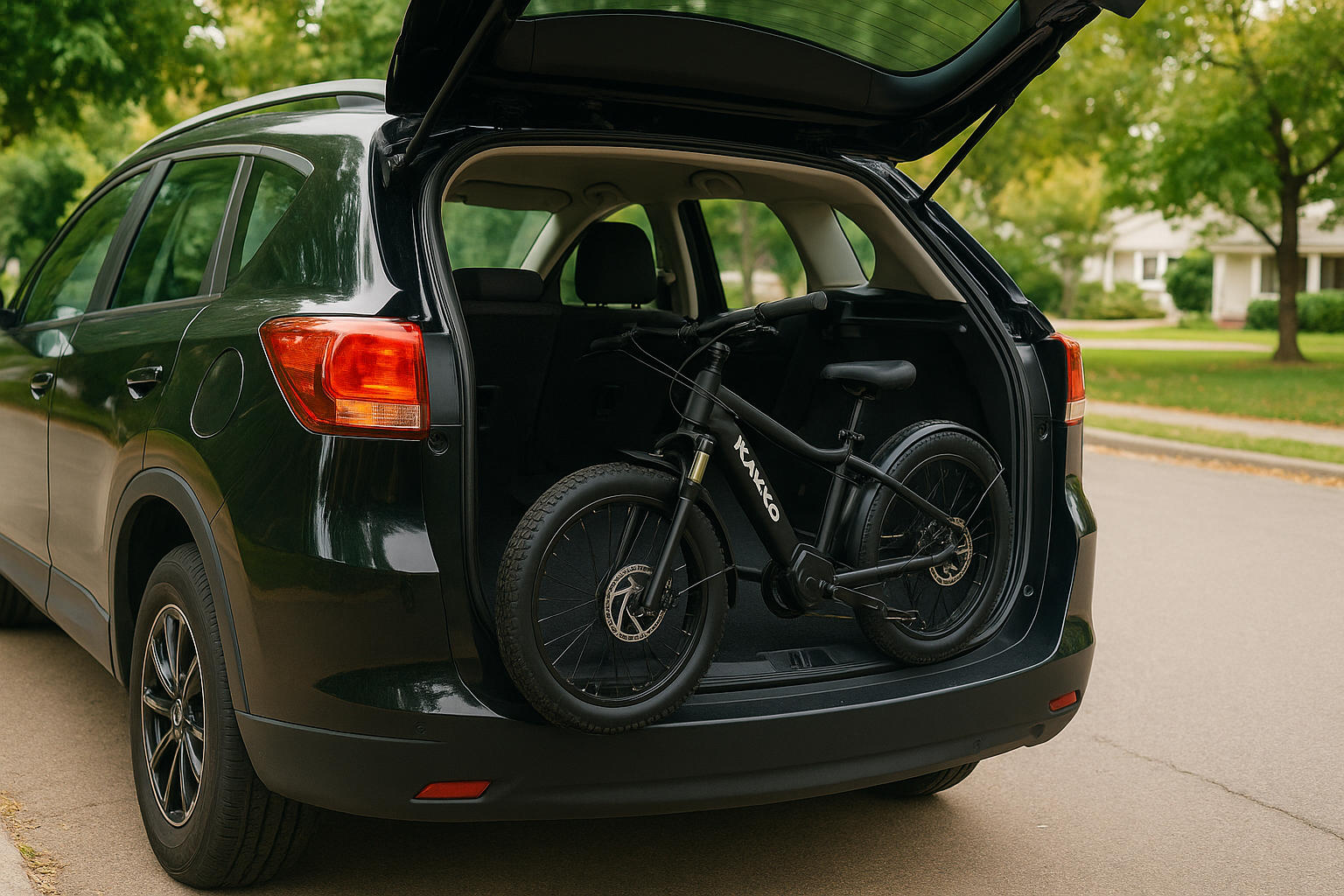
If you own a larger vehicle, you might only need to remove the front wheel. Place the bike diagonally, and use the cargo hooks to strap it in place. Always check that the bike doesn’t block your rearview mirror.
Transporting A Bike In The Trunk
If folding seats isn’t possible, you can still use your trunk, but the process is a bit different.
- Remove both wheels from the bike.
- Turn the handlebars parallel to the frame.
- Cover the trunk floor with a blanket for protection.
- Place the frame in the trunk with the chain facing up.
- Store wheels and small parts (like skewers or axles) in a bag, so they don’t get lost.
- Avoid stacking heavy items on top of the bike.
This method works well for compact cars, but always measure before you start so you’re not stuck halfway through.
Credit: viavelolock.com
Using Back Seat For Transport
If your trunk is too small or full, the back seat is another option. Here’s what to do:
- Lay down a thick blanket or sheet to protect your seats.
- Remove at least the front wheel. In many cases, both wheels must come off.
- Place the bike frame across the back seat, chain-side up.
- Position the wheels next to the frame or on the floor behind the front seats.
Never force the bike in. If you feel resistance, double-check your angles or remove more parts. For long trips, check that seatbelts or straps secure the bike so it doesn’t move.
Transporting Multiple Bikes Without A Rack
Moving two or more bikes without a rack requires careful stacking and padding. Here’s how to do it safely:
- Remove wheels from all bikes. This reduces bulk and makes stacking easier.
- Alternate the direction of each bike frame. Place one bike with the handlebars to the left, the next with handlebars to the right, and so on.
- Add padding between bikes. Use blankets, towels, or foam to prevent scratches.
- Stack wheels separately. Keep all wheels together and flat to protect the spokes.
Never stack bikes with pedals touching frames or derailleurs. This can cause damage that’s expensive to fix.
Alternative Methods: Diy Solutions
If fitting the bike inside your car isn’t possible, there are a few creative ways to transport your bike without a rack.
Using Rope Or Bungee Cords
Some cyclists secure their bikes to the car using rope or bungee cords. This is only safe for short, slow trips and when you have a sturdy anchor point. For example, you can tie the bike frame to the trunk lid, but make sure the bike is very secure and does not block your license plate or lights.
Trunk Mount With Towels
If your trunk lid can close on the bike’s frame, place thick towels where the lid touches the bike to avoid scratches. Tie the trunk down with a bungee cord so it doesn’t bounce.
Cardboard Box Transport
For long-distance moves, consider using a large bike box (like those from bike shops). Disassemble the bike—remove wheels, pedals, and handlebars—and pack everything inside. This method offers the best protection but requires more work.
Protecting Your Bike And Car
One often overlooked aspect of bike transport is protection. Even if you’re careful, the smallest bump can cause scratches or dents. Take time to:
- Use old yoga mats, towels, or foam under the bike.
- Cover sharp parts like pedals and dropouts.
- Wrap your car’s interior with moving blankets if possible.
- Keep a small repair kit in the car in case you need to reassemble the bike on arrival.
Professional movers often use purpose-made bike bags or boxes. If you transport bikes often, investing in one can save you money on repairs.

Credit: www.youtube.com
Common Mistakes And How To Avoid Them
Many beginners make small errors that cause big problems. Here are common mistakes to avoid:
- Forgetting to secure the bike. Even small movements can damage gears or bend wheels.
- Not removing pedals or handlebars. These parts stick out and can catch on car parts or doors.
- Letting bike grease touch upholstery. Chain and cassette oil can stain fabric and is hard to clean.
- Stacking heavy objects on the bike. This can bend the frame or rims.
- Ignoring local laws. In some places, it’s illegal to drive with the trunk open or items sticking out.
Paying attention to these details can save time, money, and frustration.
Comparing Bike Transport Methods Without A Rack
Below is a quick comparison of the most popular methods:
| Method | Best For | Protection Level | Ease of Use |
|---|---|---|---|
| Inside Car | Single bike, short trips | High | Medium |
| Trunk Lid with Towels | Larger bikes, small trunks | Medium | Low |
| Cardboard Box | Moving, air travel | Very High | Low |
Credit: velosurance.com
Example Scenarios And Solutions
Let’s look at a few real-life examples:
Scenario 1: Compact Car, One Bike
You have a Honda Civic and need to pick up a new road bike from a shop. Fold the back seats, remove both wheels, and carefully load the frame and wheels separately. Bring towels to protect your car.
Scenario 2: Suv, Two Mountain Bikes
You and a friend want to go trail riding. Remove the front wheels, fold the seats, and alternate the bikes so the handlebars face opposite directions. Use straps to keep them from moving.
Scenario 3: No Space Inside, Only Trunk
Your car’s interior is full of luggage. Remove both bike wheels, pack the frame in the trunk, and use a bungee cord to secure the trunk lid. Pad all contact points with towels.
Quick Reference: What To Remove When Fitting A Bike
Not sure what to take off your bike? Here’s a handy guide:
| Part | When to Remove | Tool Needed |
|---|---|---|
| Front Wheel | Most cars | Quick Release or Allen Key |
| Rear Wheel | Small trunks | Quick Release or Allen Key |
| Pedals | Tight spaces | Pedal Wrench |
| Handlebars | Very tight space | Allen Key |
Legal And Safety Considerations
Always check your local laws before transporting a bike without a rack. In some places, driving with a partially open trunk or items sticking out is not allowed. Make sure your license plate, taillights, and turn signals are always visible.
For long trips, stop every hour to check that the bike and straps are still secure.
If you’re interested in more details about cycling rules and safety, consider reading this comprehensive guide on bicycle transportation planning.
Frequently Asked Questions
How Can I Transport A Bike If I Can’t Remove The Wheels?
If your bike’s wheels are not removable, you’ll need a car with a very large trunk or SUV. Place blankets on the seats, turn the handlebars sideways, and move the front passenger seat forward as much as possible. Be prepared for a tight fit.
Is It Safe To Drive With My Trunk Open For A Bike?
Driving with the trunk open is not ideal, but it can be safe for short distances if you use straps or bungee cords to secure the lid and the bike. Make sure nothing blocks your view or license plate, and check local laws.
What Should I Use To Protect My Car’s Interior From Bike Grease?
Old towels, blankets, or a dedicated bike mat work well. You can also use plastic sheeting for extra protection, especially if your car has light-colored seats.
Can I Transport An E-bike Without A Rack?
Yes, but e-bikes are heavier than standard bikes. Always remove the battery and wheels to reduce weight. Lift carefully and use two people if possible to avoid injury.
What Is The Best Way To Transport Multiple Bikes Without A Rack?
Remove the wheels from all bikes, alternate the direction of each frame, and use padding between them. Stack the wheels separately and secure everything with straps to prevent movement.
Moving a bike without a rack might seem challenging, but with the right preparation, it’s quite manageable. Take your time, protect your gear, and enjoy your ride when you reach your destination.