Turning left on a bike may sound simple, but it’s a skill that takes practice, awareness, and the right technique. Many cyclists, especially new riders, find left turns challenging—especially in traffic or at busy intersections. It’s not just about steering your handlebars.
You need to signal, position yourself correctly, and keep an eye on cars and other road users. Learning how to turn left safely can boost your confidence and help you ride more smoothly in the city, suburbs, or countryside.
Left turns are different from right turns because they usually involve crossing lanes of traffic. In countries where people drive on the right, a left turn means crossing the path of oncoming vehicles. This increases the risk, so understanding each step is important.
In this guide, you’ll learn practical tips, the essential rules, and some non-obvious insights that many riders miss. Whether you’re a commuter, a recreational rider, or just starting out, mastering the left turn will make your cycling experience safer and more enjoyable.
Why Left Turns Are Challenging For Cyclists
Turning left is more complex than it seems. Unlike right turns, you often need to cross traffic or move into a different lane. Drivers may not expect a cyclist to change lanes or may have trouble seeing you. Here’s why left turns can be tricky:
- Crossing Traffic: You must cross one or more lanes, often in front of moving vehicles.
- Visibility: Cyclists are smaller and can be hidden in a car’s blind spot.
- Road Positioning: Knowing where to ride and when to change lanes is critical.
- Signaling: You need to communicate clearly with drivers, using hand signals.
- Road Rules: Laws for left turns vary by country and region.
Understanding these challenges helps you approach left turns with the right mindset. Many accidents happen during turns, not on straight roads.
Preparing For A Left Turn
Preparation starts before you reach the intersection. Good planning reduces stress and helps you avoid sudden moves.
Scanning The Road
Look ahead and behind. Check for cars, buses, other bikes, and pedestrians. Use your eyes, and if possible, a rear-view mirror. Many experienced cyclists glance over their left shoulder several times before turning.
Positioning In The Lane
Move towards the center or left side of your lane, depending on the road. On multi-lane roads, you may need to cross over to a left-turn lane. Try to make your move early—about 100 feet (30 meters) before the intersection.
This gives drivers time to notice you and adjust.
Reducing Speed
As you approach the turn, slow down. This helps you control your bike and react to surprises, like a car turning unexpectedly.
Checking The Traffic Signal
Only turn left when it’s safe and legal. Watch for green arrows, “left turn only” signals, or traffic officers controlling the intersection.
The Steps To Turn Left On A Bike
Turning left can be divided into clear steps. Follow these, and practice until each one feels natural.
1. Signal Your Intentions
Extend your left arm straight out to the side. This tells drivers and other cyclists you plan to turn. Hold the signal for 2-3 seconds.
2. Check Behind And Ahead
Before moving over or turning, look behind you. Make sure no cars are close or speeding up to pass. Also, look for pedestrians, especially in crosswalks.
3. Change Lane (if Necessary)
On roads with multiple lanes, you may need to move left. Do this early and smoothly—don’t swerve. Signal as you change lane, and only move when it’s safe.
4. Position At The Intersection
If there’s a left-turn lane, use it. If not, stay near the centerline. Avoid the gutter, where debris and water collect. Keep a safe distance from cars.
5. Yield When Required
If there’s a stop sign or red light, obey it. Yield to oncoming traffic unless you have a green arrow or clear right-of-way.
6. Complete The Turn
Pedal smoothly through the turn. Lean your bike slightly, not your body. Keep your inside pedal (the one closest to the turn) up to avoid hitting the ground.
7. Resume Riding
After turning, move back to your normal riding position. Check for traffic again, and keep both hands on the handlebars.
Choosing The Best Left Turn Method
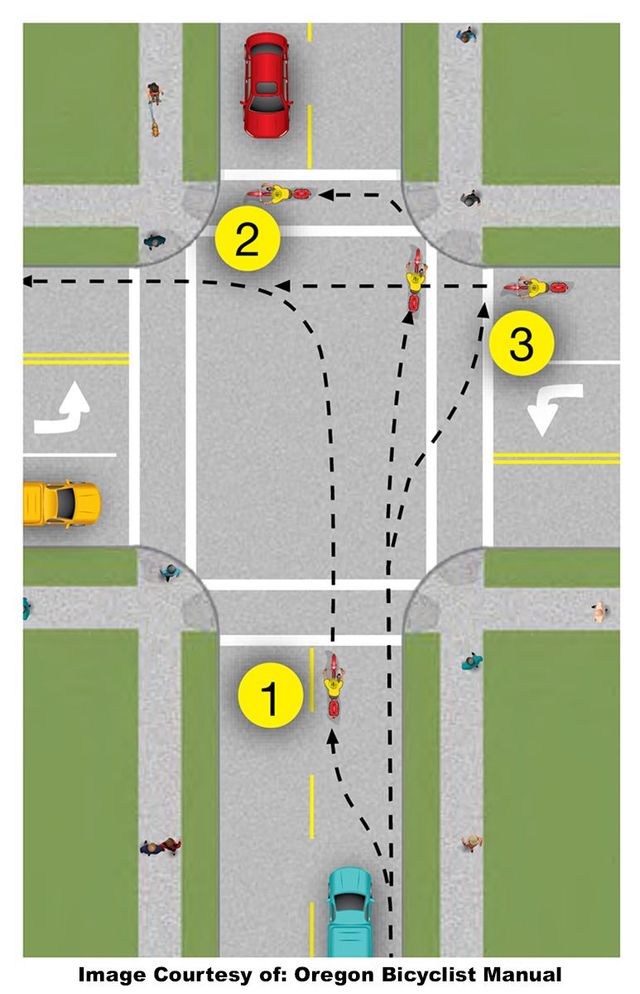
There are two main ways to turn left on a bike: vehicular left turn and pedestrian-style left turn (also called a “two-stage turn” or “box turn”).
Vehicular Left Turn
This method is for confident cyclists and is similar to how cars turn left. You move to the left-turn lane, signal, and turn with the traffic. It’s faster but requires you to cross lanes and mix with vehicles.
Pedestrian-style Left Turn (box Turn)
This is safer for beginners or on busy roads. Here’s how it works:
- Ride straight across the intersection on the right side (as if you are going straight).
- Stop at the far corner or in a marked bike box.
- Turn your bike to face left (the direction you want to go).
- Wait for the green light or a safe gap.
- Cross with the next green or when it’s safe.
This method avoids merging with traffic but can take longer.
Here’s a comparison of both methods:
| Method | When to Use | Pros | Cons |
|---|---|---|---|
| Vehicular Left Turn | Confident riders, low to moderate traffic | Faster, direct | Riskier, must merge with cars |
| Pedestrian-Style Left Turn | Beginners, heavy traffic, wide roads | Safer, no lane crossing | Slower, may need to wait twice |
Credit: www.bikelegalfirm.com
Common Mistakes When Turning Left
Even experienced cyclists can make errors. Here are common mistakes and how to avoid them:
- Not Signaling: Drivers can’t read your mind. Always signal before turning.
- Turning Too Wide or Sharp: Keep your turn smooth. Practice in an empty parking lot.
- Riding in the Gutter: Stay away from the edge where debris collects. It’s safer near the lane’s center.
- Not Checking Behind: Cars may overtake you as you prepare to turn. Always check your blind spot.
- Crossing Without Looking: Never assume cars will stop. Make eye contact if possible.
Special Situations For Left Turns
Some situations need extra care or a different approach.
Left Turn At Busy Intersections
At intersections with lots of lanes or fast-moving traffic, use the pedestrian-style turn. It’s safer to cross in two steps than risk merging with cars.
Left Turn From A Bike Lane
If you’re in a bike lane and want to turn left, you may need to leave the bike lane before the intersection. Signal early, check for cars, and only move when it’s clear.
Left Turn On One-way Streets
If both streets are one-way, position yourself on the left side. Signal and turn as you would in a standard vehicular left turn.
Left Turn With No Traffic Signals
At unsignalized intersections, be extra cautious. Yield to cars, and only turn when there’s a clear gap.
Dealing With Traffic And Road Users
Sharing the road means being predictable and visible.
- Communicate: Use hand signals and make eye contact with drivers.
- Be Assertive, Not Aggressive: Take the lane when needed, but don’t swerve or make sudden moves.
- Watch for Pedestrians: Always yield to people in crosswalks.
- Use Lights and Reflectors: At dawn, dusk, or night, visibility is key.
Gear And Preparation For Safer Left Turns
The right equipment makes left turns safer.
Helmet
A helmet reduces the risk of head injury by up to 70%. Always wear one, and replace it after any crash.
Lights
Use a bright white front light and a red rear light. These help cars see you, especially at night or in bad weather.
Reflective Clothing
Wear a reflective vest or bands. Bright colors make you visible.
Bell Or Horn
Letting others know you are there can prevent accidents, especially in busy city traffic.
Rear-view Mirror
A small mirror on your handlebars or helmet helps you see cars coming from behind.

Credit: biketoeverything.com
Practicing Left Turns
Like any skill, left turns get easier with practice. Start in a quiet area:
- Find an empty parking lot or a quiet street.
- Practice signaling, checking behind, and turning smoothly.
- Try both vehicular and pedestrian-style turns.
- Gradually try busier intersections as you gain confidence.
Here’s a sample practice plan:
| Practice Area | What to Practice | Why It Matters |
|---|---|---|
| Empty Parking Lot | Basic turns, hand signals | Builds muscle memory |
| Quiet Residential Street | Checking for cars, lane changes | Realistic traffic conditions |
| Busy Intersection (with supervision) | Combining skills under pressure | Prepares you for city riding |
Two Non-obvious Insights Most Beginners Miss
1. Your Speed Affects Car Drivers’ Judgement
Many drivers misjudge a cyclist’s speed, especially before a left turn. If you go too fast, cars may not expect you to cross their path so quickly. Slow down before turning—not just for your control, but so drivers can predict your movement.
2. Road Slope And Camber Can Change Your Turn
Roads often slope toward the curb (camber) for drainage. When turning left, this slope can pull your bike outward. Practice adjusting your lean and steering to stay on your path, especially in wet weather.
Advanced Tips For Confident Left Turns
Once you’re comfortable, these advanced tips can make your turns even safer:
- Anticipate Light Changes: Time your approach so you don’t get stuck in the middle of the intersection on a yellow light.
- Use Lane Positioning Strategically: Take the entire lane if needed. This signals to drivers that you are making a left turn and prevents unsafe passing.
- Pre-Position Your Pedals: Before the turn, put your inside pedal up to avoid pedal strike.
- Use the “Hook Turn” Where Legal: Some countries allow a “hook turn,” where you cross the intersection straight, wait, and then turn left with the next green. This is another form of the pedestrian-style turn.
Laws And Rules For Left Turns On A Bike
Always know your local laws. In many places, cyclists have the same rights and duties as drivers. However, some regions require you to use pedestrian crossings for left turns. If you’re unsure, check your city or country’s bicycle rules. The Wikipedia Bicycle Law page is a good starting point.

Credit: bicycles.stackexchange.com
Frequently Asked Questions
What Hand Signal Should I Use For A Left Turn?
Extend your left arm straight out to the side, parallel with the ground. This is the universal signal for a left turn.
Is It Safer To Use The Pedestrian-style Left Turn?
Yes, especially for beginners or in heavy traffic. The pedestrian-style turn reduces your exposure to cars and is legal in many places.
Can I Turn Left From A Bike Lane?
Usually, you need to leave the bike lane before the intersection to position for a left turn. Signal early, and check for cars before moving over.
What If There’s No Left-turn Lane?
Position yourself near the centerline of the road. Signal your intentions and yield to oncoming traffic before turning.
Do I Have To Get Off My Bike To Turn Left?
Not usually. You can turn left while riding using either the vehicular or pedestrian-style turn. Some busy intersections have signs asking cyclists to walk their bikes across—always follow local signs.
Mastering the left turn on a bike is a key cycling skill. With practice, clear signaling, and smart road positioning, you’ll ride more confidently and safely—wherever your journey takes you.