Choosing between 2-wheel vs 3-wheel recumbent for long-distance touring isn't just about wheel count. It's about how you'll handle crosswinds at mile 60, whether you can unclip safely on a loaded mountain descent, and if you're willing to trade a bit of speed for rock-solid stability when you stop for lunch.
Most touring recumbents weigh between 25 and 55 pounds unloaded, and you'll add another 30 to 50 pounds of gear depending on your style. That weight changes everything about how each design performs over hundreds of miles. Let's walk through what actually matters when you're planning a multi-day or cross-country tour.
Quick Answer
Two-wheel recumbents are faster and lighter but require balance at stops. Three-wheel trikes offer stability and easier loading but weigh more. For long touring, choose a 2-wheeler if speed and agility matter most.
Pick a 3-wheeler if comfort at rest and stability outweigh pace. Both handle loaded gear well with proper packing.
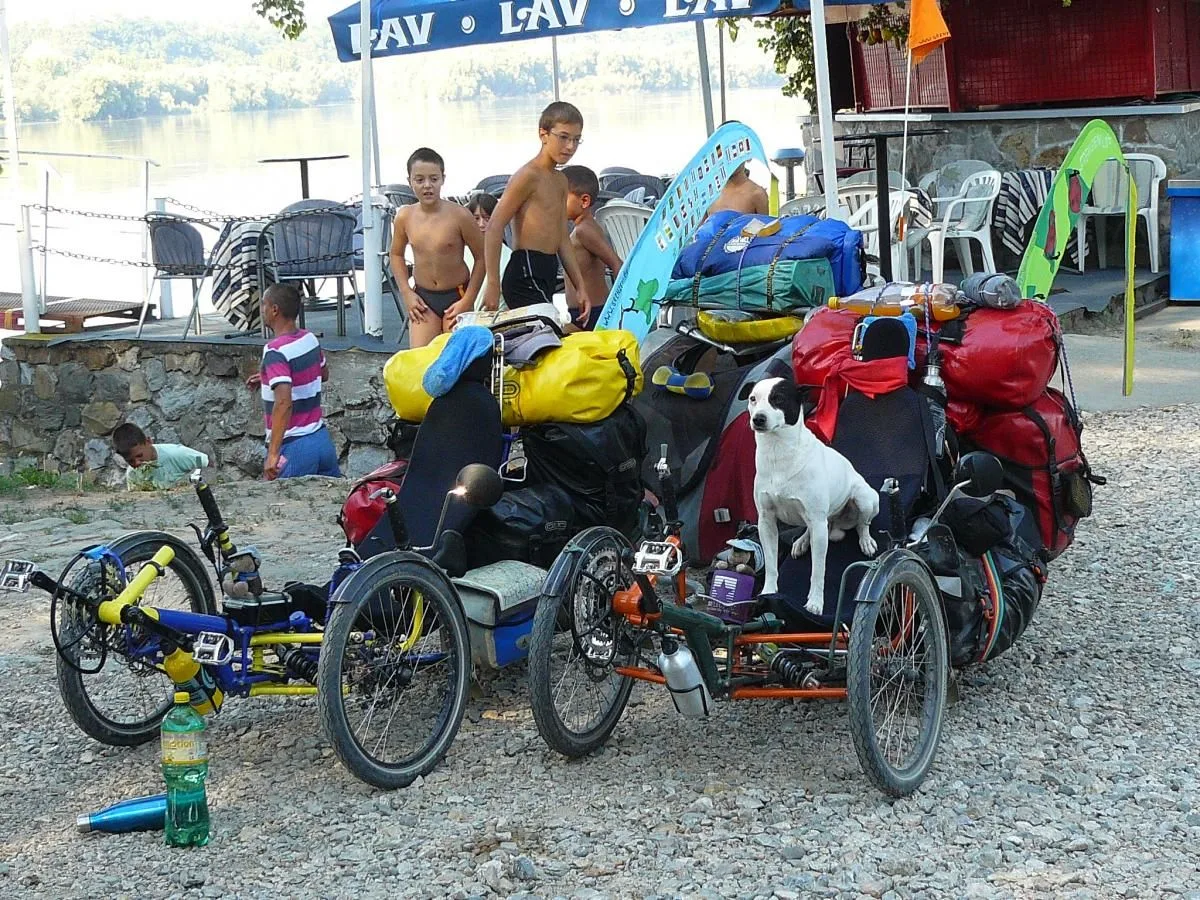
Image source: Bing (Web (fair-use with source credit))
Why the Wheel Count Decision Matters More Than You'd Think
Most cyclists switching to recumbents underestimate how much the wheel configuration shapes the entire touring experience. A two-wheel recumbent (often called a "bent") rides like a low-slung bicycle. You lean through turns, balance at stoplights, and unclip when you need to put a foot down.
A three-wheel recumbent trike, usually in tadpole configuration (two wheels up front, one in back), stays upright when stopped. You can load and unload panniers without propping the bike against a wall. You never worry about tipping over on a steep cambered shoulder.
The tradeoff shows up in weight, width, and speed. Trikes typically weigh 10 to 20 pounds more than comparable two-wheelers. They're wider, which matters on narrow bike paths or when you're squeezing past parked cars.
And they're slower on flat roads because of higher rolling resistance and a less aerodynamic profile.
For touring, these differences compound over days and weeks. A 2-wheeler might average 12 to 15 mph on flats with a tailwind. A trike might sit closer to 10 to 12 mph under the same conditions.
That gap narrows on climbs and in headwinds, but it's real.
What Makes a 2-Wheel Recumbent Different on Tour
Two-wheel recumbents come in short-wheelbase (SWB), long-wheelbase (LWB), and compact long-wheelbase (CLWB) designs. For touring, LWB and CLWB models dominate because they offer more stable handling with heavy rear loads and better heel clearance during pedaling.
The seat on a touring 2-wheeler typically sits 10 to 16 inches off the ground, depending on whether it's a lowracer or highracer design. Highracers put you closer to car-window height, which helps with visibility in traffic. Lowracers offer better aerodynamics but make you less visible to drivers.
You'll pedal with your legs roughly level with your torso, which takes pressure off your lower back and eliminates the saddle discomfort that plagues upright touring bikes. The reclined position also reduces wind resistance. On a flat road with no wind, a recumbent can be 20 to 30 percent more efficient than an upright bike at the same power output.
Balance works differently than on a standard bike. At very low speeds (under 3 mph), a loaded recumbent feels twitchy. You'll need to unclip and put a foot down more often than you'd expect, especially on steep climbs or when navigating crowded ferry docks.
Once you're rolling above 5 mph, stability improves and handling feels predictable.
Most touring 2-wheelers use 26-inch or 700c rear wheels and 20-inch front wheels. The smaller front wheel keeps the wheelbase manageable and improves aerodynamics. Rear racks mount above or beside the rear wheel, and front panniers often hang low on either side of the front wheel or under the seat.
What Makes a 3-Wheel Recumbent Trike Different on Tour
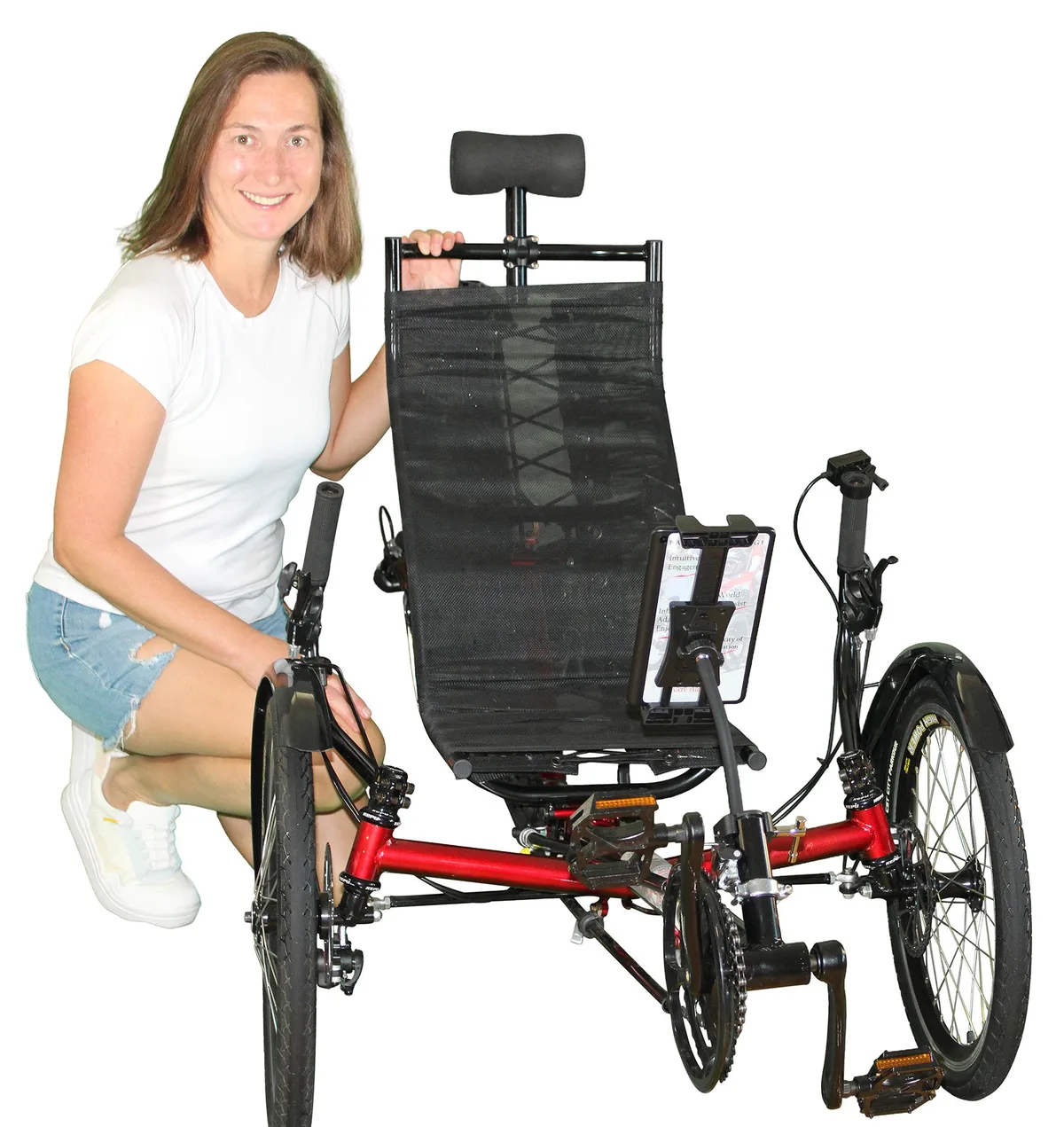
Image source: Bing (Web (fair-use with source credit))
Tadpole trikes (the most common touring configuration) place two wheels in front, spaced 28 to 34 inches apart depending on the model. That wide front track gives the trike stability in crosswinds and on off-camber surfaces, but it also means you're wider than most bike lanes.
The rear wheel carries most of your cargo weight. A touring trike typically has a rear rack that spans the width of the frame, offering more usable pannier space than a 2-wheeler. You can mount bags on both sides of the rear wheel and still have room for a trunk bag on top.
Seat height on trikes ranges from 6 to 12 inches off the ground. Lower seats improve stability and cornering but make you nearly invisible in traffic. Higher seats (10 inches or more) put you closer to car-door height and make it easier to get in and out, which matters when you're stopping every hour to stretch or refuel.
Steering on a trike uses either direct steering (handlebars mechanically linked to the front wheels) or indirect steering (handlebars connected via pushrods or cables). Direct steering offers better road feel. Indirect steering (also called tiller steering) keeps the handlebars stationary relative to your body, which some riders find more comfortable over long distances.
The three-wheel design eliminates the need to balance, so you can coast to a stop at a red light without unclipping. You can also eat, drink, or adjust your GPS while moving without worrying about keeping your hands steady. That convenience adds up over a multi-day tour.
Trikes corner differently than bikes. You don't lean into turns. Instead, you steer through them, and the outside wheel lifts slightly if you're going fast enough.
On a fully loaded trike, that outside wheel can lift earlier than you'd expect, especially on downhill switchbacks. Learning to modulate your speed through tight turns takes practice.
Speed, Aerodynamics, and Daily Mileage Reality
Aerodynamics favor 2-wheelers, especially lowracer designs. A lowracer presents a frontal area of roughly 3 to 4 square feet, compared to 5 to 6 square feet for most trikes. At 15 mph, that difference doesn't cost much.
At 20 mph and above, it becomes significant.
On flat terrain with no wind, a fit rider on a 2-wheel recumbent can sustain 15 to 18 mph for hours. The same rider on a trike might average 12 to 14 mph. Over an 8-hour riding day, that's the difference between 100 miles and 80 miles.
Headwinds hurt both designs, but trikes suffer more because of their wider frontal area. In a 15 mph headwind, a trike's speed might drop by 4 to 5 mph, while a lowracer 2-wheeler might only lose 3 mph. Crosswinds affect 2-wheelers more severely because the rider has to lean into the wind to maintain balance, which increases drag and fatigue.
Climbing efficiency depends more on gearing and rider fitness than wheel count. Both designs let you use your body weight to brace against the seat, which engages your core and allows for sustained power output without the standing-sprint option available on upright bikes. On steep grades (8 percent and above), trikes often edge ahead because you can't lose balance and you can grind away at 3 mph without worrying about tipping over.
As of 2026, most touring recumbents come with wide-range gearing: 22 to 30 speeds with a low gear around 20 to 25 gear-inches. That's low enough to climb a 10 percent grade at 4 mph while carrying 60 pounds of gear. Without that low gearing, loaded climbing becomes miserable on either design.
Daily mileage on tour realistically sits between 40 and 80 miles for most riders, depending on terrain and fitness. A 2-wheeler might shave 30 to 60 minutes off that distance on flat routes. A trike makes up some of that time on technical descents and in stop-and-go urban environments where you don't have to keep unclipping.
Stability, Balance, and Handling Loaded Gear
Two-wheel recumbents require constant balance, just like upright bikes. When you add 40 pounds of panniers and a handlebar bag, the center of gravity shifts. Most of that weight sits low and near the rear axle, which actually improves stability at speed.
But it makes slow-speed maneuvering trickier.
Loaded 2-wheelers handle best when weight is distributed evenly: half in rear panniers, a quarter in front panniers (if your frame supports them), and the rest in a seat bag or frame bag. Overloading the rear makes the front end feel light and vague in crosswinds. Overloading the front can cause speed wobble on long descents.
Trikes carry weight differently. Most of your cargo sits on the rear rack, directly over or just behind the rear axle. You can stack 60 to 80 pounds back there without significantly affecting handling.
The wide front track keeps the trike planted even when the rear is heavily loaded.
Cambered roads (crowned in the center, sloping toward the edges) challenge both designs. On a 2-wheeler, you'll constantly adjust your line to avoid rolling toward the shoulder. On a trike, one front wheel rides higher than the other, which makes steering feel asymmetric.
If the camber is severe, the trike will pull toward the low side and you'll have to fight it for miles.
Loose gravel, sand, and dirt roads favor trikes. The three-point contact patch spreads the load, so you're less likely to break traction or feel the bike slide underneath you. Two-wheelers can handle these surfaces but require more focus and smoother inputs, especially when loaded.
Stopping with a full load takes longer than you'd think on either design. Disc brakes are nearly universal on modern touring recumbents, and you'll want them. Rim brakes struggle to dissipate heat on long descents with 100+ pounds of bike and gear.
Plan for 20 to 30 percent longer stopping distances than an unloaded bike, and adjust your following distance accordingly.
Climbing Hills and Mountain Passes: The Weight Factor
Weight matters more on climbs than anywhere else. A typical touring 2-wheeler weighs 28 to 38 pounds unloaded. Add 50 pounds of gear and you're pushing 80 to 90 pounds uphill.
A touring trike starts at 38 to 50 pounds and climbs to 100 to 110 pounds fully loaded.
That extra 15 to 20 pounds on a trike translates directly to slower climbing speeds. On a sustained 6 percent grade, you might average 5 to 6 mph on a loaded 2-wheeler. The same grade on a trike often drops you to 4 to 5 mph.
Over a 10-mile climb, that's the difference between 1 hour 40 minutes and 2 hours.
Gearing compensates for some of the weight penalty. Most touring recumbents offer a low gear around 20 to 22 gear-inches, which lets you spin at 60 to 70 rpm while climbing at walking pace. If you're touring mountainous regions like the Rockies or the Alps, confirm your gearing goes low enough before you leave.
The recumbent position helps on long climbs because you can push hard without standing. You brace your back against the seat and drive through your legs. On a trike, you never worry about balance, so you can grind away at 3 mph without the fear of tipping over that haunts slow-climbing 2-wheelers.
Descending reverses the equation. Trikes feel more stable at high speeds because of their three-point contact, but they're also heavier and harder to slow down. You'll use your brakes more, and on long alpine descents that can overheat rim brakes or fade poorly maintained disc brakes.
Two-wheelers descend faster and more nimbly but require more attention to line choice and braking technique.
Crosswinds, Cambered Roads, and Weather Exposure
Crosswinds hit both designs hard, but in different ways. A 2-wheeler in a 20 mph crosswind requires constant correction. You'll lean into the wind to stay upright, which increases drag and tires you out.
A highracer with a tall seat catches more wind than a lowracer, making it harder to hold a straight line.
Trikes handle crosswinds more predictably. The wide front track keeps you planted, and you don't have to lean. But the larger frontal area means you'll feel more drag, and strong gusts can push you sideways in your lane.
On exposed coastal routes or Great Plains highways, that lateral push becomes exhausting after hours of fighting it.
Cambered roads torture trike riders. Most highways crown in the center and slope toward the shoulder to shed water. On a trike, that slope puts one front wheel higher than the other.
The steering pulls toward the low side, and you'll spend miles correcting it. Some riders report hand fatigue and sore shoulders after a full day on severely cambered roads.
Two-wheelers handle camber more naturally because you can lean slightly uphill to compensate. It's still annoying, but it doesn't require constant steering input. If your route includes a lot of secondary highways with heavy camber, a 2-wheeler will feel less tiring.
Rain affects both designs, but trikes keep you drier. You're sitting lower, so road spray hits your legs and torso instead of your face. A 2-wheeler, especially a highracer, puts your face right in the spray zone.
Most recumbent tourists carry a small windscreen or fairing for rainy days.
Cold weather favors trikes because you can bundle up without worrying about balance. On a 2-wheeler, you'll need to unclip frequently at stop signs and traffic lights, which means your feet hit cold pavement. On a trike, you stay clipped in all day and keep your core warmer.
Storage Space and Cargo Loading Strategies
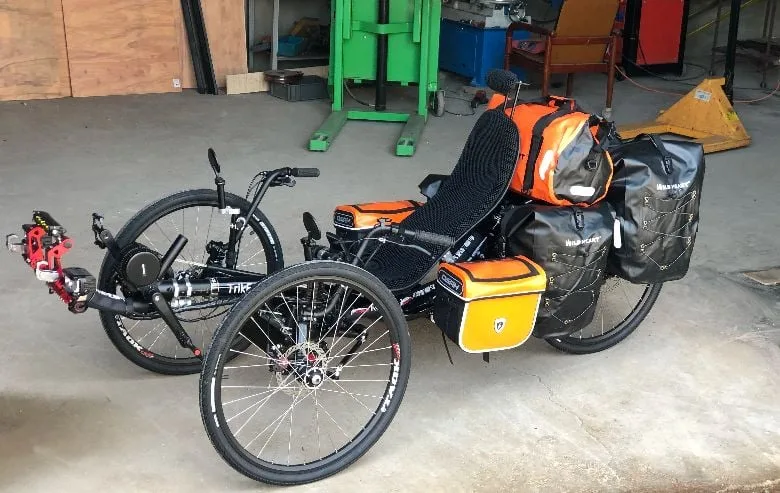
Image source: Bing (Web (fair-use with source credit))
Trikes offer more usable cargo space because of their wide rear racks. You can mount full-size panniers on both sides of the rear wheel and still have room for a trunk bag or waterproof duffel on top. Total capacity often reaches 80 to 100 liters, enough for extended expedition-style touring.
Two-wheelers force you to be more selective. Most LWB touring models have rear racks that accommodate standard panniers, giving you 40 to 60 liters of space. Some designs also support front panniers mounted low beside the front wheel, adding another 20 to 30 liters.
You'll need to pack tighter and skip luxuries like camp chairs or bulky cooking gear.
Weight distribution matters more on a 2-wheeler. Keep heavy items (tools, spare tubes, food) low and centered near the rear axle. Light, bulky items (sleeping bag, tent) can go higher or farther forward.
On a trike, you can stack weight higher on the rear rack without destabilizing the handling.
Underseat bags work well on both designs. These wedge-shaped bags fit between the seat frame and the rear wheel, offering 10 to 20 liters of storage for items you need frequently: rain gear, snacks, a phone charger. They don't interfere with pedaling and keep weight low.
Frame bags are less common on recumbents because the frame geometry doesn't always leave usable space. Some highracer designs have enough room for a small frame bag between the seat and the front wheel, but it's not universal. Check your specific frame before counting on that storage.
Loading and unloading a trike is easier because it stays upright. You can leave it standing in a parking lot while you walk into a store. A 2-wheeler needs a kickstand (which some touring models don't include) or something to lean against.
After a long day, that small convenience feels huge.
Visibility, Safety, and Riding in Traffic
Low seat height makes you nearly invisible to drivers. Highracer 2-wheelers sit 12 to 16 inches off the ground, which puts you close to car-door height. Lowracers and most trikes sit 6 to 10 inches high, below the sightline of SUVs and trucks.
A visibility flag (a tall pole with a bright flag on top) is standard equipment for low recumbents. Mount it on the rear of your trike or bike, at least 6 feet high. Drivers will see the flag even if they don't see your bike.
Daytime running lights (front and rear) also help, especially in traffic or on overcast days.
Mirrors are essential. Most recumbent tourists mount bar-end mirrors or helmet mirrors to keep track of traffic behind them. On a trike, you can't glance over your shoulder as easily as on a 2-wheeler, so mirrors become even more critical.
Riding in traffic is more stressful on a trike because you're wider and can't swerve quickly. Narrow bike lanes force you into the traffic lane, which some drivers don't tolerate well. Two-wheelers fit standard bike lanes and can squeeze through gaps that trikes can't.
Urban environments favor 2-wheelers for agility. You can navigate tight spaces, make quick stops, and filter through stopped traffic at lights. Trikes need more room to maneuver and take longer to accelerate from a stop.
Rural highways favor trikes for comfort. You don't have to unclip every time a car passes too close or a dog chases you. You can ride relaxed, focus on the scenery, and let the trike's stability handle rough pavement or gravel shoulders.
Comfort Over 50+ Miles: Seat Position and Body Fatigue
Recumbent seats eliminate the pressure points that plague upright touring bikes. Your weight rests on your back and butt instead of your hands, wrists, and perineum. After 8 hours in the saddle, you'll feel tired but not sore in the ways upright riders complain about.
Seat angle varies by model. A more upright seat (30 to 40 degrees from horizontal) offers better visibility and easier breathing on climbs. A more reclined seat (10 to 20 degrees) is more aerodynamic and comfortable on flat roads but can cause neck strain if you're constantly lifting your head to see ahead.
Most touring recumbents use mesh seats with a fabric sling stretched over a rigid frame. The mesh breathes well, which keeps you cooler in hot weather. Foam seats offer more cushioning but trap heat and moisture.
After a few days of riding, you'll appreciate the ventilation.
Neck fatigue is the most common complaint from new recumbent riders. You'll spend hours with your head lifted to see the road ahead. A headrest helps, but it also adds weight and can interfere with looking over your shoulder.
Many riders adapt within a week or two and stop noticing the strain.
Leg circulation improves on recumbents because your legs are roughly level with your heart. Upright bikes force blood to pool in your feet, which can cause numbness or swelling on long rides. Recumbents spread that workload more evenly.
Lower back support varies by seat design. A well-fitted seat should support your lumbar curve without creating pressure points. If your back aches after an hour, adjust the seat angle or add a thin lumbar pad.
Don't tolerate discomfort. A bad seat will ruin a tour faster than any mechanical issue.
Transport, Storage, and Getting It to Your Start Point
Trikes are harder to transport because of their width and weight. Most won't fit in a standard sedan trunk. You'll need a hitch rack designed for trikes or a truck bed.
Some models fold or disassemble, but reassembly at your destination can take 30 to 60 minutes.
Two-wheelers are lighter and narrower, so they fit standard bike racks more easily. Many LWB recumbents can be partially disassembled (remove the front wheel and seat) to fit in a car. If you're flying to your tour start point, expect to pay oversized baggage fees for either design.
Home storage favors 2-wheelers. A trike takes up as much floor space as a small motorcycle. If you're storing it in a garage or apartment, measure your available space before buying.
Parts Availability and Roadside Repairs in Remote Areas
Standard components (chains, cassettes, brake pads) are the same on recumbents as on upright bikes. Any bike shop can replace them. The challenge comes with recumbent-specific parts like idler pulleys, long chain tubes, or specialized seat hardware.
Trikes use more unusual wheel sizes (often 20-inch front, 26-inch rear). In rural areas or developing countries, finding replacement tires or tubes can be difficult. Two-wheelers typically use more common 700c or 26-inch wheels, which are easier to source globally.
If your chain starts skipping under load, you'll need more chain length to repair it than on an upright bike. Carry at least two spare quick links and an extra 10 to 15 links of chain. Long chainlines on recumbents wear chains faster than upright bikes, so check for wear every 500 to 700 miles on tour.
Learning Curve and Transition Time for New Riders
Expect one to three hours of practice before a 2-wheeler feels natural. Low-speed balance is the hardest skill to master. Most riders gain confidence within a week of daily riding.
Trikes require almost no learning curve. If you can steer a car, you can ride a trike. The only adjustment is learning to modulate speed through tight turns to avoid lifting the inside wheel.
Side-by-Side Comparison: 2-Wheel vs 3-Wheel for Touring
Image source: Bing (Web (fair-use with source credit))
| Factor | 2-Wheel Recumbent | 3-Wheel Trike |
|---|---|---|
| Speed (flat) | 12–15 mph average | 10–12 mph average |
| Weight (unloaded) | 28–38 lbs | 38–50 lbs |
| Cargo capacity | 40–60 liters typical | 80–100 liters typical |
| Stability at rest | Requires balance | Stays upright |
| Width | 24–28 inches | 30–34 inches |
| Climbing | Lighter, faster | Heavier, more stable |
| Crosswind handling | Requires leaning | More planted |
| Transport ease | Fits standard racks | Needs specialized rack |
Best For: When a 2-Wheel Recumbent Makes Sense
Choose a 2-wheeler if speed matters and you're comfortable with balance. They excel on long flat routes, paved rail-trails, and tours where daily mileage targets are high. If you're fit and experienced, a 2-wheeler will feel more responsive and engaging than a trike.
Two-wheelers also make sense if you're mixing bike touring with public transit or air travel. They're easier to transport and store. For credit-card touring (light, fast trips with minimal gear), a 2-wheeler's speed and agility are hard to beat.
Best For: When a 3-Wheel Trike Makes Sense
Pick a trike if stability and comfort outweigh speed. They're ideal for riders with balance concerns, older tourists, or anyone recovering from injury. You'll ride slower, but you'll also arrive less fatigued and more relaxed.
Trikes excel on fully loaded expedition tours where cargo capacity matters. If you're carrying camping gear, cooking equipment, and weeks of supplies, the extra weight penalty of a trike becomes less significant. The added stability with 80+ pounds of gear makes daily riding less stressful.
Choose a trike if you're touring in areas with heavy traffic or rough pavement. The ability to stop without unclipping and the planted feel on broken roads make trikes safer in challenging conditions.
What Experienced Recumbent Tourists Wish They'd Known
Test ride both designs with a full load before committing. An unloaded test ride in a parking lot won't reveal how the bike handles after 50 miles with 60 pounds of gear. Rent or borrow a touring-spec recumbent for a weekend shakedown tour.
Invest in a quality seat from the start. Cheap mesh seats sag and create pressure points after a few hundred miles. A well-designed seat (from brands like HP Velotechnik or TerraTrike) costs more but pays off in comfort over thousands of miles.
Budget for visibility and safety gear. A flag, mirrors, and high-quality lights aren't optional on a recumbent tour. Aggregate rider feedback confirms that visibility equipment reduces close passes and near-misses in traffic.
Costs: What You'll Actually Pay for Touring-Ready Models
Entry-level touring 2-wheelers start around $1,800 to $2,500. Mid-range models with better components and lighter frames run $3,000 to $5,000. High-end touring recumbents from brands like Bacchetta or RANS can exceed $6,000.
Touring trikes start higher, typically $2,500 to $3,500 for basic models. Mid-range trikes (Catrike, TerraTrike, ICE) cost $4,000 to $6,500. Premium trikes with carbon frames or advanced suspension approach $8,000 to $10,000.
Factor in accessories: panniers, racks, mirrors, flags, and spare parts add another $500 to $1,000 to your total investment. Used recumbents hold value well, so buying a well-maintained used model can save 30 to 40 percent off new prices.
Frequently Asked Questions
Can I tour on a recumbent if I've never ridden one before?
Yes, but allow time to adapt. Spend at least two weeks riding your recumbent locally before starting a tour. Practice slow-speed handling, emergency stops, and mounting with a loaded bike.
How do I find bike shops that work on recumbents?
Call ahead and ask if they're familiar with recumbent repairs. Most standard maintenance (brake adjustments, wheel truing, drivetrain work) uses the same skills as upright bikes. Bring spare parts for recumbent-specific components.
Are recumbent trikes allowed on all bike paths?
Most bike paths allow trikes, but some narrow trails or bridges restrict width. Check local regulations before planning your route. State and national parks sometimes have different rules than municipal trails.
Which is better for solo touring, a 2-wheel or 3-wheel recumbent?
It depends on your priorities. Choose a 2-wheeler if you value speed and portability. Choose a trike if comfort and stability matter more.
Both handle solo touring well once you've adapted to the design.
Do I need special tools to maintain a touring recumbent?
Most maintenance uses standard bike tools. You'll need a chain tool, spare quick links, and possibly longer cables. Carry the hex keys and wrenches specific to your seat and rack mounts.
Final Recommendation: How to Make Your Decision
Start by defining your tour style. If you're planning fast, light tours on paved roads, a 2-wheeler offers better speed and efficiency. If you're planning slow, scenic tours with lots of gear and frequent stops, a trike delivers more comfort and less stress.
Consider your physical condition honestly. Balance issues, prior injuries, or age-related concerns tip the scale toward a trike. If you're fit and enjoy the technical challenge of bike handling, a 2-wheeler will feel more engaging.
Rent or test ride both designs on terrain similar to your planned tour. A flat rail-trail test won't tell you how either handles a loaded climb or a windy coastal highway. Aim for at least 30 to 40 miles with a full load before deciding.
Budget matters, but don't compromise on fit and quality. A poorly fitted recumbent will ruin a tour faster than any other factor. Work with a knowledgeable dealer (like the experts at Adventure Cycling Association) who can help you find the right seat angle, boom length, and handlebar position for your body.